Beyond the Sandwich:
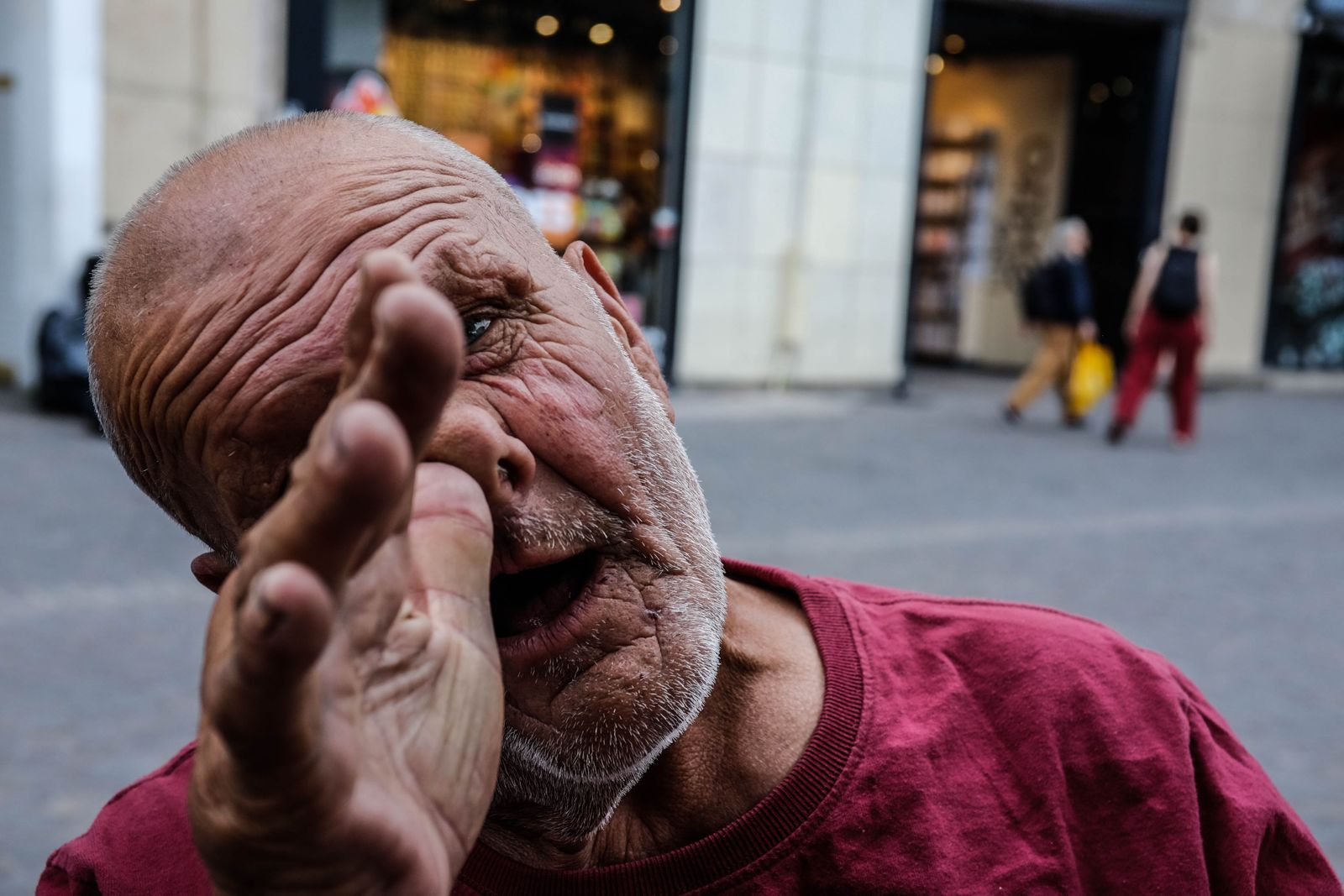
For our first feature, it was essential for us to begin with a subject close to the heart, presenting someone truly impactful. I have the personal privilege of calling Heger a friend (or as we call each other “ma go”), she is a woman I am particularly proud of. The photographs accompanying this piece were taken by Heger, the founder of La Rue Tourne, and are available for purchase to help fund the association’s vital work.
A decade ago, a simple desire to connect with others sparked a movement that would bridge the gap between the street and society. In this candid interview, Heger reflects on the ten-year journey of La Rue Tourne. She discusses the evolution of the association, the shifting landscape of homelessness, and how a woman who once claimed not to be “social” found her life’s purpose in the stories of others. These images, captured through her own lens, serve as a testament to the dignity and humanity she fights to protect every day.
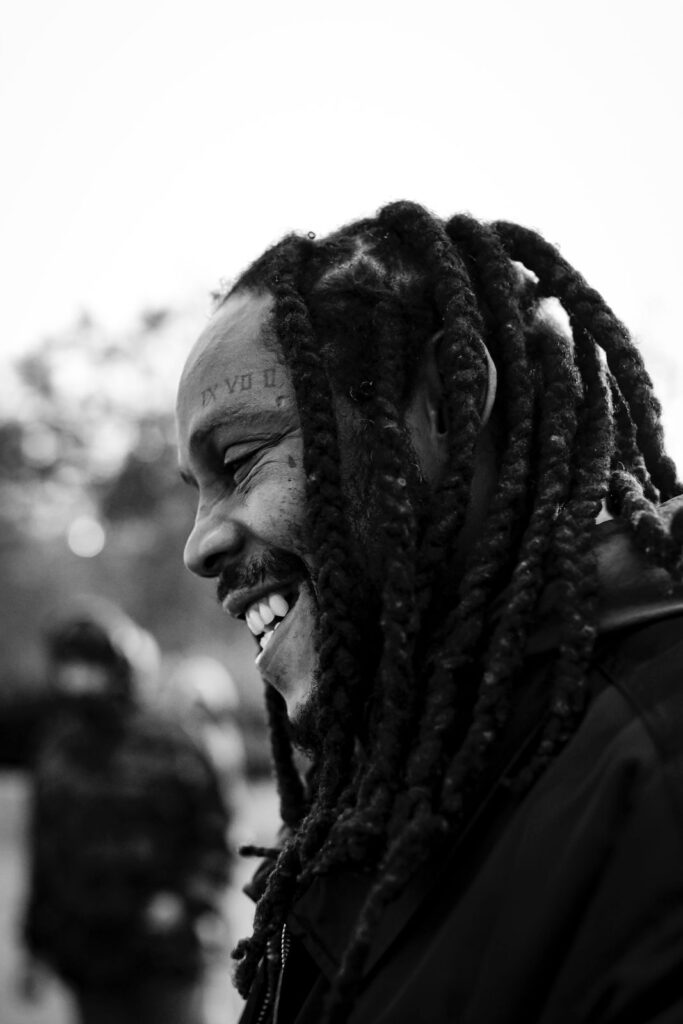
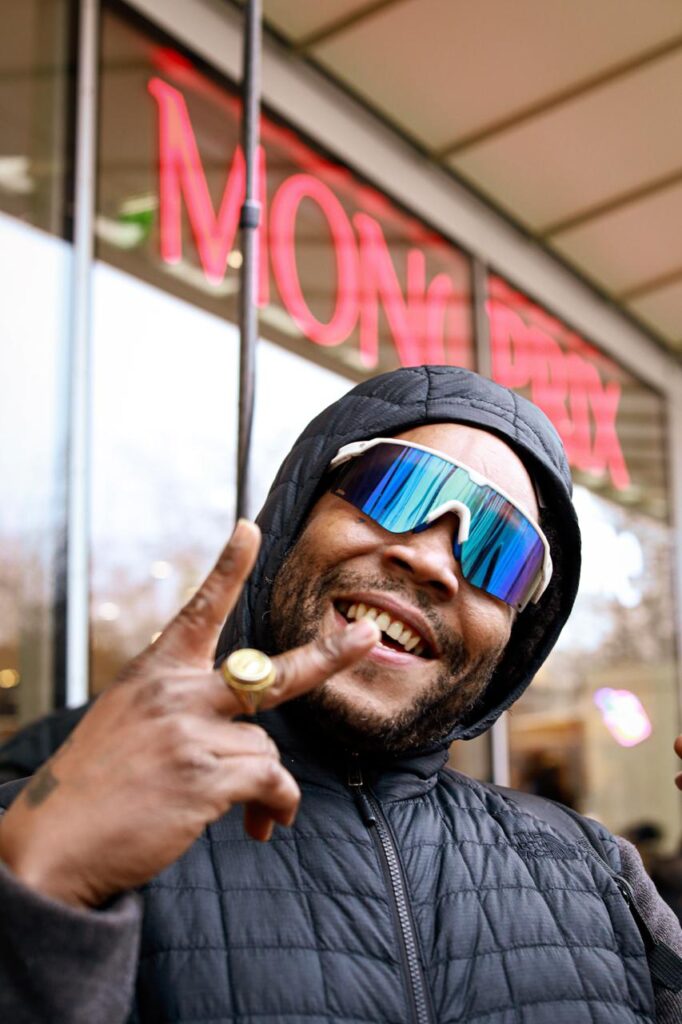
Charly Doudou Photographed by Heger Barkati
Osé Magazine: Ten years ago, you launched La Rue Tourne. Do you remember the exact moment the idea was born? What pushed you to act?
Heger: Ten years ago, I was under 30 and, honestly, I wasn’t looking to start an association or take on any major responsibilities. My drive was simply to build a team on the ground that shared the same “vibe” and a visceral desire to reach out to others. But I remember one encounter in particular that pushed me to my limits; it forced me to explore my potential for mobilization and my creativity for a good cause. I realized that to lead this fight in a consistent, solid way, an associative structure was the best solution. Associations exist where the State fails. That was true back then, and it is even truer today!
“My drive was simply to build a team on the ground that shared the same “vibe” and a visceral desire to reach out to others.”
OM: Why was this human dimension, going beyond “classic” outreach, so important?
H: Every time I tackle a subject, I ask myself: “Why am I doing this? With what intention? How could I do it differently?” When we started outreach in Paris, we quickly realized that food distribution was already being done, -and done well-,by others. However, what was cruelly lacking was quality time.
So, we decided to step aside and “fill the holes in the racket,” as I like to say. The most precious thing today is time: exchange, discussion, play. Our strength was directly asking homeless people about their desires, building original themes with them and not just for them. That was our added value ten years ago, and it still defines the DNA of La Rue Tourne. Sometimes, you have to think about action in a much simpler way. Taking an interest in someone else isn’t complicated… it doesn’t require specific skills, resources, or money; it’s within everyone’s reach. So we said: what if we started there?
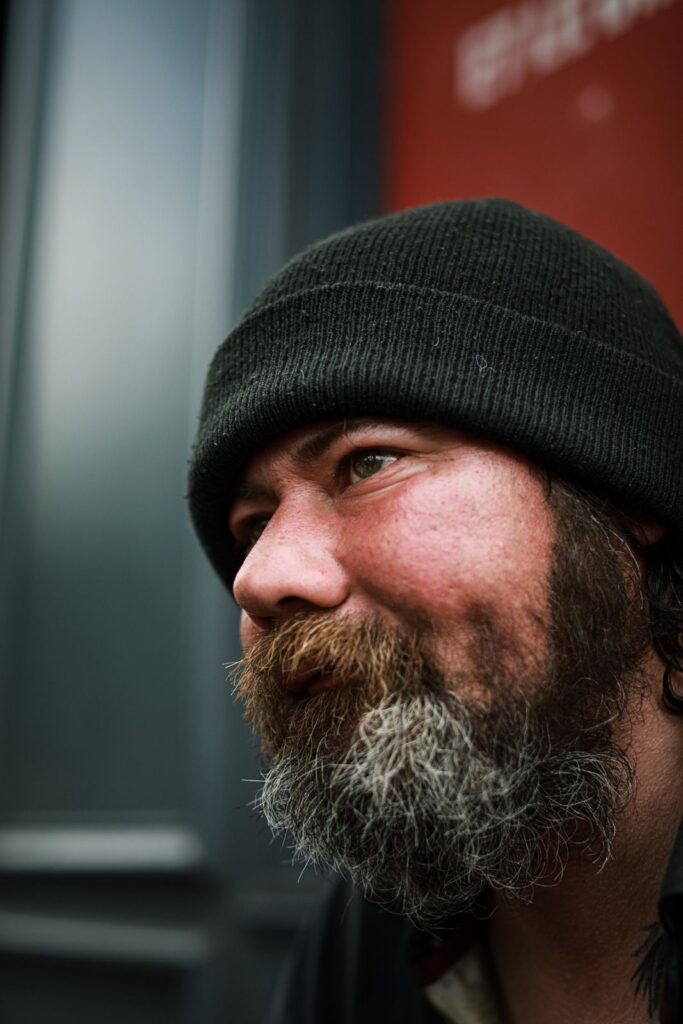
John Doe Photographed by Heger Barkati
“Taking an interest in someone else isn’t complicated… it doesn’t require specific skills, resources, or money; it’s within everyone’s reach.”
OM: Setting up an association is never easy. What were the first obstacles you encountered?
H: It might sound a bit mundane, but my first obstacles were purely administrative. I had been part of associations before, but I had never created one from scratch. It’s a very rigid world that didn’t necessarily suit me at first, but it forced me to get organized and stop being a “free electron.”
The real challenge was building a framework for work (and yes, it is still work) and a rhythm that respected everyone: the volunteers, the donors, and of course, the people on the street. The structure had to serve the general interest.
On a more personal level, the other big challenge was my own nature. I’m not a very social person by default, and starting La Rue Tourne forced me to step out of my comfort zone and go toward others even more intensely. The association was a true “accelerator of bonds”-, for me first and foremost-,and sometimes that’s a bit unsettling!
OM: In ten years of outreach and encounters, is there one story or moment that particularly marked you?
H: That’s a difficult question because if I answer you today, I might do outreach next Saturday and have an encounter that shakes me even more. I don’t like to stop at a single anecdote because everything is in motion.
However, what marks me most deeply are inevitably the faces and stories of those who are no longer here today. I think of Pascal, of Saïd… and I know every person volunteering with us has their own names in mind. What remains engraved is this incredible process: you meet someone who is a total stranger, they become someone you truly know, someone you talk with, whose family you sometimes know, or whether they take one or two sugars in their coffee, and they end up becoming a precious memory. It’s this transformation from “unknown” to “strong connection” that stays with me when I look back at these ten years.
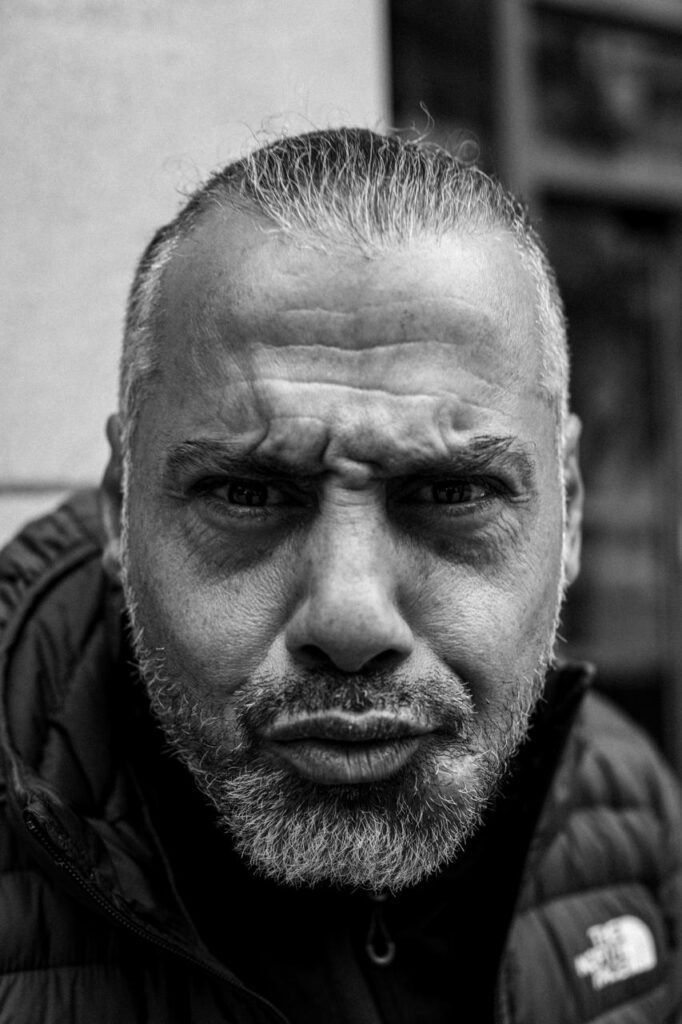
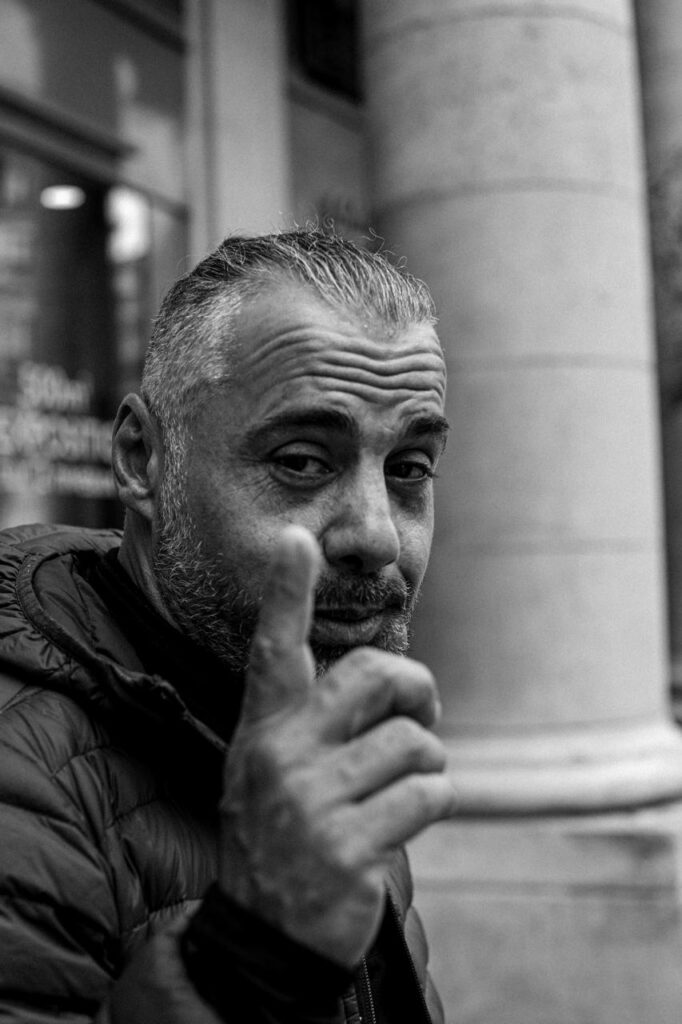
Lyes Photographed by Heger Barkati
OM: What are the most persistent misconceptions about homeless people?
H: It’s a complex mix. Some clichés are shifting: today, people realize more easily than ten or twenty years ago that the “topple” can happen to anyone, that the line is fragile.
But alongside that, the “shaker” of darker stereotypes remains well-anchored. You still hear that it’s a choice, that they deserved it, or that they are necessarily prone to alcohol, violence, lacking skills, friends, or family. It’s a dehumanizing vision.
What we see on the ground, and what we want to show, is exactly the opposite: these are individuals just like us. People who have a history, a family, incredible skills, people who sometimes speak several languages, who have passions and ambitions. Our mission is to remind people that behind the label “SDF” (without stable housing), which I hate, there is above all a person with all their complexity. Homeless people have the same problems as people with a home, but they are naturally more scarred because of the street.
OM: Have you seen the situation on the street or society’s perspective evolve over these last ten years?
H: Honestly, the assessment is bitter: I cannot say things have improved. We were already in a dramatic situation ten years ago, and with COVID and the skyrocketing cost of living, the number of people on the street is increasing drastically.
Yet, I perceive a change in the collective consciousness. Today, life has become harder for everyone. When you start to hesitate over a bill or deprive yourself of a small pleasure you used to allow yourself, you realize the balance is fragile.
I think people understand better now that the street is often an accumulation of “small missed steps,” strokes of bad luck that end up flipping a life over. So, even if the social context darkens, I have hope that the gaze is changing in a positive way. We are perhaps becoming more attentive to others because we feel closer to that vulnerability.
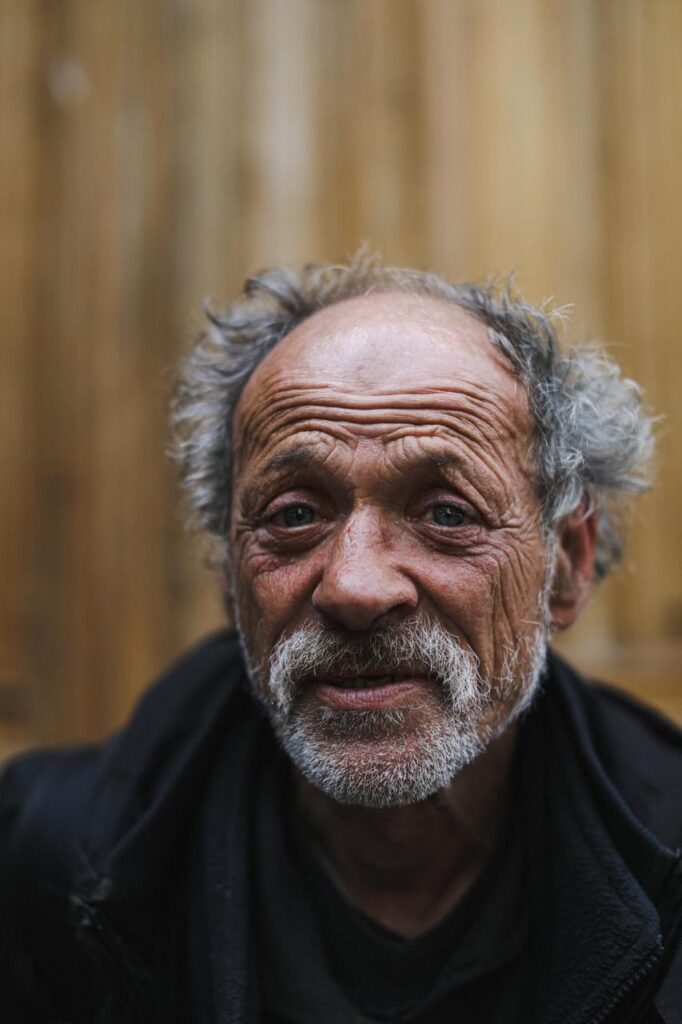
John Doe Photographed by Heger Barkati
“We managed to create an identity that looks like us: an atmosphere that is “cool” yet meaningful, with the desire to create a group of friends acting for good.”
OM: How do you manage to transmit this desire to act to the volunteers who join you?
H: Without wanting to sound demagogic, I don’t think I am the sole source of this energy. It’s the global “vibe” of the association that breathes through, whether it’s via our social media or our concrete actions on the street. While I put a lot of myself into it at the beginning, and I still put my whole heart into it, today the volunteering people are our best ambassadors.
We managed to create an identity that looks like us: an atmosphere that is “cool” yet meaningful, with the desire to create a group of friends acting for good. We have always refused “miserabilism” (playing on pity). Our engine is the desire to show the reality of the street, without concession, but with humanity and dynamism. It’s this mix of authenticity and joy that makes people want to commit alongside us. We aren’t here to give ourselves a clear conscience; we are here to live something real together!
OM : What have these ten years of commitment changed in your own life?
H: It has changed a huge part of my perception of the world and my place in society. If I had to choose one word, it would be appeasement. Finding your place through an action of general interest soothes a brain that goes too fast, that asks too many questions, and a soul that thirsts for commitment but doesn’t always know where to start.
Today, my passion is telling stories: those of the people I meet on the street, but also those of my volunteers who have incredibly diverse backgrounds. It’s almost ironic: I, who used to say I didn’t like people much, am now doing the exact opposite. When you see the energy I put into these relationships and this bond with others, it’s now hard to believe I don’t like humans. It’s over, I can’t even joke about saying that anymore! This adventure has reconciled me with others, and with myself.
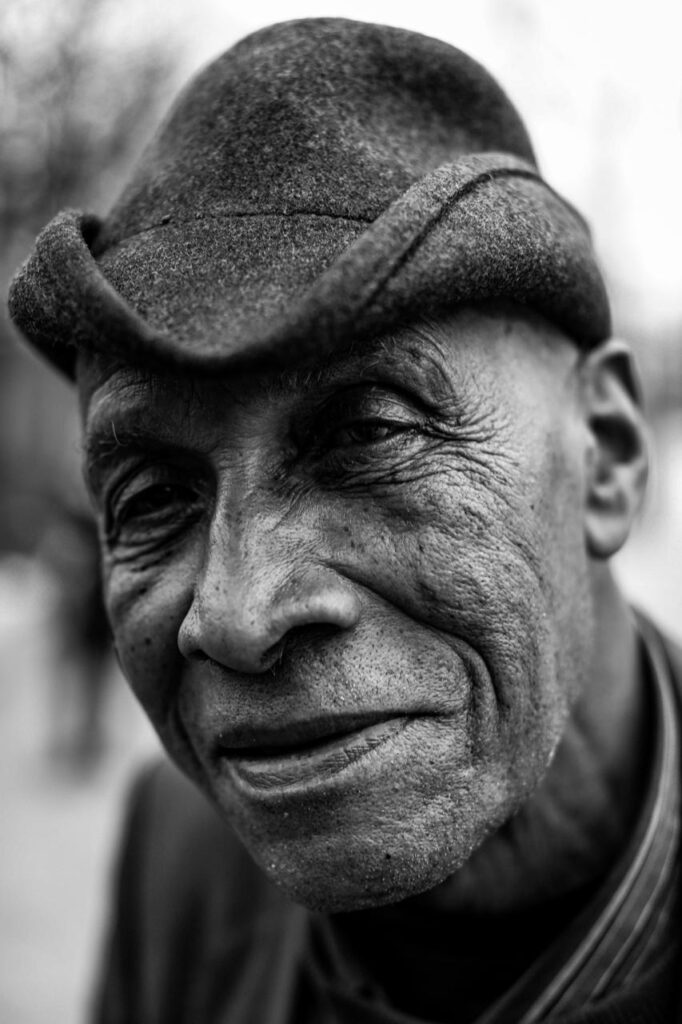
Mouss Photographed by Heger Barkati
OM : If you had to summarize the spirit of La Rue Tourne in one value or central idea, what would it be?
H: We worked a lot on the concept of empathy for this tenth anniversary, but I’m wary of “buzzwords” that no longer mean anything. For me, empathy at La Rue Tourne is a form of active connection.
It’s the ability to put yourself in the other person’s shoes to understand their real needs, without projecting our own ideas onto them. It’s what allows us to take that “step aside” I mentioned: not just giving a sandwich, but giving time, consideration, and showing them they still have the dignity they thought they had lost.
“…giving time, consideration, and showing them they still have the dignity they thought they had lost.”
Even if associative life is sometimes made of turmoil and internal tensions, this value remains our compass. This is the profound meaning of our action: transforming an anonymous encounter into a true bond. If I had to summarize our spirit, it would be that: a concrete empathy that creates connection where society has left voids.
OM : After ten years of action, what is your dream for the next ten years of La Rue Tourne?
H: I believe every founder of an association in my field would tell you the same thing: “My dearest dream would be for the association to no longer have a reason to exist.” Obviously, that would mean there is no one left on the street. Unfortunately, given the current climate, I don’t hold much belief in that.
So, for the ten years to come, I wish for us to continue telling beautiful stories and meeting people, even when social tensions harden. My ambition is to continue creating these bridges and these memories. I would love for former volunteers, 30 or 40 years from now, to say to themselves: “That was an incredible period, I met friends there, it played a decisive role in my life,” or “I remember when Sabine moved into her home, it was amazing!” Whether for those who give or those who receive, I want La Rue Tourne to remain that central place where we create shared memories and where we feel less alone in the face of the world.
Learn more about how to get involved with La Rue Tourne by clicking on the links below.
Here’s: How to Donate
Here you can: Join the Marauding with LRT
Here you can: Acquire Portraits