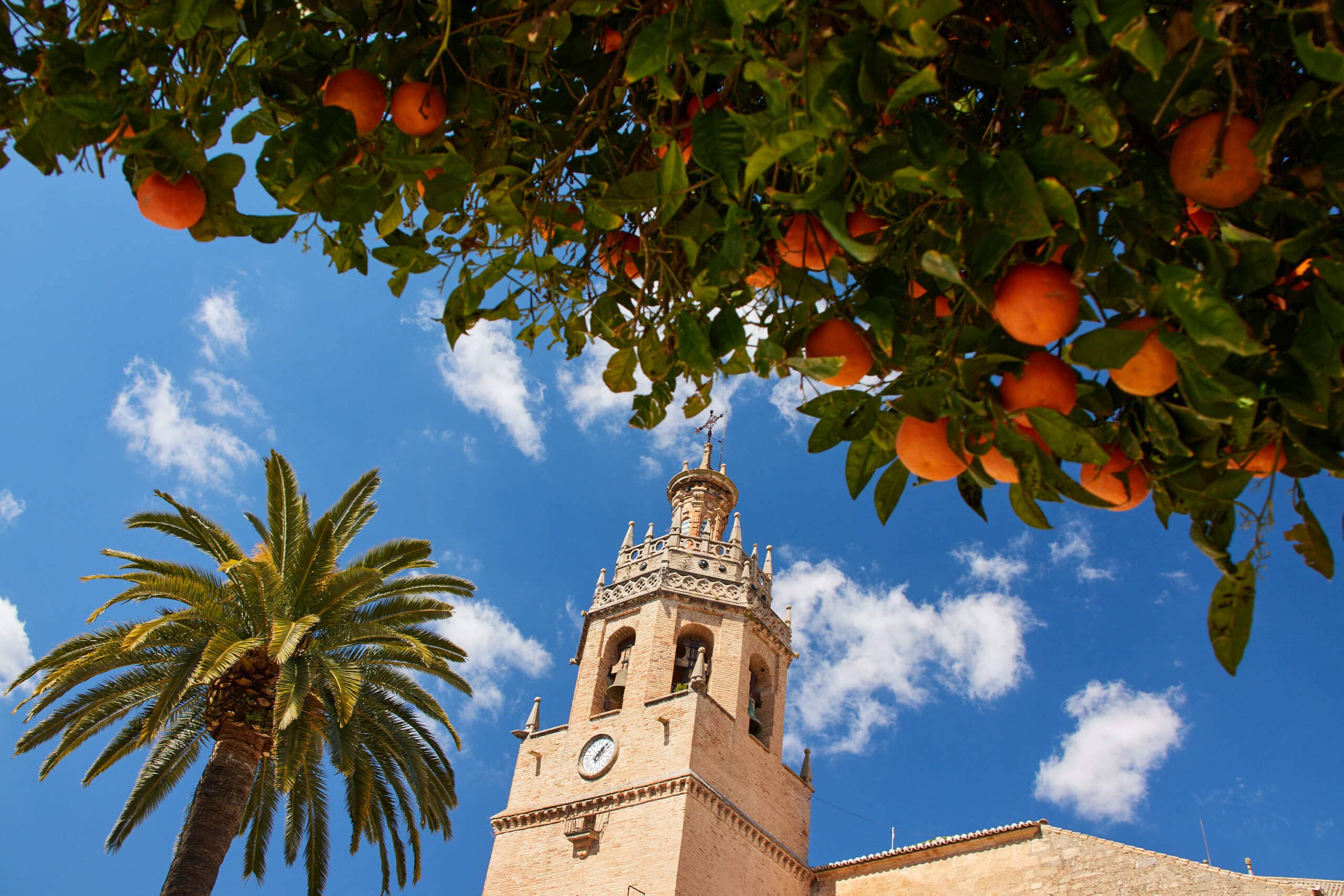
Ronda, Spain: Where Daydreaming Begins
Ronda belongs to the latter: a city suspended between cliffs and centuries, where every view feels like a painting and every street carries a memory.
Ronda, aka la ciudad de los sueños (city of dreams), doesn’t rely on first impressions. This city, shaped by time, stone and silence unfolds slowly, almost deliberately, revealing itself through contrasts, light and shadow, void and matter, history and stillness. Its most striking feature, the El Tajo gorge, slices the city in two, a dramatic natural divide carved over millennia by the Guadalevín river. But beyond the spectacle, it is this tension between fragility and permanence that defines Ronda.
Long before it became a destination, Ronda was a strategic stronghold. Traces of prehistoric settlements were later followed by Roman occupation. Yet it was under Islamic rule, from the 8th century onwards, that Ronda took on its most defining character. For nearly 800 years, it evolved into a refined urban center, with advanced irrigation, defensive walls, and public baths many of which remain today.
When the city was taken by the Catholic Monarchs in 1485, a new layer was added rather than replacing the previous one. Churches rose where mosques once stood, but the structure of the city, its rhythm, its relationship to water, to space, to defense, remained deeply influenced by its past.
Today, Ronda feels like a city that exists slightly outside of time. Not frozen, but slowed.
Where to stay
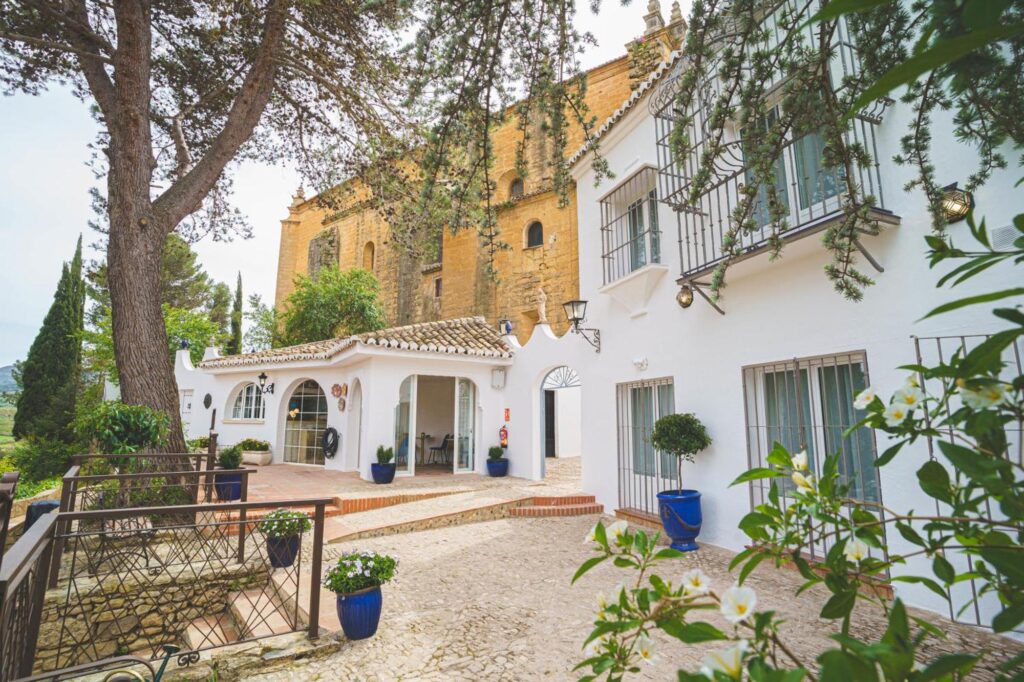
Photo of Palacio de la Duquesa
Finca La Marquesa
Set slightly away from the center, Finca La Marquesa offers a retreat-like atmosphere, where the emphasis is on space, nature, and quiet. The property feels closer to a private estate than a traditional hotel, with rooms designed in a rustic-chic style with natural materials, soft tones, and understated elegance.
The experience here is defined by calm: mornings that stretch out, evenings that settle slowly. The outdoor areas are a highlight, with open views over the surrounding countryside and a pool that blends seamlessly into the landscape, making it ideal for those looking to disconnect from the pace of the city.
Palacio de Hemingway
Located just steps from Ronda’s most iconic landmarks, Palacio de Hemingway immerses you directly into the city’s historic core. The building itself reflects classic Andalusian architecture, with traditional elements such as wooden beams, warm tones, and elegant, slightly old-world décor.
Rooms feel intimate and atmospheric, leaning into a literary aesthetic that echoes the writer who once found inspiration here. There is no pool, but the charm lies elsewhere: in its location, its character, and the feeling of staying somewhere deeply connected to Ronda’s cultural history.
Palacio de la Duquesa
This boutique hotel leans into elegance and intimacy. Housed in a historic building, Palacio de la Duquesa blends classic architecture with a more curated, refined interior design. Rooms tend to feature decorative details, textured fabrics, soft lighting, and a palette that balances tradition with comfort.
It’s the kind of place that feels discreet rather than showy, ideal for a quieter stay. Some rooms open onto interior patios, reinforcing that sense of privacy. The focus here is less on amenities like large pools, and more on atmosphere and aesthetic coherence.
Catalonia Ronda
For a more contemporary take on Ronda, Catalonia Ronda offers a sleek, modern contrast to the city’s historic backdrop. The rooms are clean-lined and spacious, with a minimalist aesthetic softened by warm materials.
One of its standout features is the rooftop terrace, complete with a pool and panoramic views over the city, particularly striking at sunset. It’s a place that balances comfort and design, ideal for travelers who want modern amenities without sacrificing location.
Where to eat
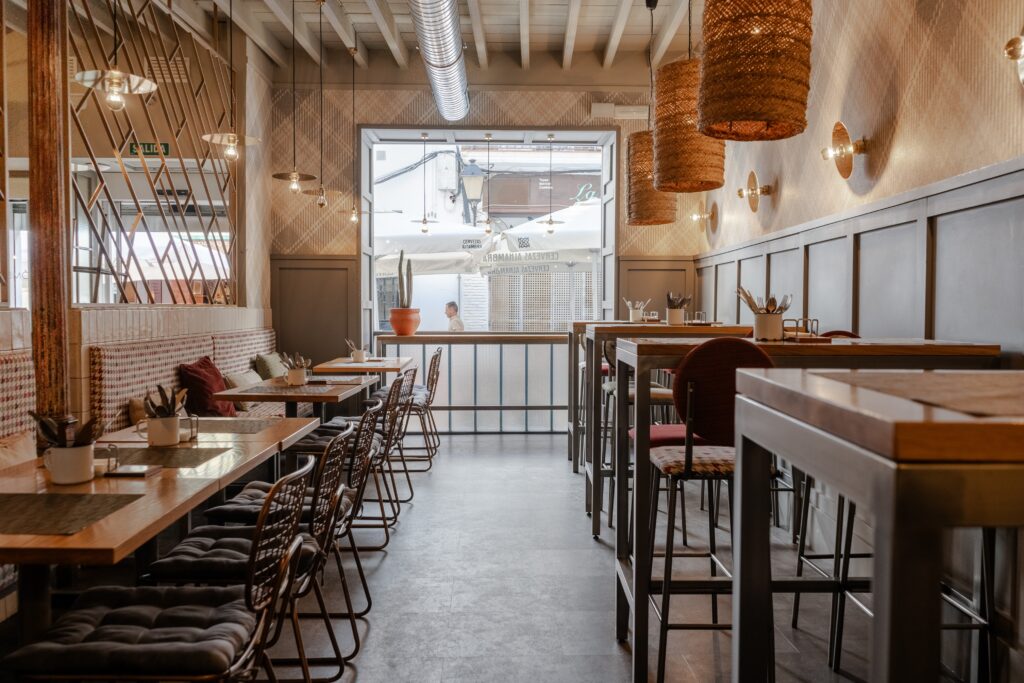
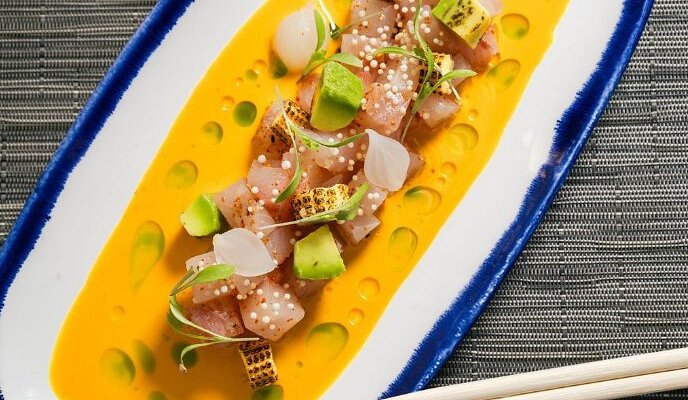
Photo of Tragatá’s Interior & Fresh Fish Dish
Tragatá
Tragatá is the kind of place that feels effortless but only because a lot of thought has gone into it. Chef Benito Gómez takes familiar Andalusian flavors and subtly elevates them, creating dishes that feel both comforting and surprising.
On the menu, you might find a perfectly crisp calamari roll layered with aioli and a slightly spicy bravas sauce, or a soft brioche filled with Iberian pastrami butter that melts instantly. Even something as simple as coleslaw is reworked with fresh herbs and a peppery touch of rocket.
The atmosphere is lively without being overwhelming, and the colonial-industrial décor adds to the sense of a place that sits between tradition and modernity.
Infos :
Around 35 euros a menu, drinks included
Ronda Nueva 4
www.tragata.com
(+34) 952 87 72 09
Bardal
Bardal is where Ronda’s culinary identity reaches its most refined expression. Awarded two Michelin stars, the restaurant offers a deeply considered approach to local cuisine: one that is less about spectacle and more about precision, balance, and storytelling.
The experience unfolds through tasting menus that evolve with the seasons. Expect dishes that reinterpret local ingredients: vegetables treated with the same attention as meat, delicate textures and unexpected contrasts. Andalusian cheeses often appear before dessert, grounding the experience in regional tradition.
Chef Benito Gómez’s (yes, again!) commitment to sustainability is tangible, with ingredients sourced locally, often from his own farm. Dining here is not just about eating, it’s about understanding a landscape through flavor.
2 stars at the Michelin Guide
Calle José Aparicio, nº 1, 29400
(+34) 951 48 98 28
http://restaurantebardal.com/home/
Bar de Tapas Camelot
This is where things get real. No staging, no reinterpretation, just straightforward, generous Andalusian foods served the way locals have always eaten it. Camelot is known among Rondeños for its montaditos (small sandwiches), grilled meats, and fried specialties.
You come here for things like dried meat in bread, crispy fried fish, or simple plates of eggs and potatoes done right. The atmosphere is lively, sometimes loud, always authentic. It’s not about presentation but exclusively about flavor, price, and habit.
Infos :
Calle Comandante Salvador Carrasco, 5
(+34) 952 87 27 12
Very affordable
Casa María
While not street food in the strict sense, Casa María offers something equally rooted: a deeply local, almost domestic approach to Andalusian cuisine. There’s no fixed menu, you just eat what is cooked that day.
Dishes might include slow-cooked stews, seasonal vegetables, or traditional recipes passed down through generations. It feels less like a restaurant and more like being invited into someone’s home, which is precisely what makes it special.
Infos :
Calle Nueva, 13
(+34) 952 87 15 23
Around 25–35€
What to visit
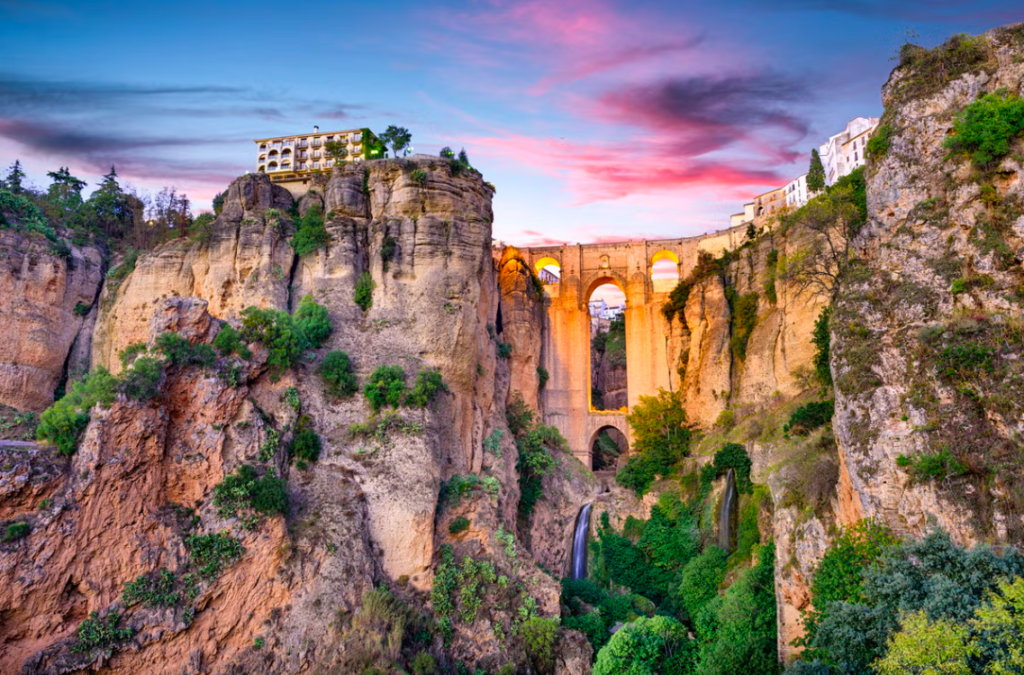
Photo of Puente Nuevo
Ronda is not a city of checklists, it’s a city of perspectives.
The Parador de Ronda, located on the very edge of the El Tajo, offers one of the most striking vantage points in the city. Standing there, you understand immediately how geography shaped everything from defense to architecture.
The Puente Nuevo is more than a bridge; it is the image of Ronda itself. Massive, almost improbable, it connects two halves of the city while anchoring it visually. Seen from above or below, it changes entirely, offering a different reading each time.
The minaret of San Sebastián remains as one of the few visible traces of the Islamic period. Its presence is discreet but essential, a reminder that Ronda’s identity is built on layers rather than erasure.
The Arab walls tell a story of survival. Combined with the natural protection of the gorge and river, they made Ronda one of the most difficult cities to conquer. What remains today is less about ruins and more about understanding the city’s strategic intelligence.
The Arab (yes, us again!) baths are perhaps the most evocative site. Hidden for centuries after repeated flooding, they have been remarkably preserved. Walking through the sequence of cold, warm, and hot rooms, beneath vaulted ceilings punctuated with star-shaped openings, you get a sense of daily life during the Islamic period, practical, but also deeply ritualized.
Finally, La Bola (Calle Espinel) offers a completely different experience. It is where the city breathes in the present. No excess, no spectacle just local life and a rhythm that hasn’t been overtaken by global retail habits or bent to the big retail groups pressure.
Cultural and fun facts
Ronda has long held a quiet magnetism for artists and thinkers. When Ernest Hemingway arrived, he found not just a landscape, but an intensity, a place where beauty and rawness coexist. He returned several times, drawn by both the scenery and the culture that surrounded it.
Orson Welles’ connection to Ronda went even further. What began as admiration became attachment, and eventually something close to belonging. His decision to have his ashes buried nearby speaks to the depth of that relationship.
For the poet Rainer Maria Rilke, Ronda offered something else entirely: solitude. During his stay, he found the kind of silence that allows for introspection, and it was here that part of The Spanish Trilogy took shape.
Even today, Ronda continues to inspire visual storytelling. Its landscapes and architecture have made it a natural setting for cinema, from classic productions like The World Is Not Enough to more recent series such as Agatha Christie’s adaptation for Netflix, Seven Dials Mystery.
What to bring back from Ronda
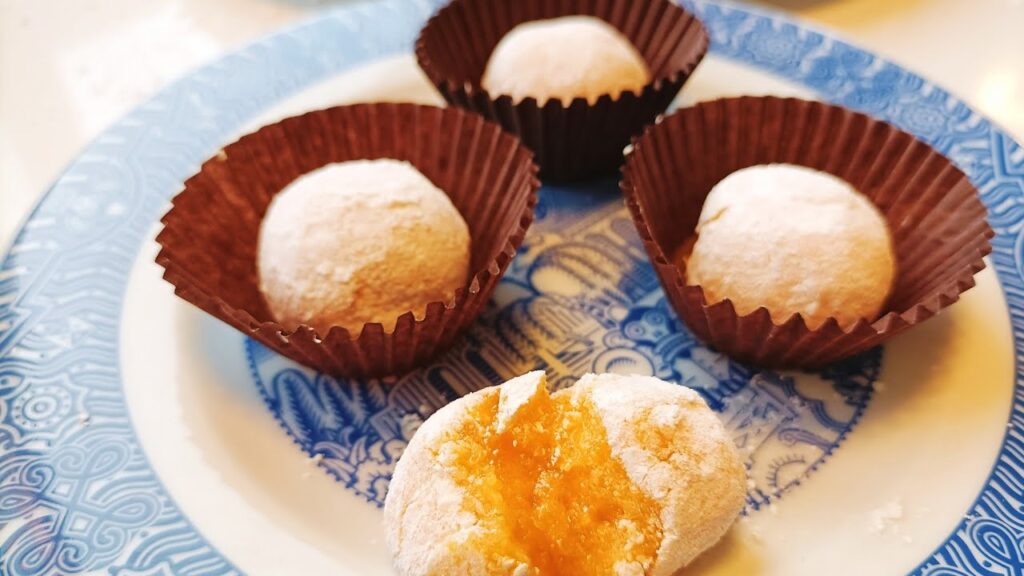
Photo of Yemas del Tajo
Food, of course ! But not just any food, products that carry the landscape within them.
Payoyo cheese is one of the region’s most distinctive specialties. Made from goat and sheep milk, it reflects the pastoral traditions of the surrounding mountains. Its texture and flavor vary depending on maturation, but it always retains a strong sense of place.
Yemas del Tajo are small, delicate pastries made primarily from egg yolk and sugar. Rich without being heavy, they belong to a long tradition of convent sweets, where simplicity meets precision.
Olive oil is perhaps the most essential souvenir. Produced locally, it ranges from smooth and buttery to more intense and peppery. It is less a product than a staple, a direct expression of Andalusia’s agricultural identity.
Turrón, with its mix of almonds and honey, offers a more festive note. Easy to carry, it makes for a familiar yet authentic gift.
Finally, local honey and jams, often produced in the surrounding mountains, capture the flavors of wild herbs and seasonal fruits. Each jar feels slightly different, shaped by the landscape it comes from.