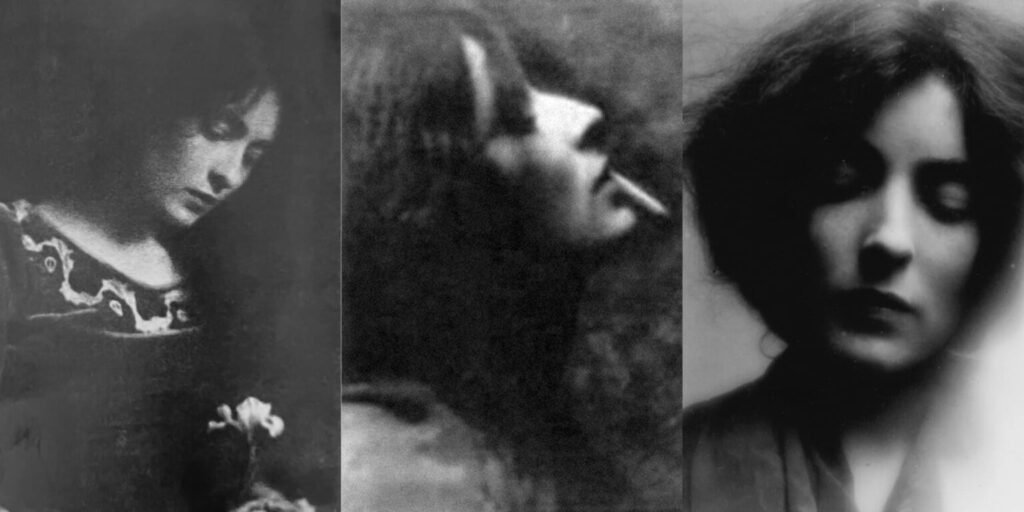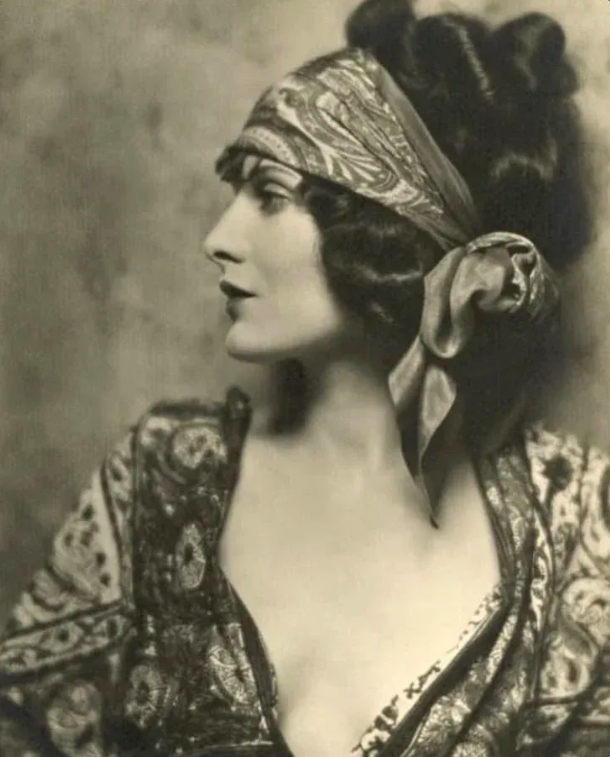
R.I.P. Mina Loy, you would have loved “Female Rage”
Kate and I stumbled upon her name in a hidden Parisian perfumery, but Mina Loy is more than a vintage aesthetic : she is a psychological riot. Painter, poet, and “absolute queen”, Loy’s life was an uncompromising dissection of the human condition. Today, we step into the “cerebral-sensitive” world of the woman who defined modernity before the world was ready for it, proving she isn’t just a historical figure; she’s a contemporary mood.
The Making of a Rebel
Born in 1882 in London to an English mother and a Hungarian father, Mina Loy grew up in a rigid Victorian environment she would spend her life intellectually dismantling. Sent to study art in Munich and later in Paris, she quickly distanced herself from academic conventions, drawn instead to radical, avant-garde circles. From early on, she resisted domestic expectations and the suffocating codes imposed on women of her time. That instinctive rebellion, quiet at first, then ferocious, would become the foundation of both her poetic language and her radical feminist vision.
The Serendipity of the Scent
Every great story begins with a secret. For Kate and me, Mina Loy didn’t come from a syllabus, but from the evocative storytelling of a perfumer in Paris. We won’t reveal the house just yet (stay tuned to Osé for that sensory detour), but that single conversation opened a door to what can only be described as an extraordinary life.
Once we began pulling the thread, we realized how elusive Loy remains. Her work feels like a treasure hunt. What we’ve been devouring isn’t a traditional monograph, but a recueil, a constellation of fragmented, electric texts gathered in French and published by the house NOUS. Paradoxically, though Loy was British and wrote her most visceral work in English, this curated body exists more visibly in translation. Aside from a few scattered PDFs, this “absolute queen” remains almost ghostlike in her own language, waiting, -perhaps-, for a digital-age resurrection.
1917: The Original “It-Girl”
In his profound preface to “Manifestes féministes et écrits modernists”, Olivier Apert poet, translator, and one of her most devoted contemporary readers, highlights a striking moment in cultural history. On February 17, 1917, the New York Evening Sun posed a question: “If Mina Loy is not the Modern Woman, who would be?”
The answer still stands. She is.
Loy moved through the avant-garde constellations of Futurism in Florence and Dada in New York, yet she was never merely orbiting them. She was the gravitational force. Not a muse, but a nucleus. Today, her image and her words feel uncannily current, as if written in anticipation of our own contradictions.
The Absolute Queen of Psycho-Demolition
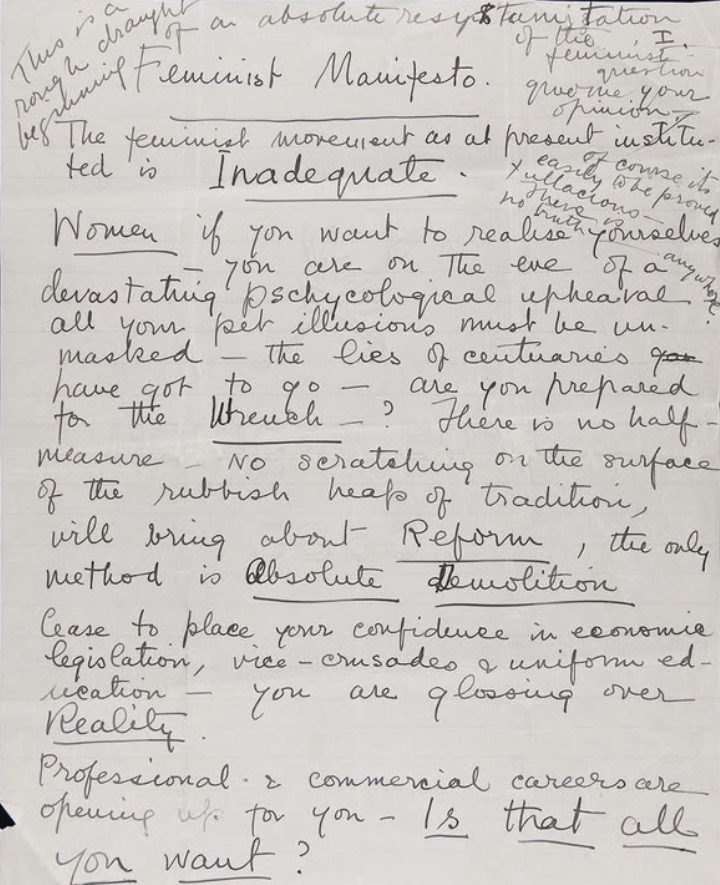
Loy’s feminism was lightyears ahead of anything we now flatten into “empowerment”. While suffragettes were fighting for the vote, she was calling for something far more radical: a total psychological upheaval. She had no nuance, if you will.
In her Feminist Manifesto (1914), she writes: “Women, if you want to realize yourselves, you are on the eve of a devastating psychological upheaval”. She dismisses equality as a “pathetic war-cry”. To her, aspiring to equality meant aspiring to imitation, replicating the very structures that confined women.
Instead, she proposes rupture.
She identifies three grim survival strategies available to women within existing social codes: parasitism, prostitution, or negation. None are liberating. All are symptoms. And yet, she refuses shame, particularly around the body.
This is not reform. This is demolition.
The “Cerebral-Sensitive” Architecture
What makes her work so arresting is what Apert calls her “cerebral-sensitive” nature. Her writing unfolds like a surgical theatre where emotion and intellect coexist in friction, never resolving, always exposing.
She dissects experience. She doesn’t simply feel pain; she studies its mechanics. She doesn’t merely desire; she interrogates desire. This duality, intensity sharpened by analysis, allows her to turn irony into armor, sarcasm into method. Beneath it all lies an indomitable will: to see clearly, even when clarity wounds.
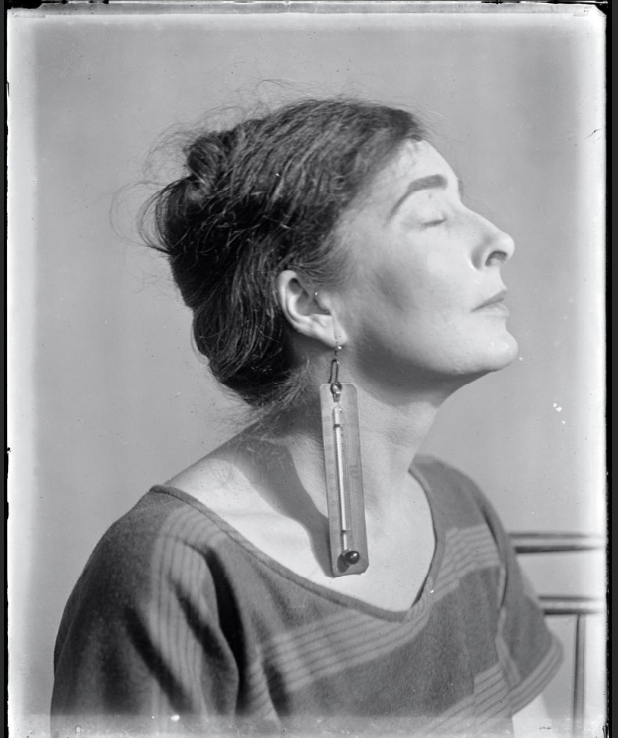
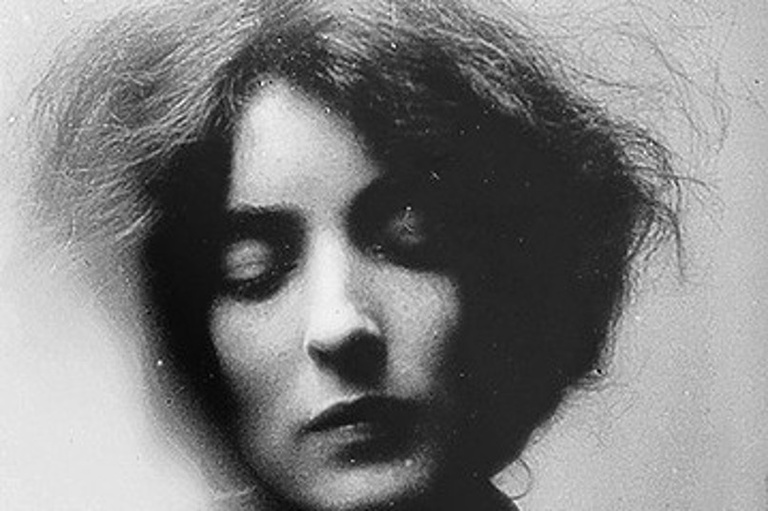
Mina Loy by Man Ray
Writing Desire, Writing Rupture
Her poetry arrives in fragments, elliptical, sensual, and often disorienting. In Songs to Joannes (1917), she collapses romantic illusion into psychological exposure: “Love is a preoccupation / with the self.” Desire, in Loy’s world, is never pure; it is layered, fractured, and intensely self-conscious. This same fragmentation informed her visual art, where she translated the Avant-garde spirit into surrealist paintings and intricate collages made from the debris of the city.
With Lunar Baedeker (1923), her language becomes almost metallic, mapping emotion onto a modern, disjointed landscape. Words feel sculpted rather than written sharp, luminous, and deliberately unstable. This tactile sensibility was not confined to the page; in her later years, Loy turned to practical craftsmanship, designing surrealist-inspired lampshades and glass light fixtures. These objects were more than just decor; they were an extension of her “Lunar” aesthetic, manipulating light and shadow to transform the domestic space into a site of artistic experimentation. Whether through a pen or a soldering iron, Loy remained a relentless architect of the new.
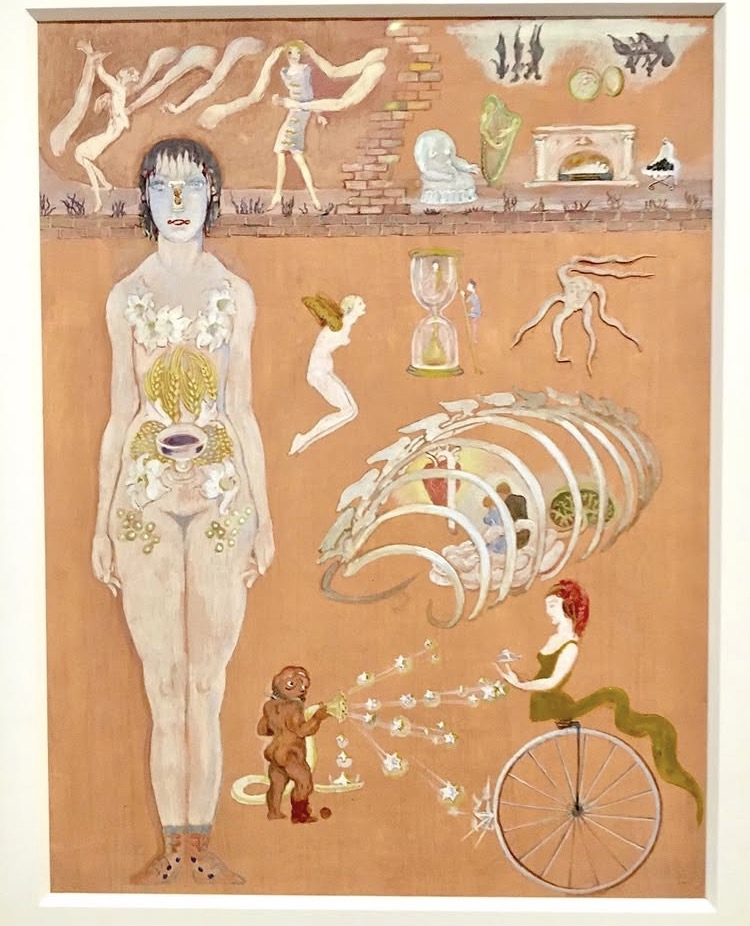
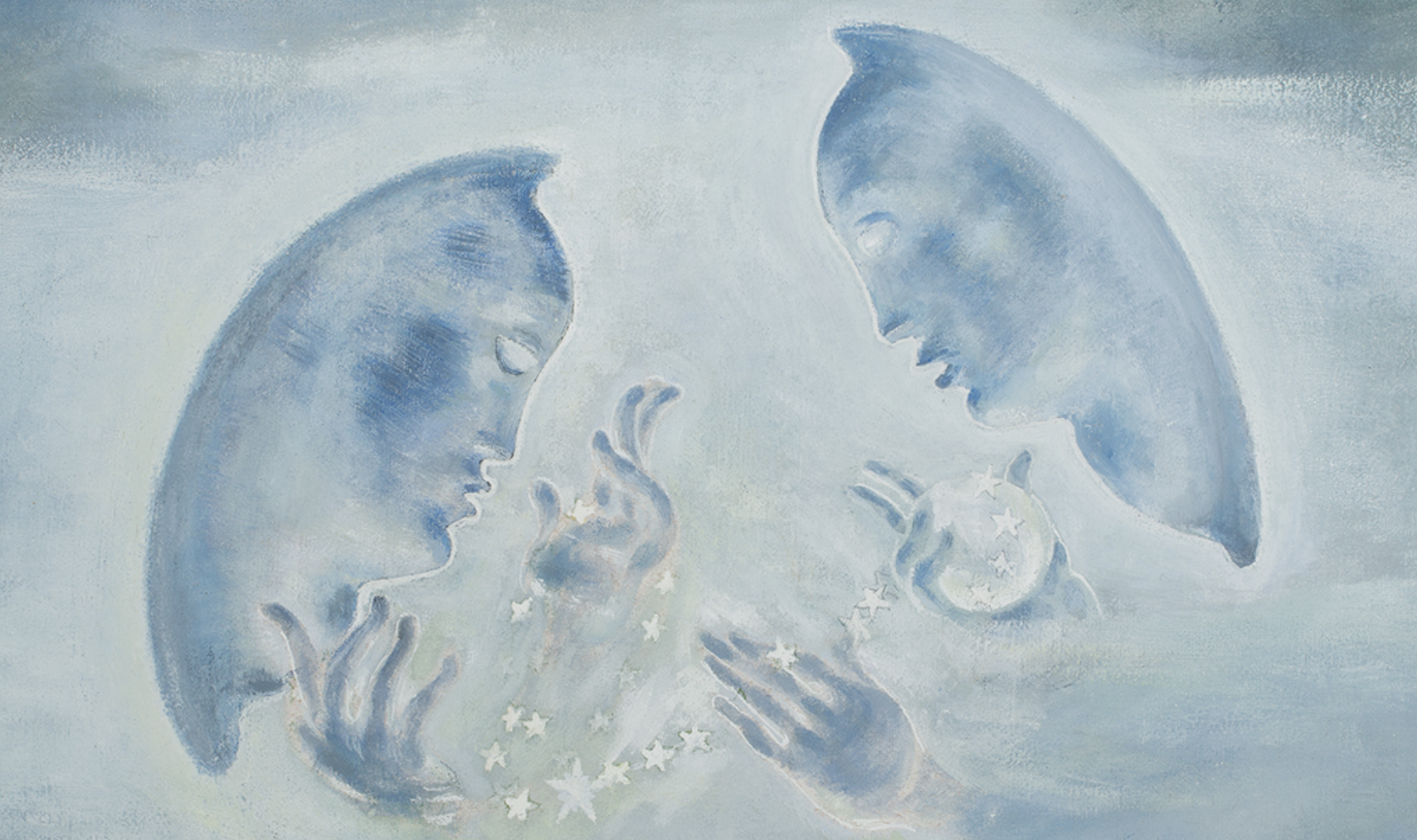
Paintings by Mina Loy
Arthur Cravan: The Drama of a Lifetime
To understand the shadow running through Loy’s work, you have to confront the ghost of Arthur Cravan. Two meters tall boxer, poet, provocateur, “dadaist“, Cravan was her improbable, explosive love.
Their relationship was less a romance than a collision. Fleeing conscription during World War I, they found themselves in Mexico, living in a state of precarious, almost mythic intensity. Then, in 1918, Cravan vanished at sea.
He never returned.
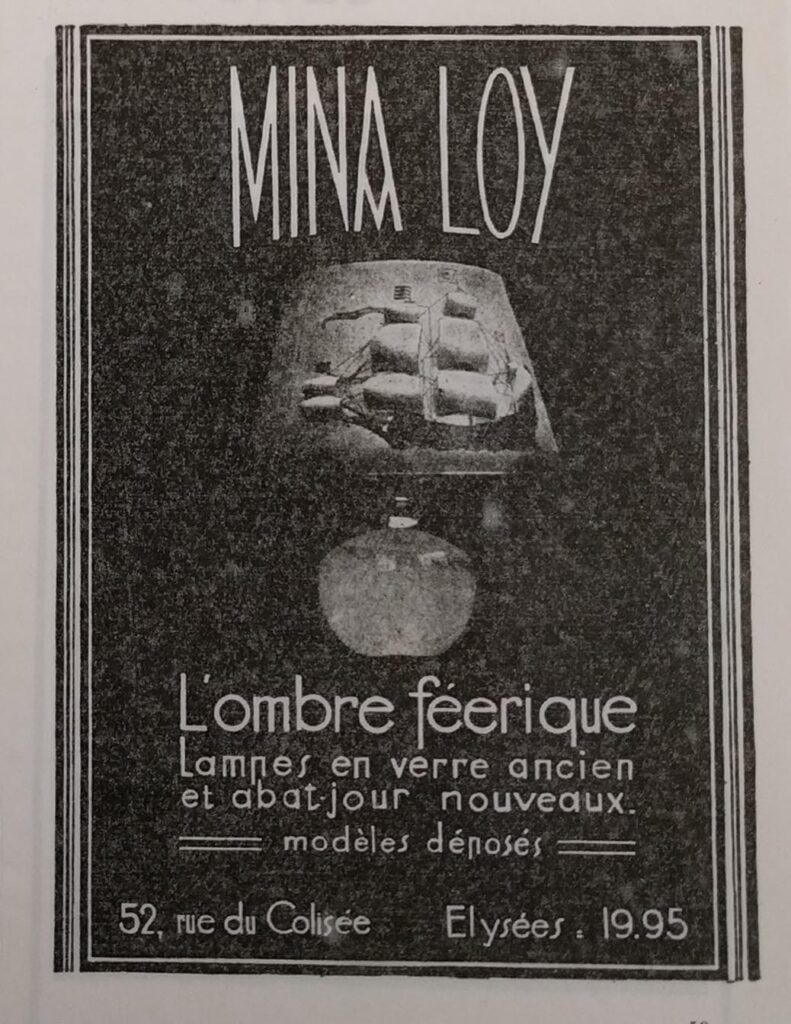
Even in her creations (here a lampshade), Arthur Cravan’s ghost & his boat are ubiquitous
That disappearance became the defining fracture of Loy’s life. For years, she searched for him, in crowds, in strangers, gossip all around the world, in memory. Grief, for her, was not an emotion but an excavation. A new terrain to dissect.
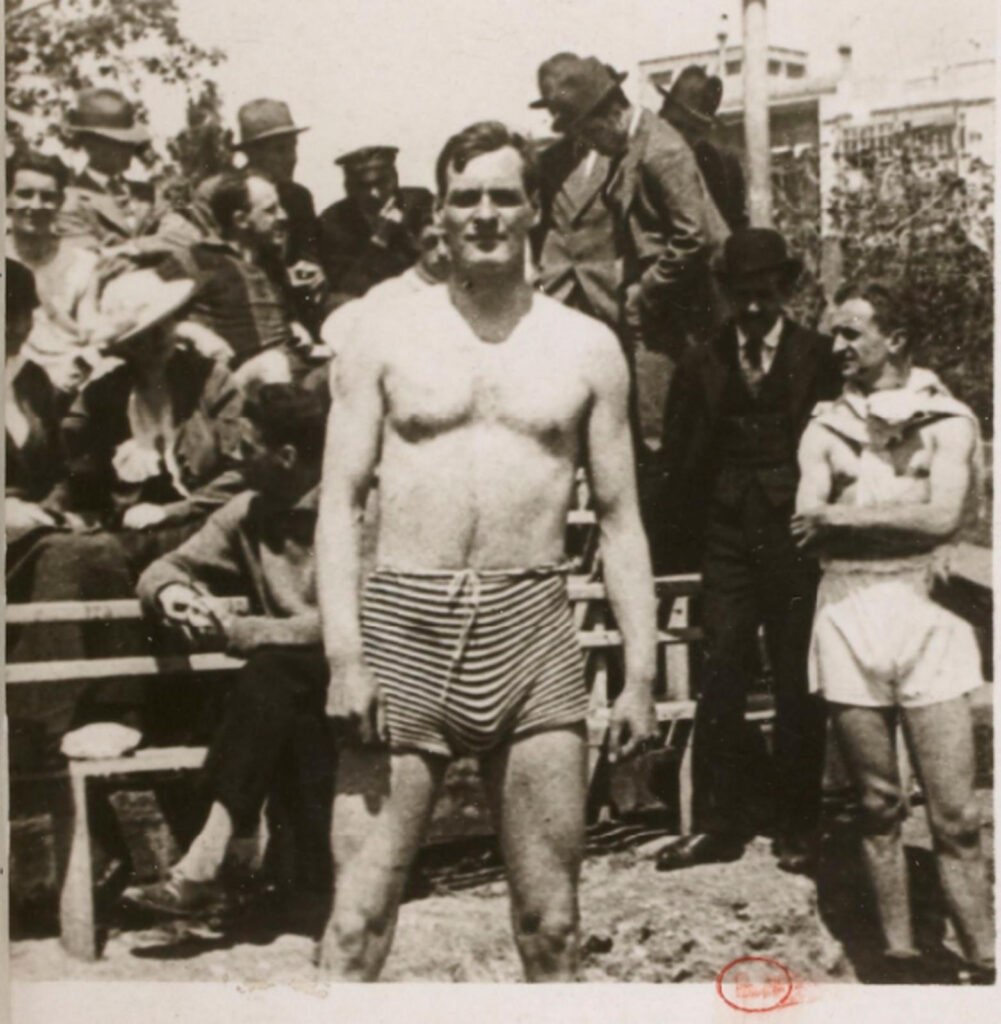
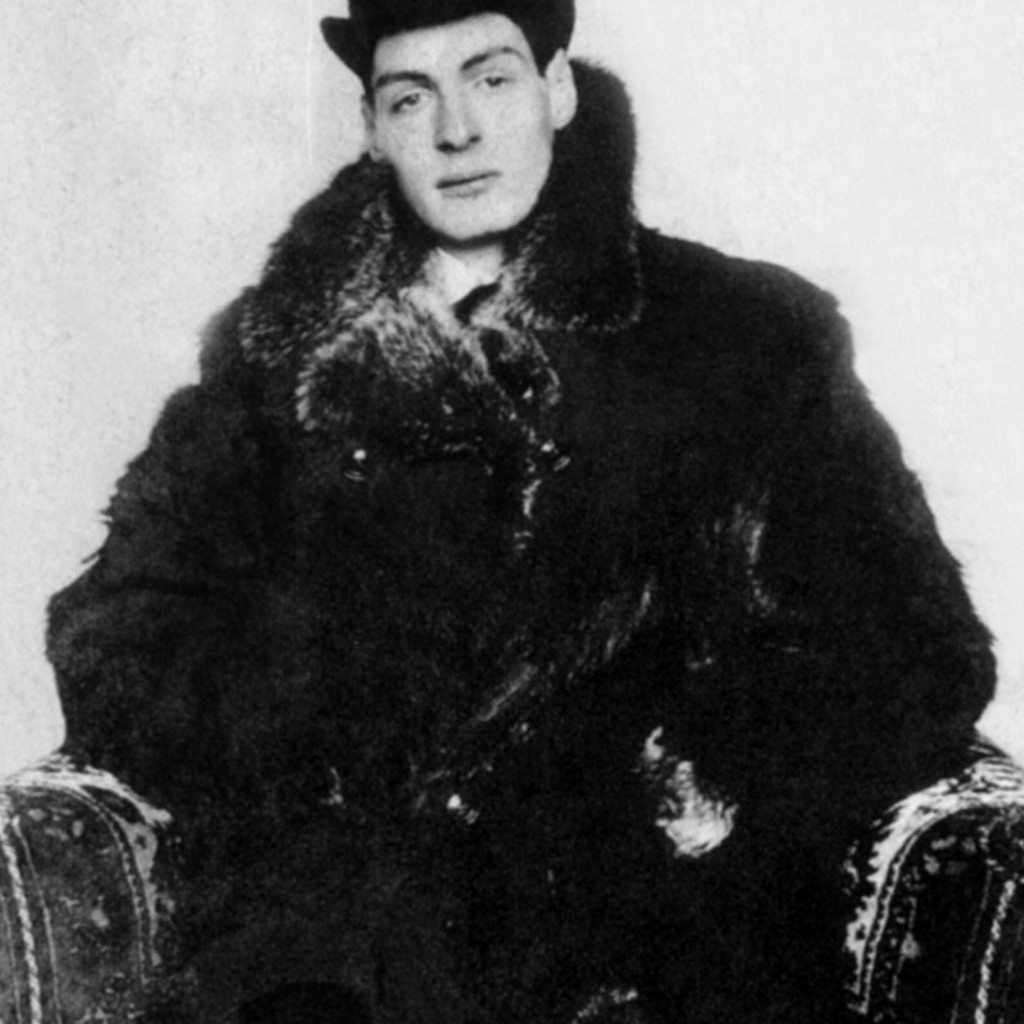
Arthur Cravan, her “Colossus”
The Silence: From New York to Aspen
Why does she remain so elusive? Perhaps because Loy understood something most artists don’t: when to withdraw. In 1936, she receded from public life in New York. By 1953, she had retreated to Aspen, Colorado, a near-mythic isolation. There, she lived out her final years, increasingly doubtful of the reach of her own work. A woman of fierce clarity and “abundance born of solid nerves,” she chose distance over recognition, silence over dilution.
By rediscovering her today, we are not simply revisiting a forgotten modernist. We are encountering a blueprint, one that refuses compromise, rejects imitation, and insists on something far more demanding: absolute lucidity.