Eternal Flame: Why Heirloom Cookware is Dominating Modern Kitchens
In an era of planned obsolescence and fast-paced living, the kitchen has become a sanctuary for durability. Once considered heavy and old-fashioned, brands like Le Creuset and Staub are seeing a massive resurgence among younger generations. Driven by a mix of “cottagecore” aesthetics, a desire for sustainable living, and a serious interest in culinary precision, these heavy-duty icons are no longer just tools, they are investments in a lifetime of flavor.
The Revival: Why Now?
The “comeback” of classic cookware is fueled by three main pillars: sustainability, social media, and health. Consumers are increasingly weary of the chemicals found in cheap non-stick coatings, particularly as those coatings degrade and end up in the food chain. This has sparked a “return to nature”, prioritizing materials like cast iron, carbon steel, and ceramic.
Simultaneously, platforms like Instagram and TikTok have turned a colorful Le Creuset Dutch oven into a status symbol, a “functional centerpiece” that looks as good on a dining table as it does on a stove. Above all, there is a growing appreciation for the “slow food” movement. After years of microwave meals and takeout, people are finding joy in the ritual of a long braise or a slow-simmered stew, which requires the superior heat retention and distribution that only these heavy-hitting heritage brands can provide.
Le Creuset (France): The Icon of Enamel
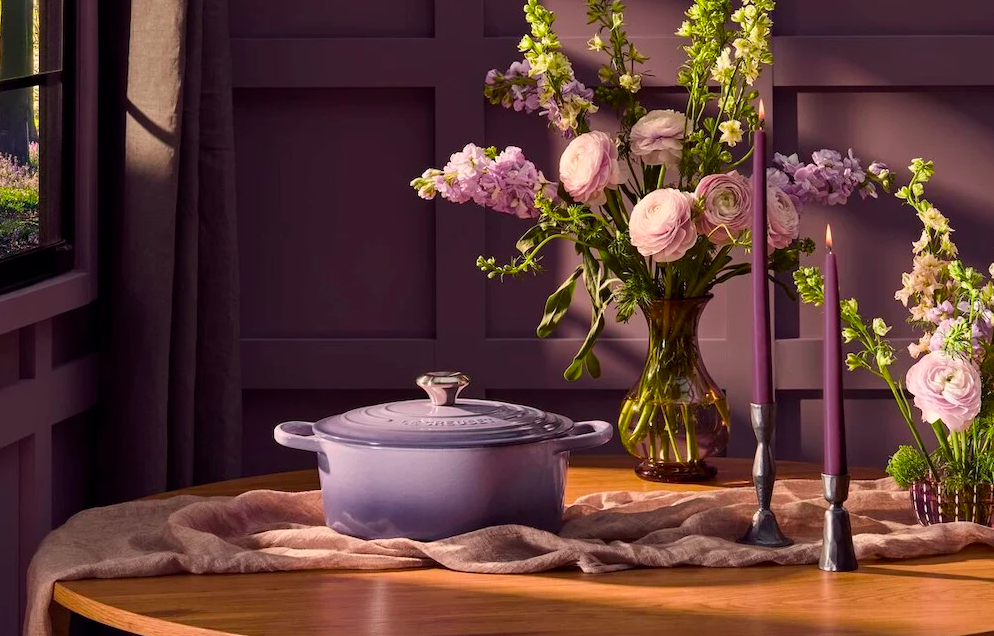
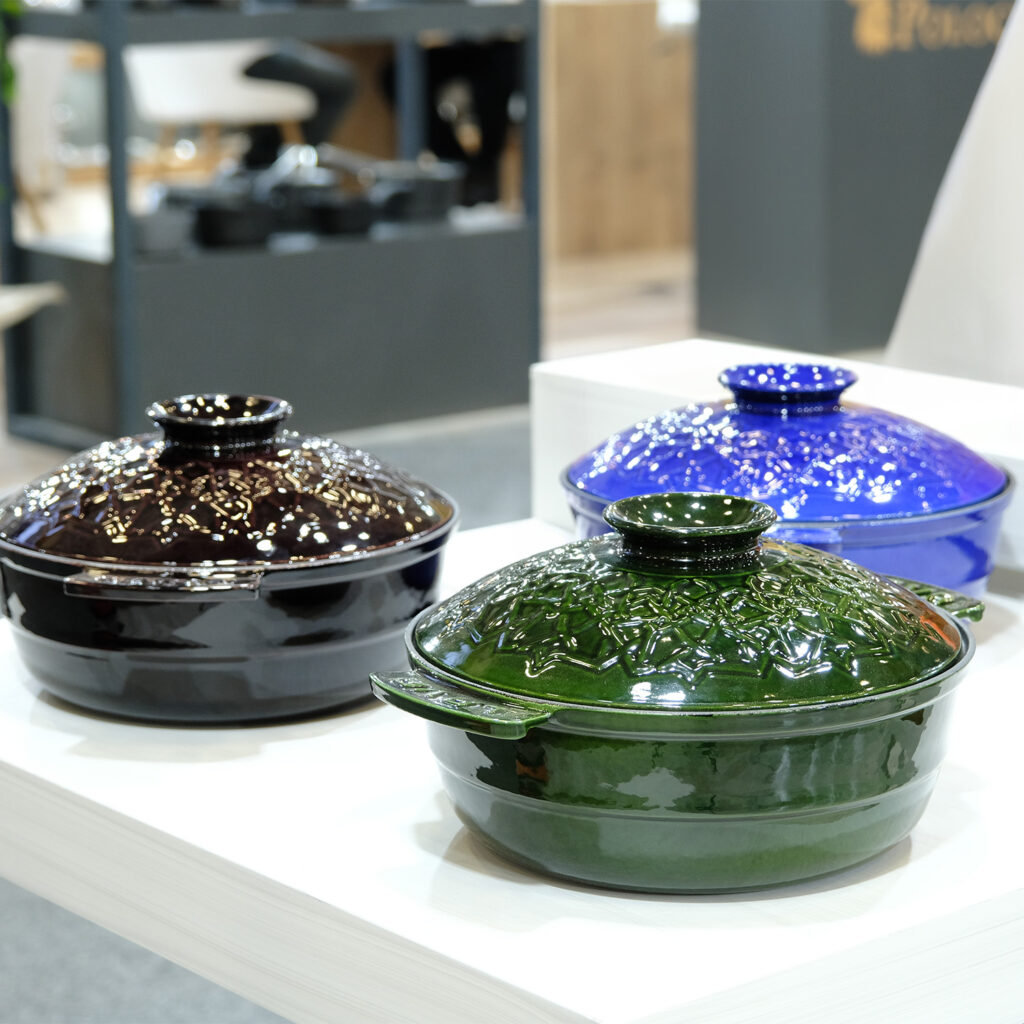
The undisputed king of colorful enamel, Le Creuset has been a staple of French gastronomy since 1925. Founded by two Belgian industrialists, one a casting specialist and the other an enameling expert, they perfected the art of glazing cast iron. Their signature “Volcanique” (Flame) orange was inspired by the glowing hue of molten cast iron inside a cauldron. They never stop reinvent themselves though, proof with this new Provence collection (cover image), absolutely breath taking.
The Appeal: Its versatility is unmatched; it can transition seamlessly from the stovetop to the oven to the center of the dining table. The light-colored interior enamel also makes it easy to monitor the browning (fond) of your food, preventing burning.
Average Price: €250 – €350 / $280 – $400 (for a standard 5.5qt Dutch Oven).
Staub (France): The Chef’s Choice
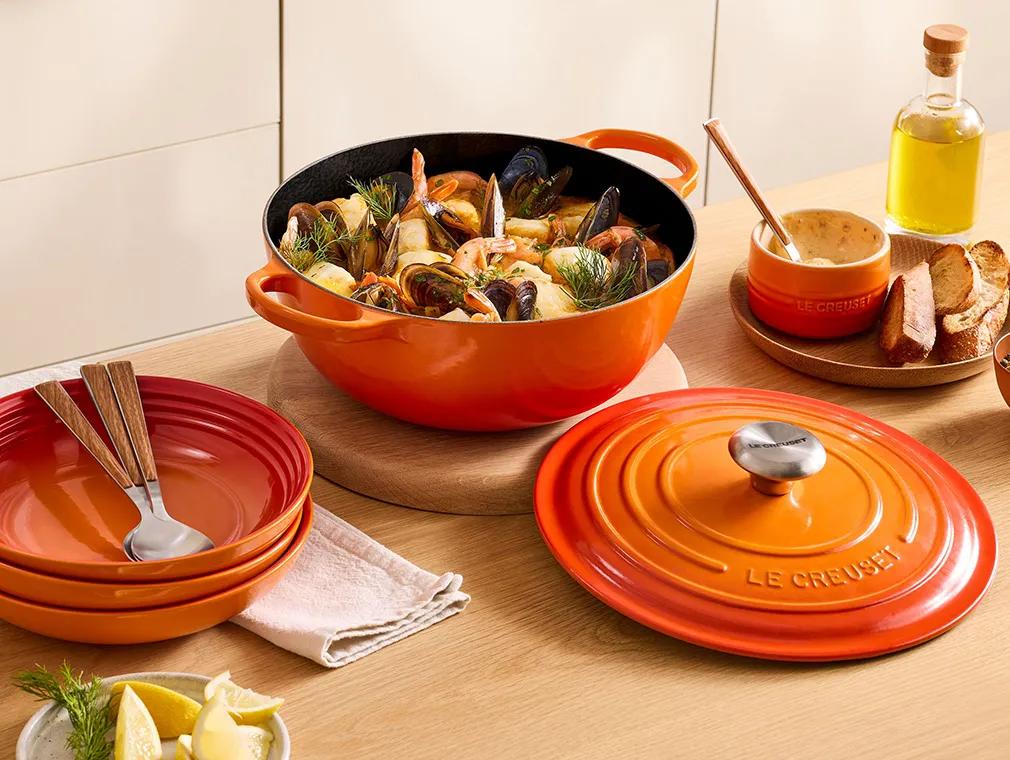
Born in Alsace, a region famous for its hearty stews and “Choucroute,” Staub is often the preferred choice for professional chefs. While Le Creuset is known for its bright colors, Staub is recognized for its “majolica” enameling technique, which creates a deep, intense shine and a more industrial, moody aesthetic.
The Appeal: The secret is in the lid. Staub lids are flat and heavy, featuring “picots” (small spikes) on the underside that create a continuous rain-effect, self-basting the food. The matte black interior is also slightly textured, which allows for better searing and fat-release than smooth enamel.
Average Price: €230 – €320 / $250 – $380.
Ballarini (Italy): The Italian Workhorse
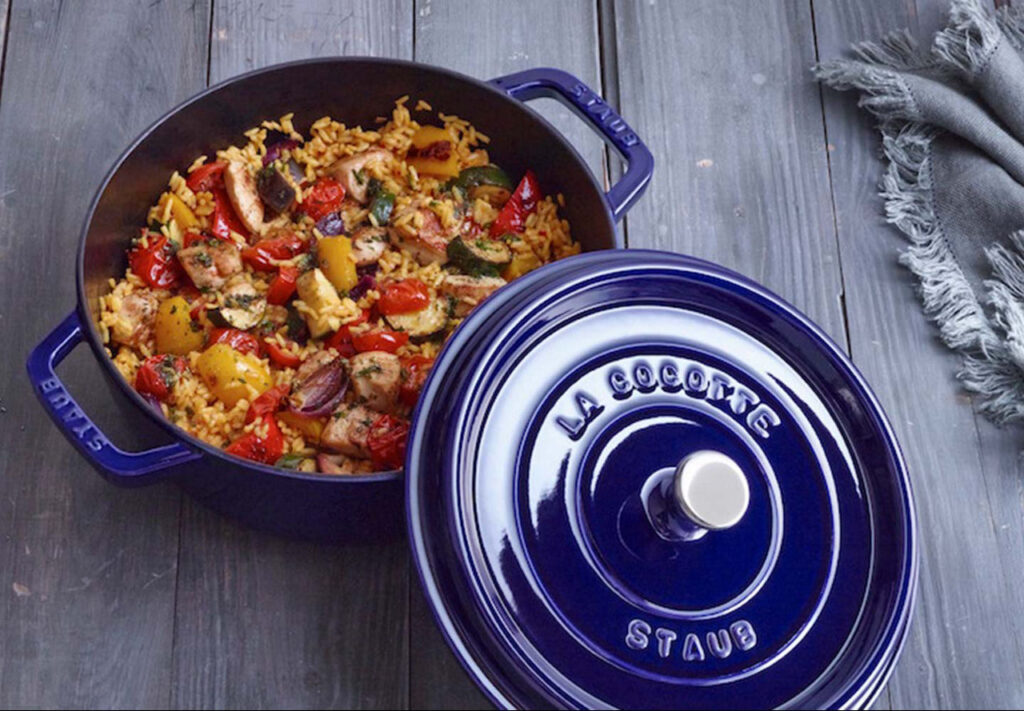
Hailing from Rivarolo Mantovano since 1889, Ballarini represents the Italian heritage of aluminum and non-stick excellence. While the brand is a giant in modern production, its “heritage” feel comes from its deep roots in the Italian “Cucina” culture, where durability and ease of use for family-sized meals are paramount.
The Appeal: They are the masters of the “Thermopoint” sensor, which tells you exactly when the pan is hot enough to cook. Ballarini is the go-to for those who want the prestige of European manufacturing but require a lighter, more agile pan for tossing pasta or flipping delicate frittatas.
Average Price: €60 – €120 / $65 – $130.
River Light (Japan): The Carbon Steel Master
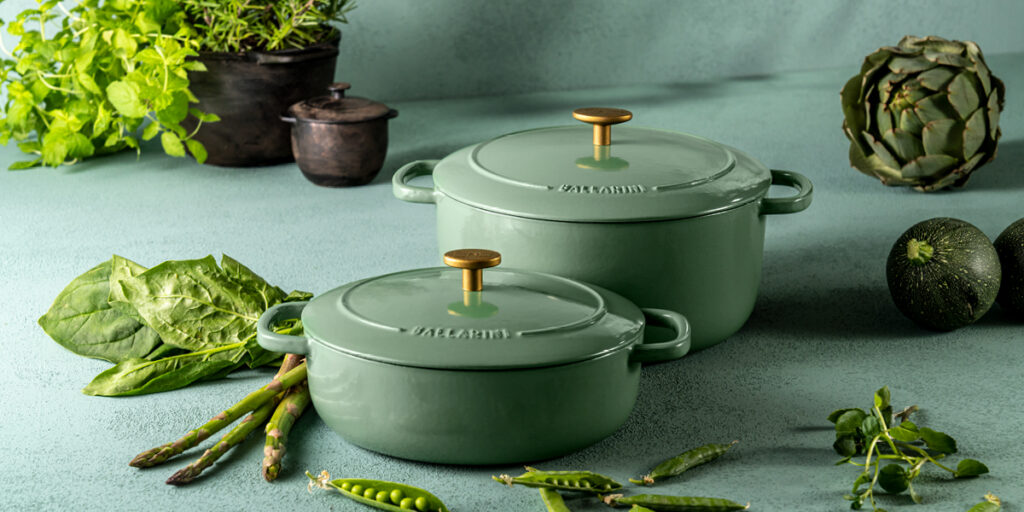
To round out the list with an Eastern perspective, River Light represents the pinnacle of Japanese metalwork. Based in Chiba, they are world-renowned for their “Kiwame” (meaning “Extreme”) line of carbon steel pans, which are a favorite among stir-fry enthusiasts and professional chefs.
The Legacy: Unlike standard iron, River Light uses a “nitriding” process, originally developed for airplane engines, to treat the steel. This makes the pan virtually rust-proof and incredibly hard, without the need for chemical non-stick coatings. It offers the lightning-fast heat response of a wok in the form of a classic frying pan, allowing for a “wok hei” (breath of the wok) flavor even on a standard stovetop.
Average Price: €90 – €150 / $100 – $160.
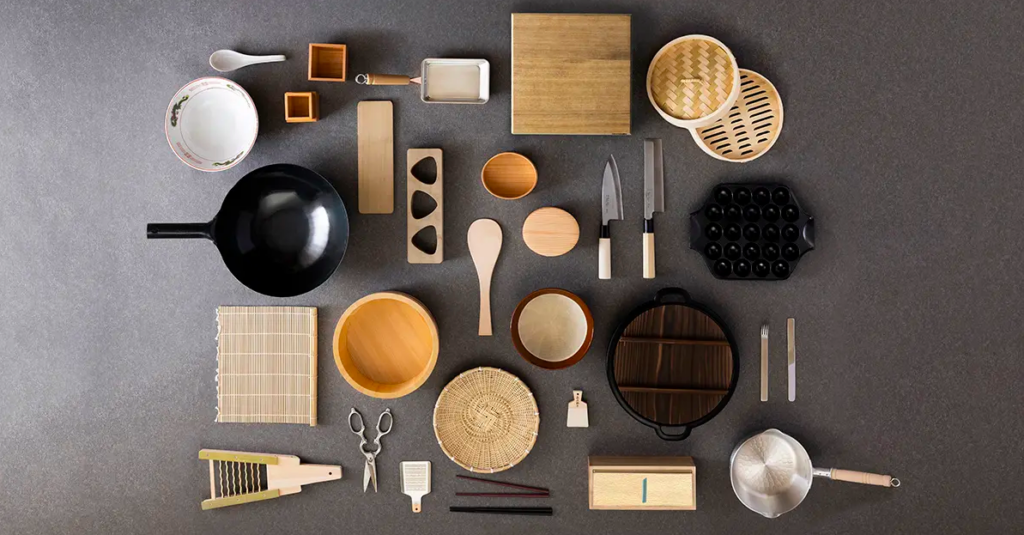
Hagen Grote (Germany): deutsche qualitat
Hagen Grote is more than just a brand; it is a curator of culinary excellence. Based in Germany, they focus on “Product Intelligence,” ensuring that every piece of cookware solves a specific problem. Their lines often blend the traditional aesthetics of German kitchens with modern metallurgical advancements.
The Appeal: They specialize in high-performance materials like multi-ply stainless steel and copper cores. For a cook who values German precision, Hagen Grote offers tools that provide extremely even heat distribution, eliminating “hot spots” that can ruin delicate sauces or pastry components.
Average Price: €100 – €250 / $110 – $270.
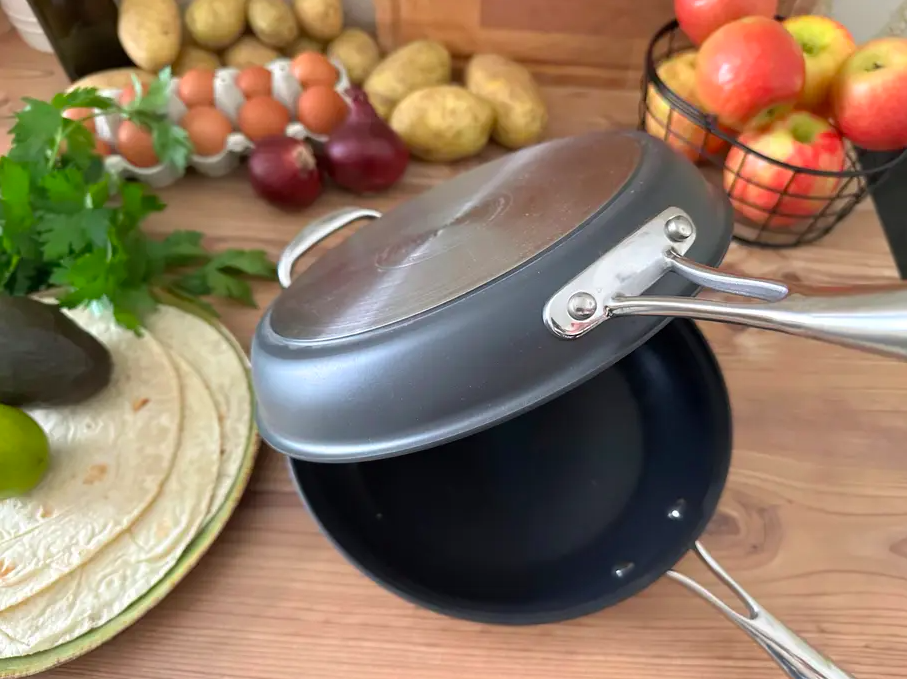
Lava (Turkey) : Modern Cast Iron
Lava brings forty years of experience in high-tech casting and enameling from their state-of-the-art facilities in Turkey. They have successfully bridged the gap between artisanal quality and modern manufacturing, offering heavy-duty cast iron that meets international standards of durability and food safety.
The Appeal: Lava is praised for its modern, sleek silhouettes and the quality of its “Electro-phoresis” enameling technology, which ensures a coating that is incredibly chip-resistant. It provides the heavy-duty performance of French cast iron at a price point that is accessible to the burgeoning home chef.
Average Price: €80 – €180 / $90 – $200.
Discover the Exhibit
Our celebration of young and incredibly talented Chinese artists. Their artworks will be available for viewing all throughout the spring season as we usher in the New Year.
The Year of the Fire Horse


Xie Shiyi
03
DANLI MA
02
Huang Wang
01
Li xueer
04
CHENJIAN BOWEN
05
Yu Liu & Lief
06
Bella
07
ZHANGZHIWEI
08
Li Zihong
09
Discover the Artists
Osé Digital Art Gallery
Enjoy our Spring Feature Exhibition
Have a story to tell? We'd love to hear it. Let’s begin with a simple note.
And everywhere in between
Paris to Casablanca