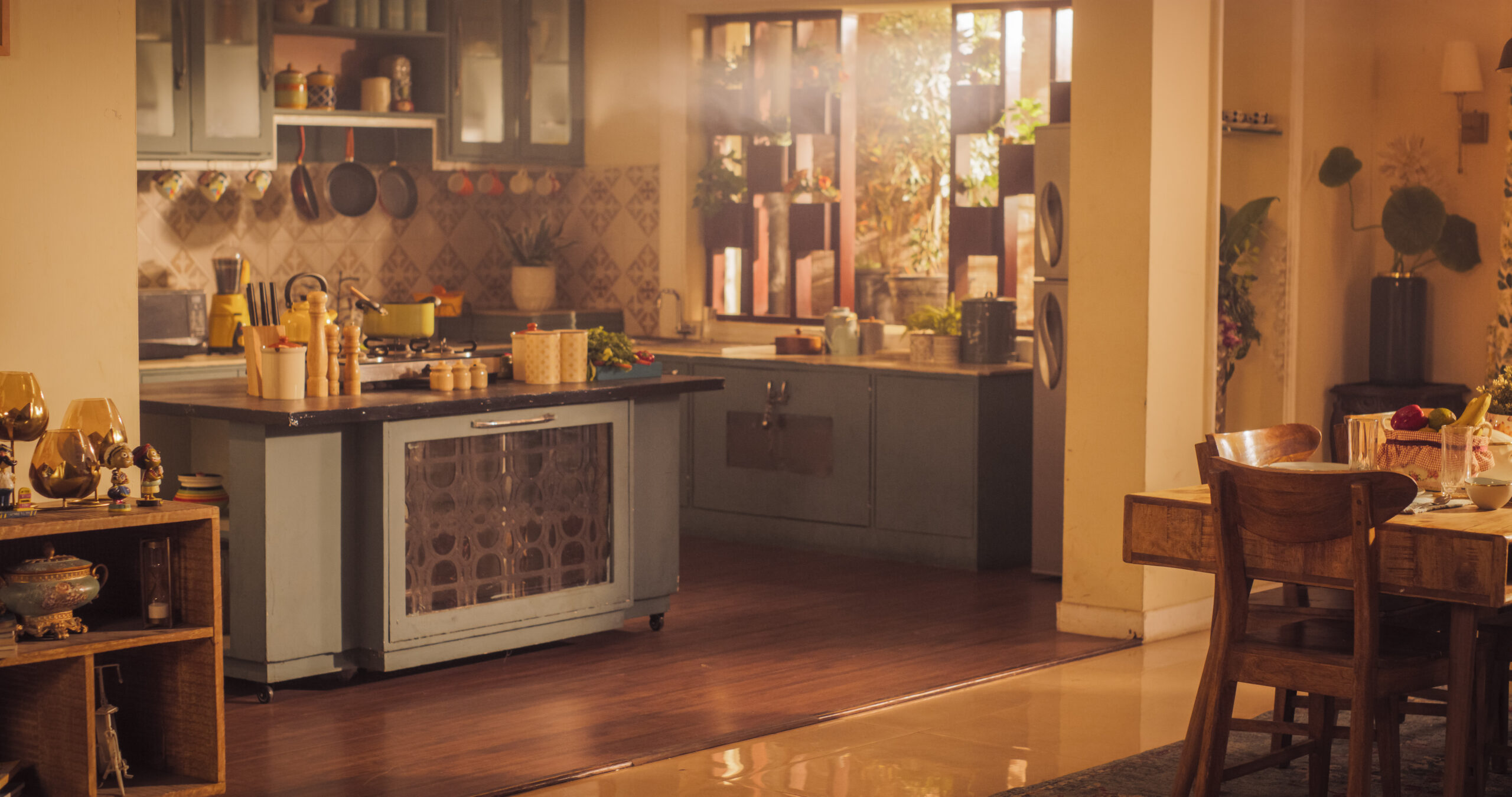
What My Childhood Kitchen Taught Me About Life, Womanhood and Connection
As an only child who grew up with my maternal grandparents close by her side, I spent many days and nights in the kitchen. Whether it be with my mom or my grandma, cooking and baking were a time for fun, festivity, tradition and being together.
Growing up in a family of strong working women, being in the kitchen was never about teaching me my duty or place as a woman but more about solace from the responsibilities of everyday life, at least from my little girl perspective. My mom, the baker of the family and the one with a degree in science, was all about the precision of baking. She loves making a recipe her own, precise measurements and weights, spending time working a dough or multi-tasking different batches of confections. My grandmother, a bit more like myself, was a high heat, improvisational, use every pot and pan in the kitchen kind of chef who employed the likes of anyone to help clean up the inevitable (huge) mess she made.
Both these experiences shaped me into the “chef” and person I am today. Whether it be precision or chaos or high heat or low and slow, each moment I spent with these women in the kitchen left a lasting impression and sometimes a permanent mark, literally, on my hands, heart and soul.
Coordinated Chaos: High Heat, Multi-Tasking and Timing are Vital Skills
If there is one thing at my age I still hear from my mother it’s “You’re just like your grandmother. You always have to cook on high!”. Damn right! As any professional chef will tell you, high heat is the best heat. Want to sear the perfect steak in your cast iron? Screaming hot pan is the recommendation. My grandmother probably didn’t know the benefits of the Maillard reaction when getting brown and flavorful food (maybe she did, I never asked), she just did what she thought was best and that was, crank the heat up. Maybe we are both impatient humans and just wanted the food to be ready faster. Maybe we are both the type that like a little chaos and pressure in life and in the kitchen, thus we turn the heat up to keep us on our toes. Whatever the reason, the benefit of high heat in both the kitchen and in life, give things their flavor. For better or worse, a high heat life will lead you to some unexpected and delicious places despite the number of dinners you have burned in the process.
As any good cook knows, multi-tasking and timing are essential to the process of cooking. Knowing when to start steaming the asparagus once the steaks are on and how much longer the potatoes need before they are perfectly cooked. A seasoned “chef” knows how to coordinate the chaos, and just by the smell of something, when it’s ready. For my mother, this is an artform. One quick sniff in the air and she knows whether a batch of her pillow soft chocolate chip cookies need 2 more minutes or they are perfectly cooked. I inherited this nose and can tell you when broccoli has that perfect crunch or when the rice needs a few more minutes. Much like in cooking, knowing the divine time of when to put your pasta in to boil and how to develop the perfect sauce, life follows the same multi-tasking dance, although we don’t always have the perfect nose for when things are fully cooked or burnt to a crisp. Honing in on those skills helps you to develop your understanding of divine timing, knowing when to walk away and how to scrap the whole meal and order take out because it’s just one of those days.
Connection and Tradition: The Two Best Love Languages Around
My family and I have a Christmas tradition of making povitiza, a time consuming and intricate croatian bread. One Christmas in an attempt to explore my Mexican roots, I convinced my mayonnaise white mother and grandmother to make tamales with me in addition to our normal povitiza and Christmas cookie baking fest. I’ll let you in on a secret I didn’t let my mom in on for years, I hate tamales (and povitiza). It’s something about the masa to meat ratio that even the best tamale has yet to change my mind about. That Christmas my mom, grandma and I sat there and made hundreds of tamales, I ate three. You might think we stopped there because, why would you continue making these things you dislike so much? Well no, every Christmas after that until I moved to Barcelona (and beyond) we spent hours in the kitchen, sharing stories, working the masa mixture, stretching sweet dough out across the table and crying from laughter when comparing tamale sizes (my grandma’s always looked like Cuban cigars) or blaming each other for punching holes in the povitiza dough (definitely never me). That was the point of these tedious tasks, the laughter, the togetherness, the stories, the true connection that comes from three women cackling, hunched over a table making food for no one but themselves to enjoy.
Fractions: The Best Math Lesson a Creative Can get
Less metaphorical and more literal, cooking is how I learned a large portion of my math skills. Weighing out ingredients on scales is reserved for European families who cook with precision and the metric system. In the US we use cups, teaspoons, tablespoons, ounces and cans. No perfect variables of 10. I needed to be able to half or double a recipe with 2 ⅔ cups of flour or 2 ¾ teaspoons of baking powder. Long before a math teacher ever explained how to find the common denominator, I was a 3 year old baking hundreds of Christmas cookies with my grandma or baking a bunch of cupcakes with my mom for her colleagues. Those numbers and lessons stuck with me and made the transition to AP geometry much easier in my pre and early teenage years.
Creativity: Cooking as Creative Expression
Whether it’s cooking an amazing meal or baking the perfect cake, cooking is a creative expression. My favorite thing to do in the kitchen is to start with a recipe by gathering all the ingredients for it and then throwing the rest of the instructions out of the window. Easier done with cooking (as opposed to baking), it speaks to the desire to start with the inspiration and then throw the rules out the window and do whatever you want with what you’ve gathered. Spices, veggies, a dash of this or a pinch of that and all the way down to what plate you choose and how you choose to plate your dish is a creative choice. Sometimes the dish is a winner, consumed by loved ones around an impeccably dressed table, sometimes it’s a flop and devoured in front of the TV with your pajamas on and sometimes it’s a combination of the two. Baking is more akin to architecture, you have a defined set of rules, psychics and chemistry that you can’t deviate from. However, creativity with constraints sometimes creates the best artwork. Whichever you work with, it’s a lesson in how creativity is multifaceted and ever changing. Sharpening those skills only makes you a better artist, whatever your choice of media.
Food is Joy: Feeding People is Amazing
When your work in the kitchen is done, whether it’s a girl dinner or a holiday feast or anything in between, laying food out for your loved ones to consume brings momentary joy (when you’ve never had to do it as obligation). Seeing the looks on people’s faces as they begin to dig into whatever delicacy you’ve created is, what I imagine, a prima ballerina feels during a well deserved standing ovation, it just hits the heart in all the right places. Seconds and thirds are that scream for an encore for an adoring crowd, soaking up a sauce with a freshly baked loaf of bread is the laughter of an audience at just the right point in a film: it’s a full body feel good moment.
My mother and grandmother made it a point to make food fun for me from an incredibly young age: my mother often brags about the full spaghetti dinner I made at 3 years old. This has translated into us being in the kitchen together for most of my life, fussing at each other, laughing with each other and usually (although there have been some huge misses) making some great meals and even better memories together. Nothing has made me more grateful than being taught the joys of cooking by two strong, absolutely untraditional women and the time we shared together arguing over what temperature the stove should be.
May 21, 2026
Kate Tramposh
Beyond the end product, cooking teaches us more than how to produce a meal.
Have a story to tell? We'd love to hear it. Let’s begin with a simple note.
And everywhere in between
Paris, san Francisco, Casablanca
@2030 copyrighted | Osé OmniMedia SAS
Based in Paris | Available worldwide
hello@theosemagazine.com