Elliot Zontone: Swimming With Art
To read Elliot Zontone’s work is to witness a deliberate collision between the energy of the metropolis and the patient rhythm of the natural world. Raised between the cultural vibrancy of Paris and the contemplative landscapes of Saint-Émilion, the multidisciplinary artist has forged a creative language where painting is not merely a visual medium, but a deeply physical, almost choreographic experience. Infused with a background in product design, Zontone rejects the constraints of traditional frames to treat space, volume, and architecture as integral components of his art. From the raw, structured fragmentation of Cubism and the vivid liberation of Fauvist color to his immersive Art Splash projects, his monumental murals and unexpected swimming pool canvases invite viewers to step entirely inside his universe. Below, the artist opens up about his visceral relationship with matter, the global light that informs his vibrant palette, and the urgent desire to make art an interactive, living landscape.
Osé Magazine: You grew up between Paris and Saint-Émilion. What impact did this environment have on your artistic vision?
Elliot Zonetone: Growing up between Paris and Saint-Émilion gave me two very different but complementary worldviews. Paris brought me cultural vibrancy, museums, architecture, and a certain artistic openness. Saint-Émilion, on the other hand, taught me to observe the passage of time, the seasons, the landscapes, and the workings of materials. I think my work was born from this tension between the city and nature, between energy and contemplation.
OM: Your work seems very instinctive, almost physical. At what point did you realize that painting would be your language?
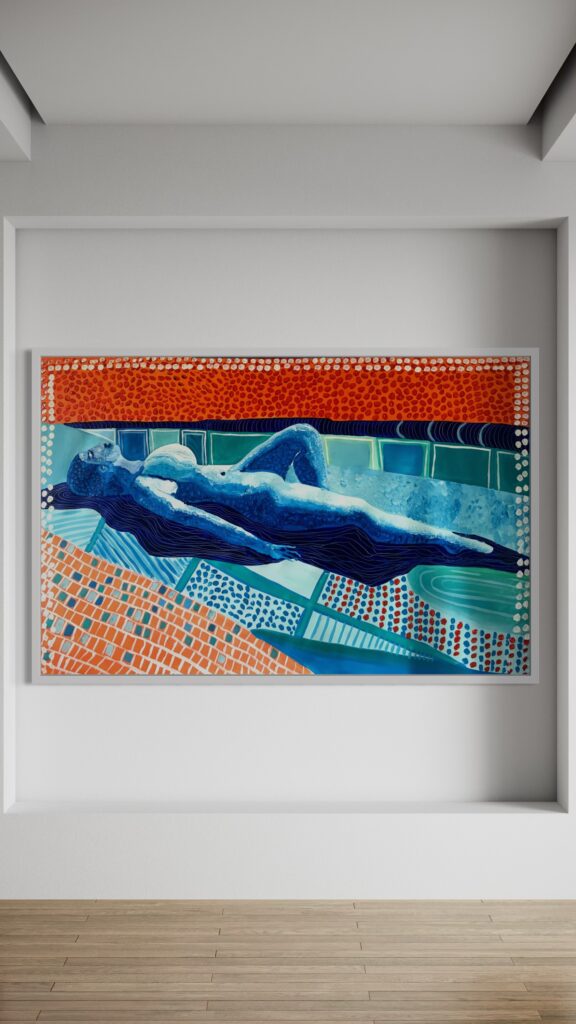
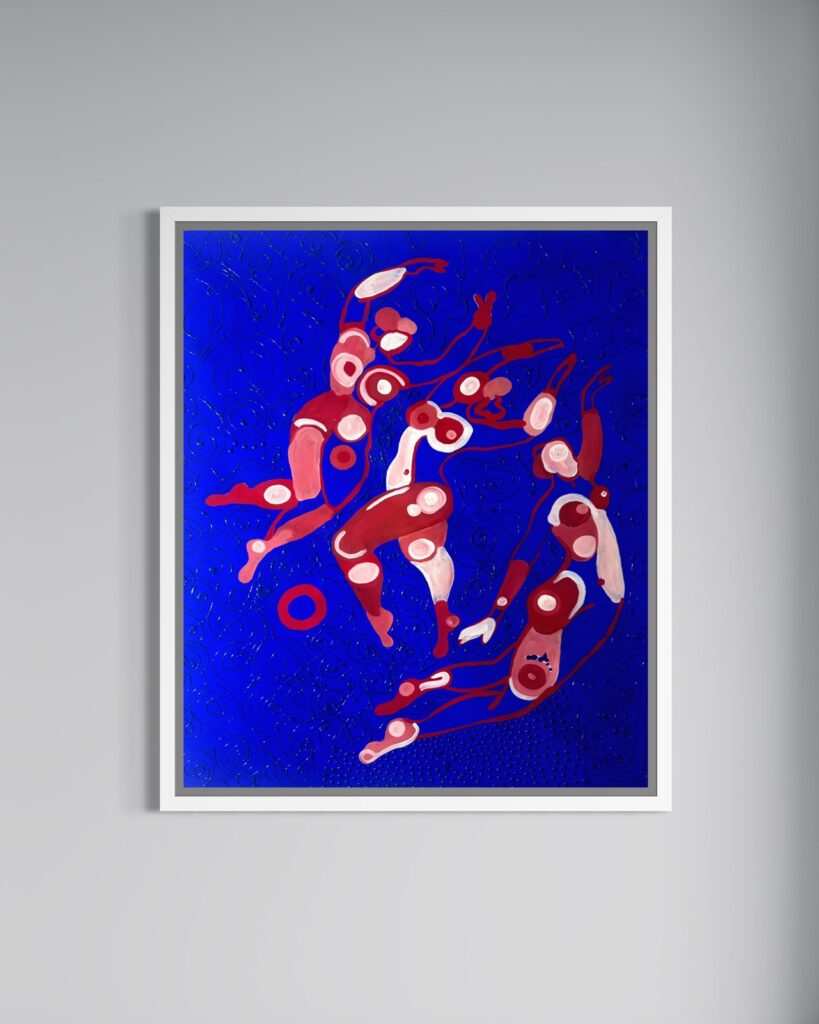
EZ: From a very young age, I felt the need to express myself through images rather than words. Painting has always allowed me to translate complex emotions that I struggled to verbalize. Over time, I understood that what fascinated me was not only the final result but also the act itself. Painting became a physical, almost choreographic experience.
OM: You have a background in product design in addition to painting. Does this approach to volume, space, and objects influence your art today?
EZ: Absolutely. Design taught me to think about a project as a whole and to consider space as an integral part of the work. Today, when I create a mural or a swimming pool, I don’t just think about the image but also about how people will experience it, move through it, or interact with it.
OM: Your works blend figuration, movement, fragmentation, and very vibrant colors. Which artists or universes have shaped your aesthetic?
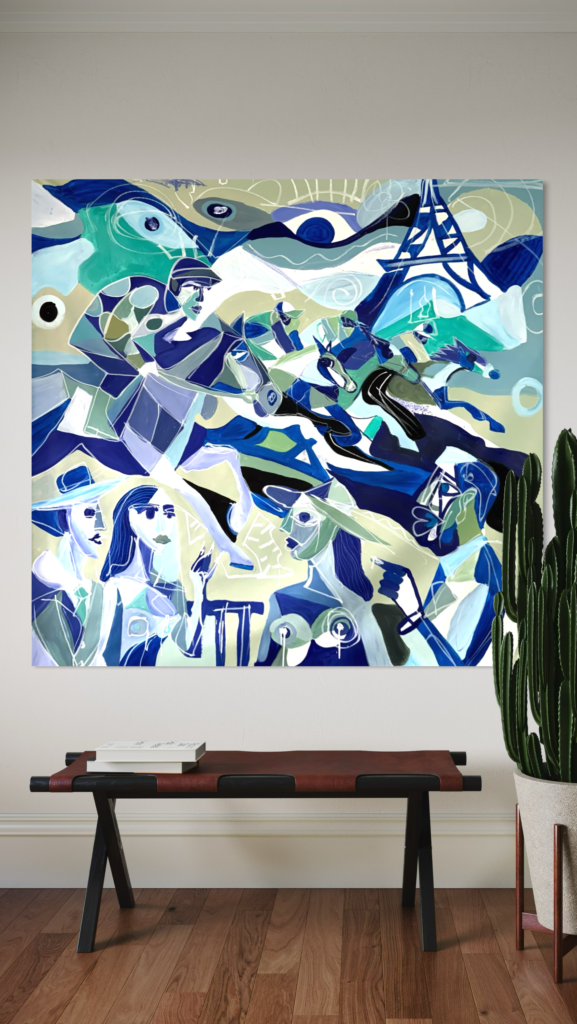
EZ: The Cubism of Picasso and Braque had a major influence on my approach to image construction. I was also deeply influenced by Matisse for his freedom of line and simplification of forms. I also love Fauvist colors and the raw energy of certain contemporary artists. But beyond artistic references, my travels, sports, electronic music, and encounters with people greatly enrich my work.
OM: Before the swimming pools, you were already working on monumental and immersive formats. Did you already have this desire to explore beyond painting on canvas?
EZ: Yes, for a long time. I’ve always loved large formats because they create a physical connection with the viewer. Canvas is a wonderful medium, but I quickly felt the urge to break free from the traditional frame and explore entire spaces.
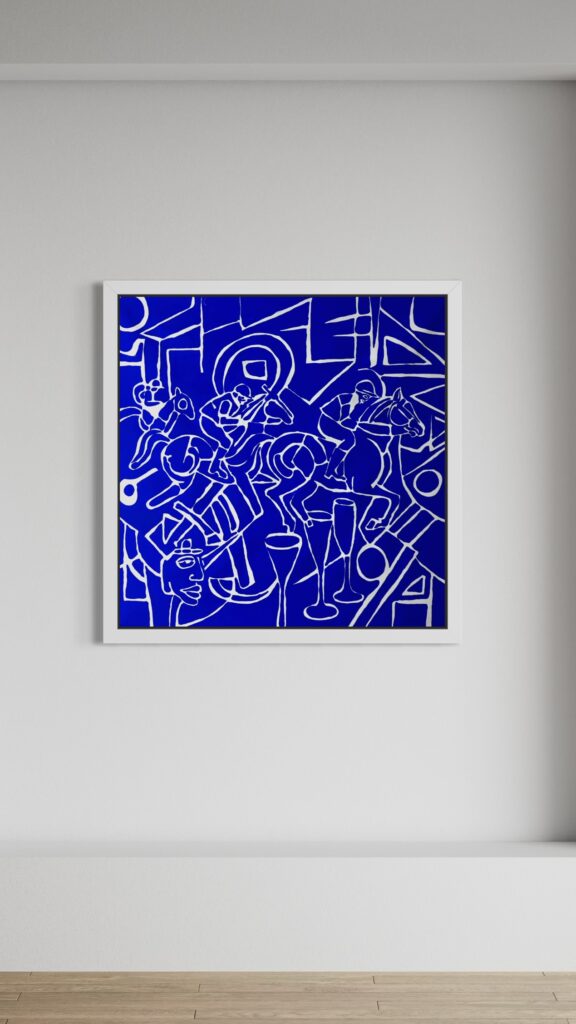
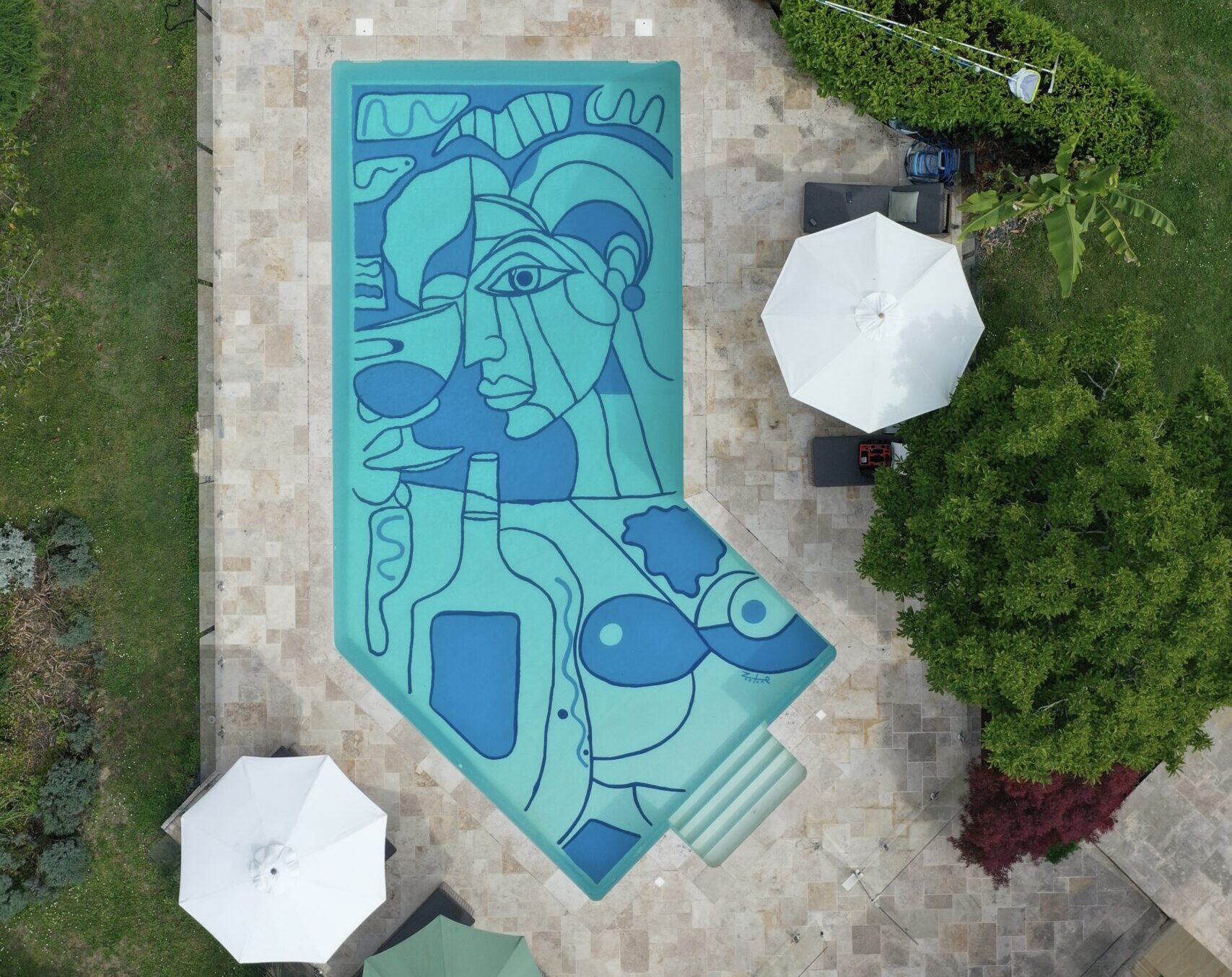
OM: Painting a swimming pool is a very artistic and unexpected idea. How did the Art Splash project come about?
EZ: The idea came about almost by chance. I was thinking about ways to take art out of the places where it’s usually expected. While observing an empty swimming pool, I suddenly realized it could become a vast canvas. What fascinated me was that the artwork was no longer static: the water, the light, and the reflections would constantly transform it.
OM: What attracts you to the swimming pool as a creative surface rather than a wall or a traditional canvas?
EZ: A swimming pool possesses an almost magical quality. Once filled, the artwork partially disappears underwater and then reappears depending on the time of day. It’s no longer simply viewed, but discovered. It’s a living medium that is constantly evolving.
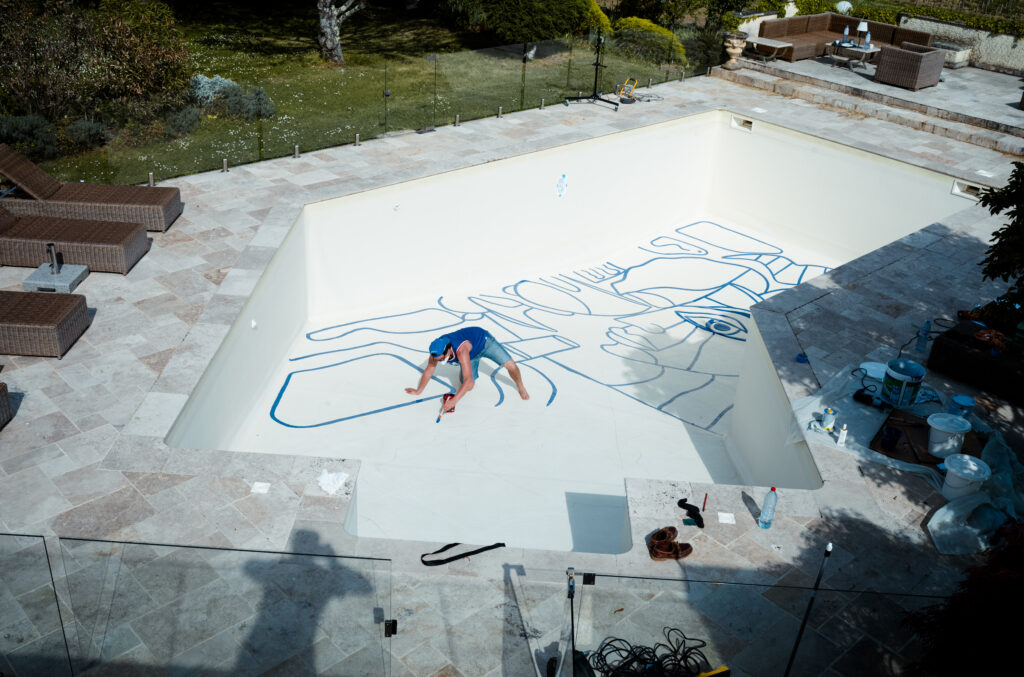
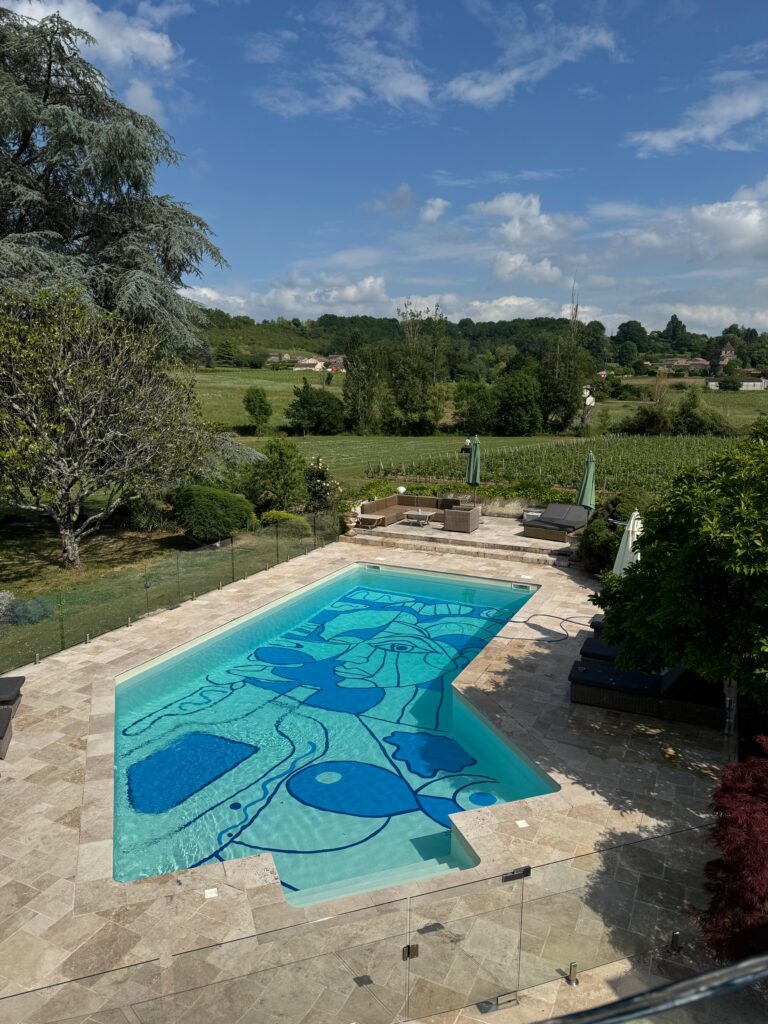
OM: Your works change depending on the light, reflections, or the movement of the water. Does this force you to think about your compositions differently?
EZ: Absolutely. When I’m working on a swimming pool, I have to anticipate optical distortions, reflections, and the movement of the water. Some shapes become more pronounced once submerged, while others disappear. It’s almost a collaborative effort between me and the natural elements.
OM: Your pools almost give the impression that art becomes a physical experience, something to be walked through rather than simply an object to be looked at. Is this the immersion you are seeking?
EZ: Yes, absolutely. I love the idea that one can literally enter into the artwork. It’s no longer a passive experience but something one experiences with one’s body. The viewer becomes an active participant in the work.
OM: You say you want to “think outside the box.” Is this also a way to make art more vibrant and less intimidating?
EZ: I think so. Many people love art but don’t always dare to walk through the doors of a gallery or museum. A swimming pool, a hotel, or a living space allows one to encounter art in a much more natural and spontaneous way.
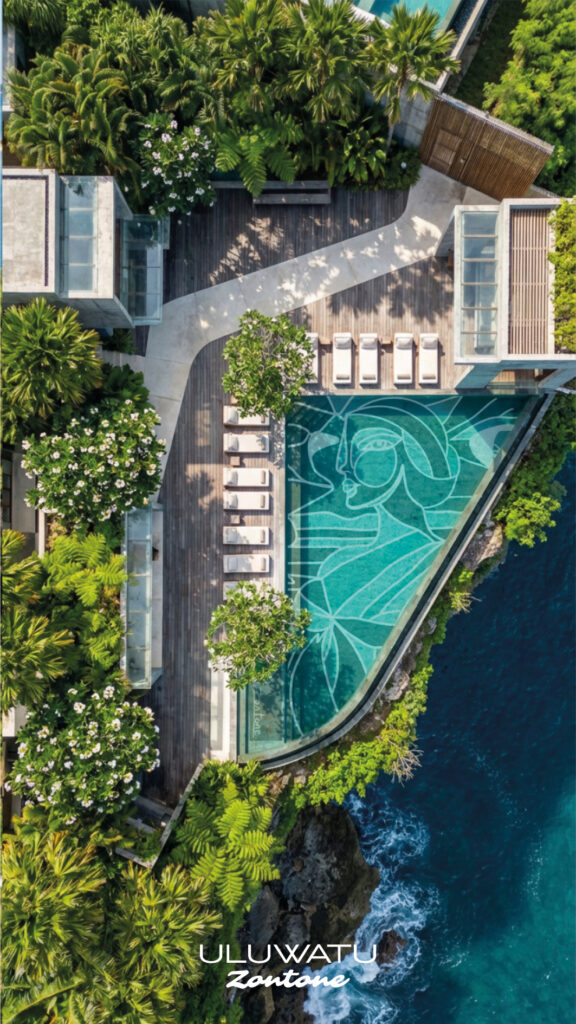
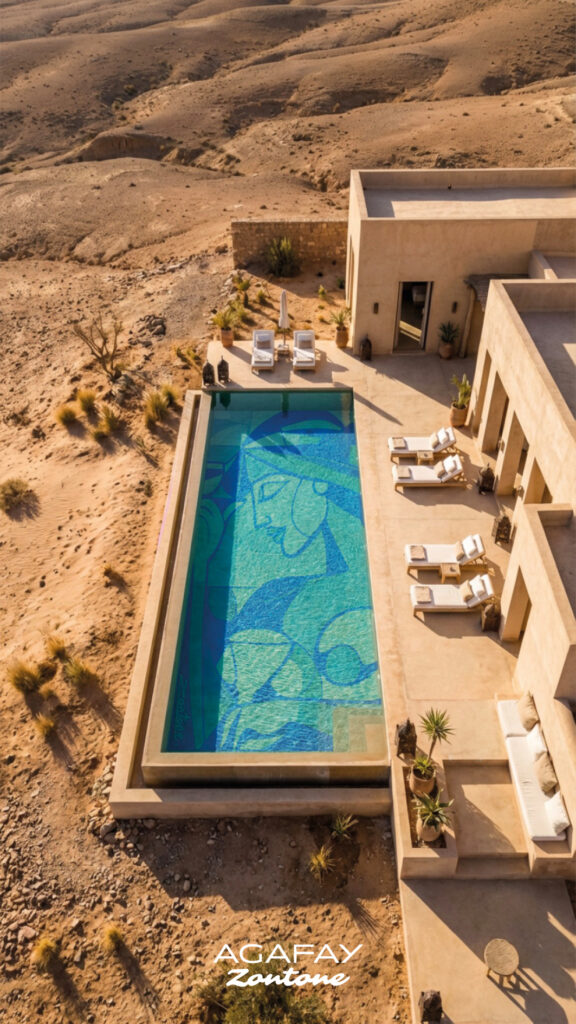
OM: When you work on a house, riad or hotel, do you work primarily as an artist or almost as a space designer?
EZ: I would say I’m a bit of both. I maintain my artistic freedom, but I also take into account the constraints of the place, its architecture, its function, and its history. The goal is always for the artwork to appear natural within its environment.
OM: Your creations seem to engage in a dialogue with the spaces that house them. How do you adapt your work to existing architecture?
EZ: I always start by observing. I analyze the volumes, the light, the materials, and even the way people move through the space. Then, I try to create a work that amplifies the identity of the place rather than a work that imposes itself on it.
OM: There is something very Mediterranean in your colours and in your relationship to water and light. Is this a world that particularly inspires you?
Yes, absolutely. The Mediterranean has exceptional light and a culture deeply connected to the outdoors, to conviviality, and to the beauty of everyday life. It’s a world that naturally resonates with my sensibilities.
OM: Do you feel you belong to a generation of artists who are increasingly blurring the lines between contemporary art, craftsmanship, design, and lifestyle?
EZ: Yes, I think our generation is much less attached to traditional categories. Today, an artist can create a painting, an installation, an object, or an immersive space while maintaining artistic coherence. This freedom is very stimulating.
OM: Is there a dream location where you would like to build a swimming pool or a monumental installation?
EZ: I would love to work in an iconic hotel in the Mediterranean, the Maldives, or Mexico. But more broadly, I dream of creating very large-scale installations where art, architecture, and landscape blend completely.
OM: After swimming pools, what other media or spaces would you like to explore?
EZ: I would like to explore architecture further, monumental facades, floors, ceilings, but also immersive experiences combining light, sound, and movement. What interests me today is no longer just the medium, but how a work can transform a place and the experience of it.
Discover the Exhibit
Our celebration of young and incredibly talented Chinese artists. Their artworks will be available for viewing all throughout the spring season as we usher in the New Year.
The Year of the Fire Horse


Xie Shiyi
03
DANLI MA
02
Huang Wang
01
Li xueer
04
CHENJIAN BOWEN
05
Yu Liu & Lief
06
Bella
07
ZHANGZHIWEI
08
Li Zihong
09
Discover the Artists
Osé Digital Art Gallery
Enjoy our Spring Feature Exhibition
Have a story to tell? We'd love to hear it. Let’s begin with a simple note.
And everywhere in between
Paris to Casablanca