The Solo Feast: The Last Frontier of Self-Care
We live in an era of radical self-optimization. We meticulously curate our skincare, our workouts, and our digital footprints, yet when the sun sets and the house grows quiet, the ceremony of nourishment often collapses.
In the privacy of our own company, we have traded the table for the sofa and the chef’s knife for the delivery app. But what if the most profound act of self-care isn’t found in a gym or a serum, but in the intentionality of a meal for one? It is time to rediscover the silent power of the solo feast.
The Paradox of the “Optimized” Individual
We treat our bodies like high-performance machines. We track our REM cycles with surgical precision and commit to grueling Pilates sessions to sculpt a core that reflects our discipline. We dedicate forty-five minutes every evening to a ten-step skincare ritual, layering acids and oils with the focus of an apothecary.
Yet, a curious paradox emerges the moment the front door closes. That same individual who just spent an hour on a yoga mat will often stand over a kitchen sink, eating lukewarm leftovers out of a plastic container, or scrolling through a delivery app because cooking for one feels like “too much effort.” This isn’t physical laziness; it is a symptom of a culture that has commodified wellness. We have been conditioned to value self-care only when it produces a visible result, glowing skin, toned muscles, or social capital. Because the solo meal has no audience, we have stripped it of its dignity, treating our nourishment as a mere chore to be “minimized.”
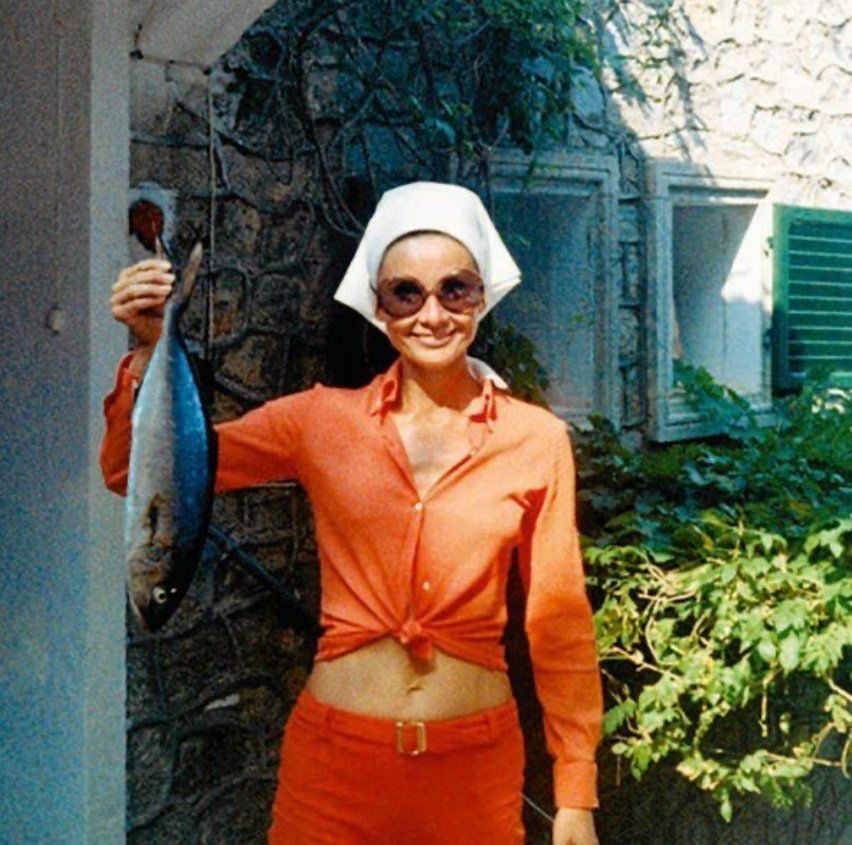
Audrey Hepburn, predicting Tinder men’s profile pictures
The Urban Paralysis: Why We Stopped Making
Modern urban life has sold us the myth of “frictionless living.” We are told that our time is too valuable to spend on the “menial” task of chopping an onion for one. In our quest for efficiency, we have outsourced our palates to dark kitchens and algorithms. But in removing the friction, we have also removed the soul.
When we cook only for ourselves, we often feel a sense of guilt, as if the effort is “wasted” without a witness. We have forgotten that the process of preparation is a transition from the noise of the city to the stillness of the home. The rhythmic sound of the knife, the smell of garlic hitting olive oil, and the steam rising from a pot are not “tasks” to be optimized away; they are the sensory markers of arriving back at oneself.
From “Sad Desk Salad” to Solo Ceremony
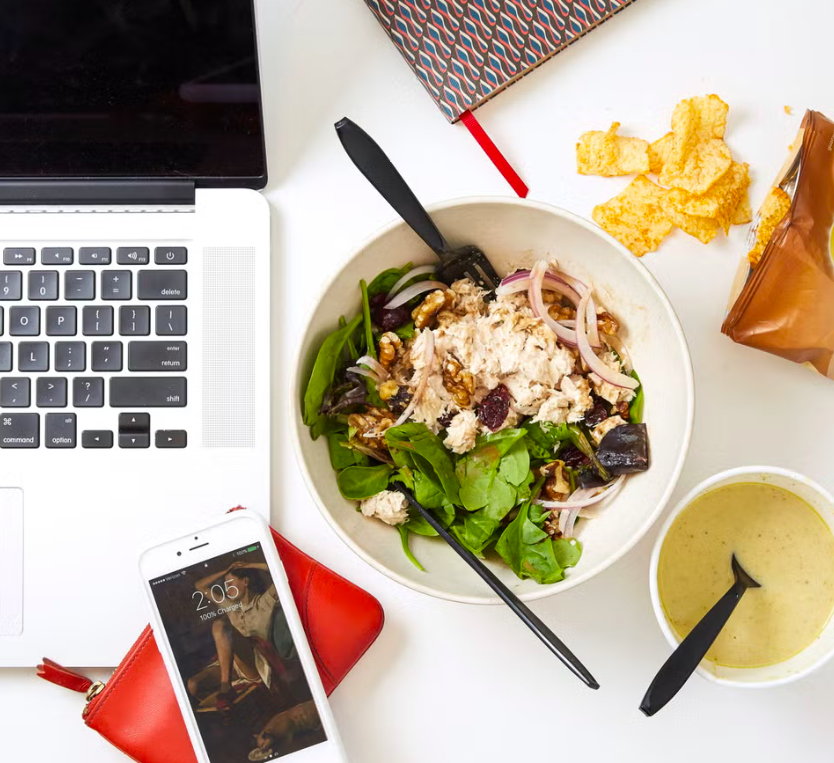
Historically, the Table d’Hôte was a foundation of social life, a contract of presence. Today, we have replaced it with the “Sad Desk Salad” or the “Sofa Supper,” where the blue light of a smartphone has replaced the warm glow of a candle. We eat while distracted, fueling our bodies while our minds are elsewhere, effectively ghosting ourselves at our own table.
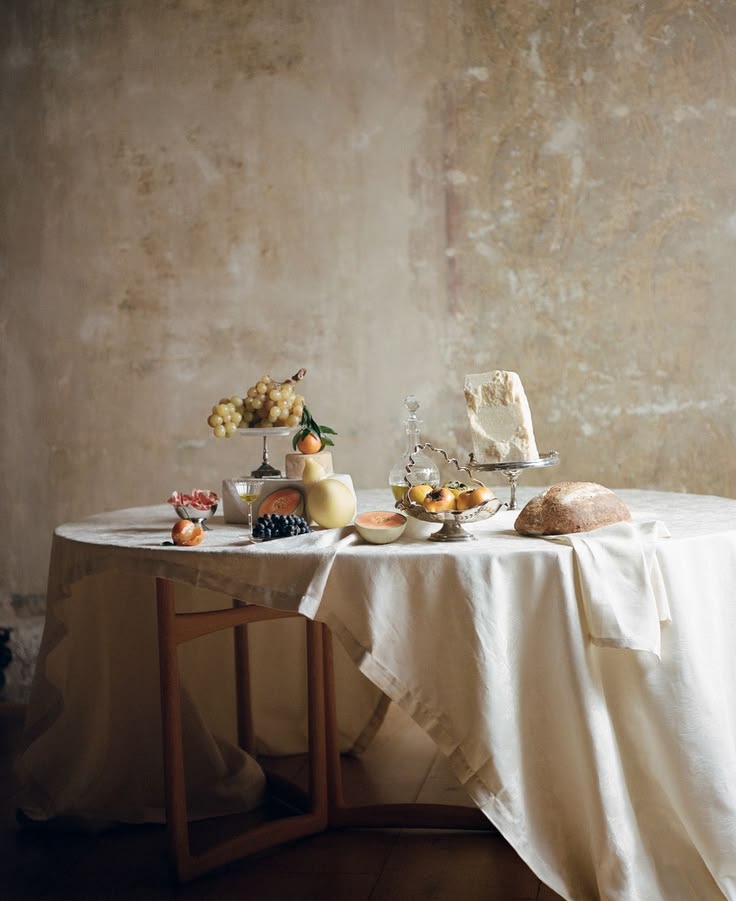
Reclaiming the Aesthetics of the Table is a radical act of self-respect. It is the decision to use the “good” linens, the hand-thrown artisanal ceramic bowl, and the heavy vintage silverware even when the only witness is the shadow on the wall. When we set a beautiful table for one, we perform a silent ritual of validation. It is an acknowledgment that your own company is worth the effort of a proper setting, that you are a guest in your own home.
The “Curation” of the Simple Dish
In the world of Osé, luxury is defined by the integrity of the source. A solo feast does not require the complexity of a banquet; it requires the poetry of the ingredient. The “art of eating alone” is actually an exercise in high-level curation.
Imagine a single, perfect heirloom tomato, sliced thick and seasoned only with a pinch of fleur de sel and a stream of exceptional, cold-pressed olive oil. Accompanied by a piece of sourdough from the local bakery and a glass of chilled, mineral wine, this meal is infinitely more sophisticated than a rushed, expensive takeaway. This is conscious luxury in its purest form: where the quality of the object (the food) meets the quality of the moment (the ritual).
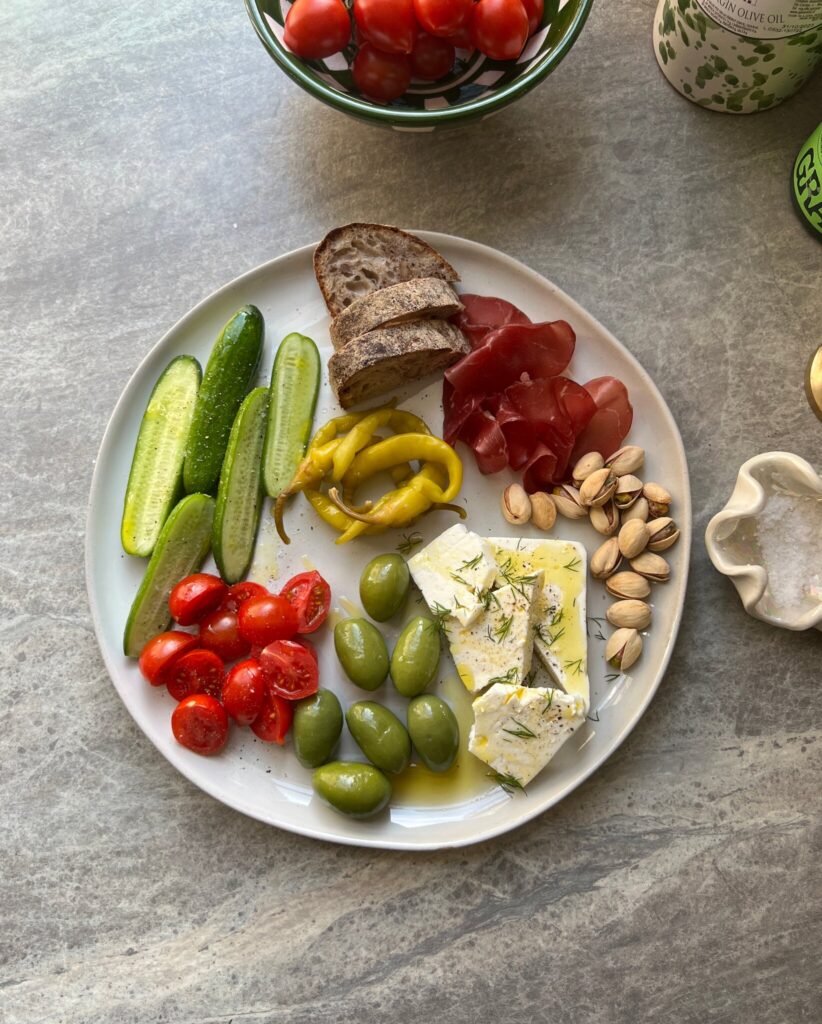
Girl diner
A Dialogue in Silence
There is a specific kind of bravery in eating alone without a screen for company. It forces us to confront the silence, to taste the food, and to sit with our own thoughts. In this space, the meal becomes a living autobiography. Every choice, from the choice of salt to the playlist in the background, is a reflection of personal taste, unfiltered by the needs or judgments of others.
The finest table in the city tonight isn’t at a Michelin-starred bistro with a three-month waiting list. It is the one you are about to set. It is time to stop waiting for “company” to justify excellence. Light the candle, pour the wine, and enjoy the feast. You are in excellent company.
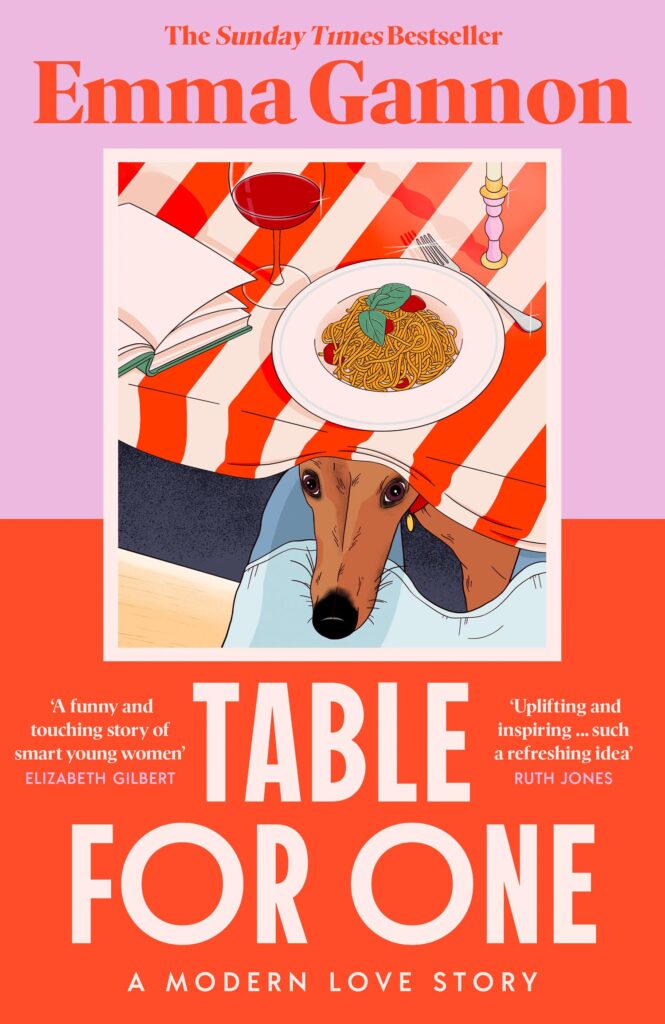
The Modern Manifesto: Table for One by Emma Gannon
The conversation around solitary dining has found a contemporary champion in Emma Gannon. In her work Table for One, she reframes what society often views as a “lonely” act into a vital practice of “selective solitude.” Gannon argues that in our hyper-connected, always-on world, the ability to sit alone at a table, whether at home or in a bustling bistro, is a superpower. It is a deliberate pushback against the “loneliness epidemic” by proving that being alone and being lonely are not the same. For the Osé reader, Gannon’s perspective reinforces the idea that the solo feast is an act of reclamation: reclaiming our time, our attention, and our right to enjoy the world on our own terms.