High-Altitude Attitude: Inside the Waldorf Astoria Rabat-Salé
For years, Morocco’s luxury scene belonged to riads hidden behind anonymous doors, palace hotels wrapped in gardens, and resorts that whispered exclusivity through silence and discretion. The Waldorf Astoria Rabat-Salé does the exact opposite. It announces itself from kilometers away.
Installed inside the now instantly recognizable Mohammed VI Tower, one of the three tallest towers in Africa, the hotel begins on the 29th floor and climbs all the way to the 55th, transforming hospitality into something almost cinematic. You don’t just arrive here. You ascend.
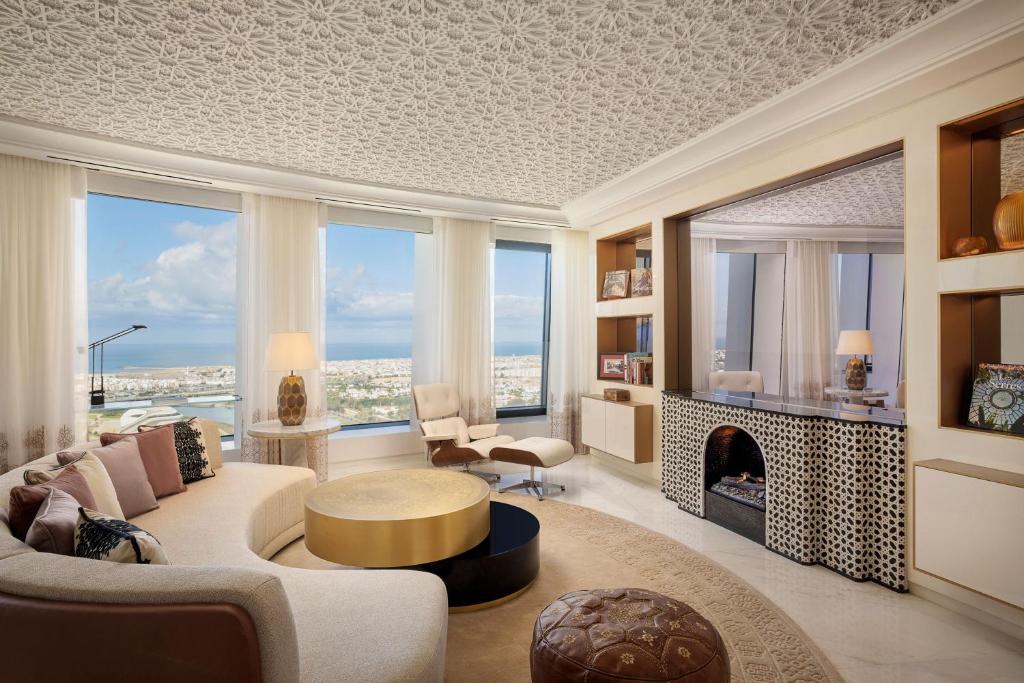
And once you’re up there, Rabat suddenly looks different. Sharper. Grander. More futuristic. The Bouregreg cuts through the landscape below while the Oudayas, Hassan Tower, Salé’s ancient walls and the newly inaugurated Grand Théâtre coexist in the same frame, as if the city itself were split between memory and projection. The effect is surreal: Morocco’s imperial past facing its vertical future through floor-to-ceiling glass.
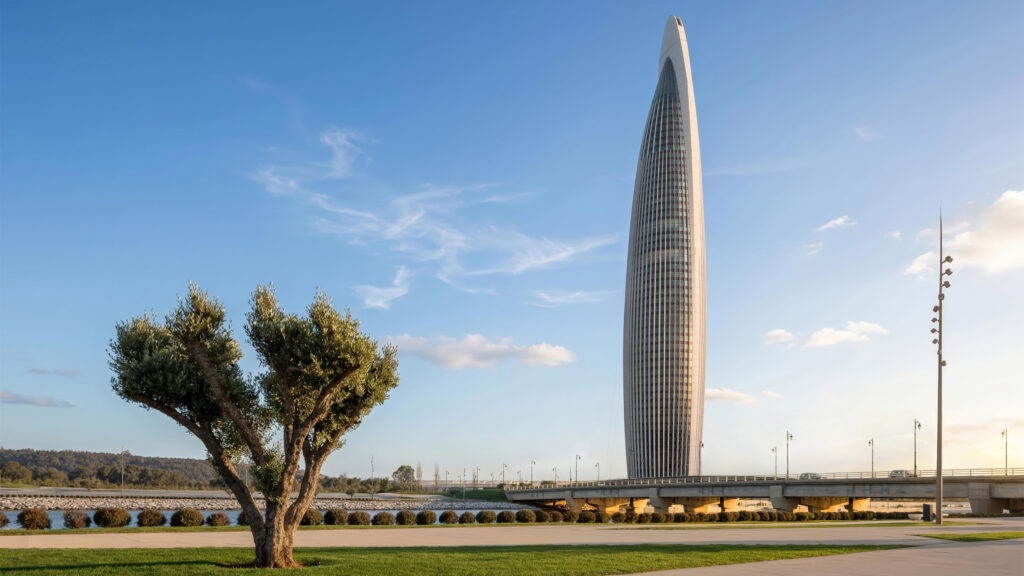
The Waldorf Astoria Rabat-Salé isn’t trying to blend into the capital. It’s here to redefine it.
There’s also something else happening here, something harder to admit when your job involves hopping between five-star properties, private previews, palace suites, and carefully manufactured “wow” moments across the world. At some point, luxury can start feeling strangely predictable. Another marble lobby. Another scented towel. Another hotel trying desperately to impress you with excess disguised as exclusivity. You become, almost despite yourself, a little jaded. But the unsettling thing about the Waldorf Astoria Rabat-Salé is that it cuts through that fatigue almost instantly. The tower, the altitude, the silence, the drama of the ascent, it awakens a kind of childish wonder usually reserved for seeing a gigantic roller coaster for the first time: intimidating, exhilarating, impossible to ignore.
The kind of place that doesn’t just impress you once, but makes you want to come back and feel it all over again.
Luxury Without the Theater
The first shock comes immediately: there is no lobby.
No giant floral arrangement. No reception desk. No awkward waiting around while someone photocopies your passport under chandeliers the size of small planets. Instead, guests are escorted directly to their rooms while check-in quietly happens in the background.
The message is clear: true luxury should never feel administrative.
Every guest is paired with a personal concierge available throughout the stay via WhatsApp, turning service into something fluid, immediate, and almost invisible. Need dinner reservations? Done. A last-minute request? Handled. The hotel functions less like a traditional property and more like an ultra-efficient private ecosystem suspended above the city.
Even the technology follows that philosophy. Your room key lives in your phone. “Do Not Disturb” signs don’t exist because the hotel is designed around the assumption that your peace is sacred. Room service arrives through a discreet “concierge box” integrated into the room itself, softly illuminated once your order is delivered, no knocking, no interruptions, no forced human interaction when all you want is solitude and silence.
It feels less like hospitality and more like frictionless living.
Peacock Alley Goes Moroccan
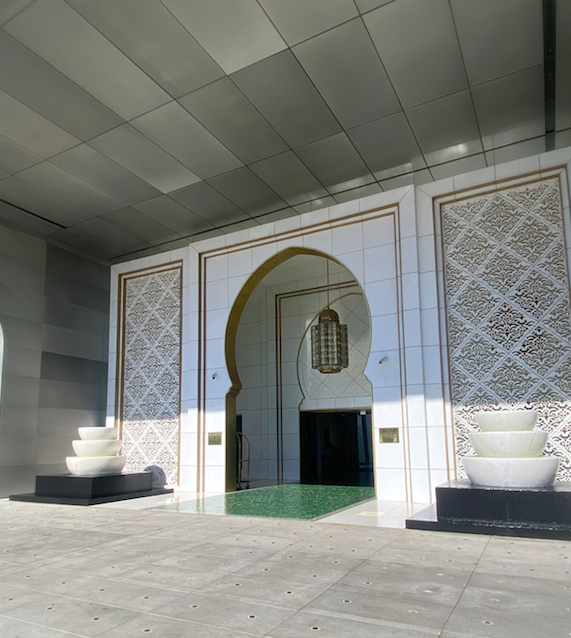
Every Waldorf Astoria in the world has its Peacock Alley, but Rabat’s version may be one of the most visually striking yet.
Originally born in New York in the late 19th century as the glamorous corridor connecting the Waldorf and Astoria hotels on Fifth Avenue, Peacock Alley became famous as the place where Manhattan’s elite came to parade, flirt, network, and be seen. Society women reportedly walked through it like peacocks displaying their feathers: hence the nickname.
At Rabat-Salé, the concept has been translated vertically. The space unfolds against monumental windows overlooking the river and the city beyond, turning the Moroccan capital into a constantly moving backdrop. During sunset, the light hits the interiors with almost unreal softness, reflecting off marble, brass, and glass like a perfectly staged film set.
Then there’s the clock.
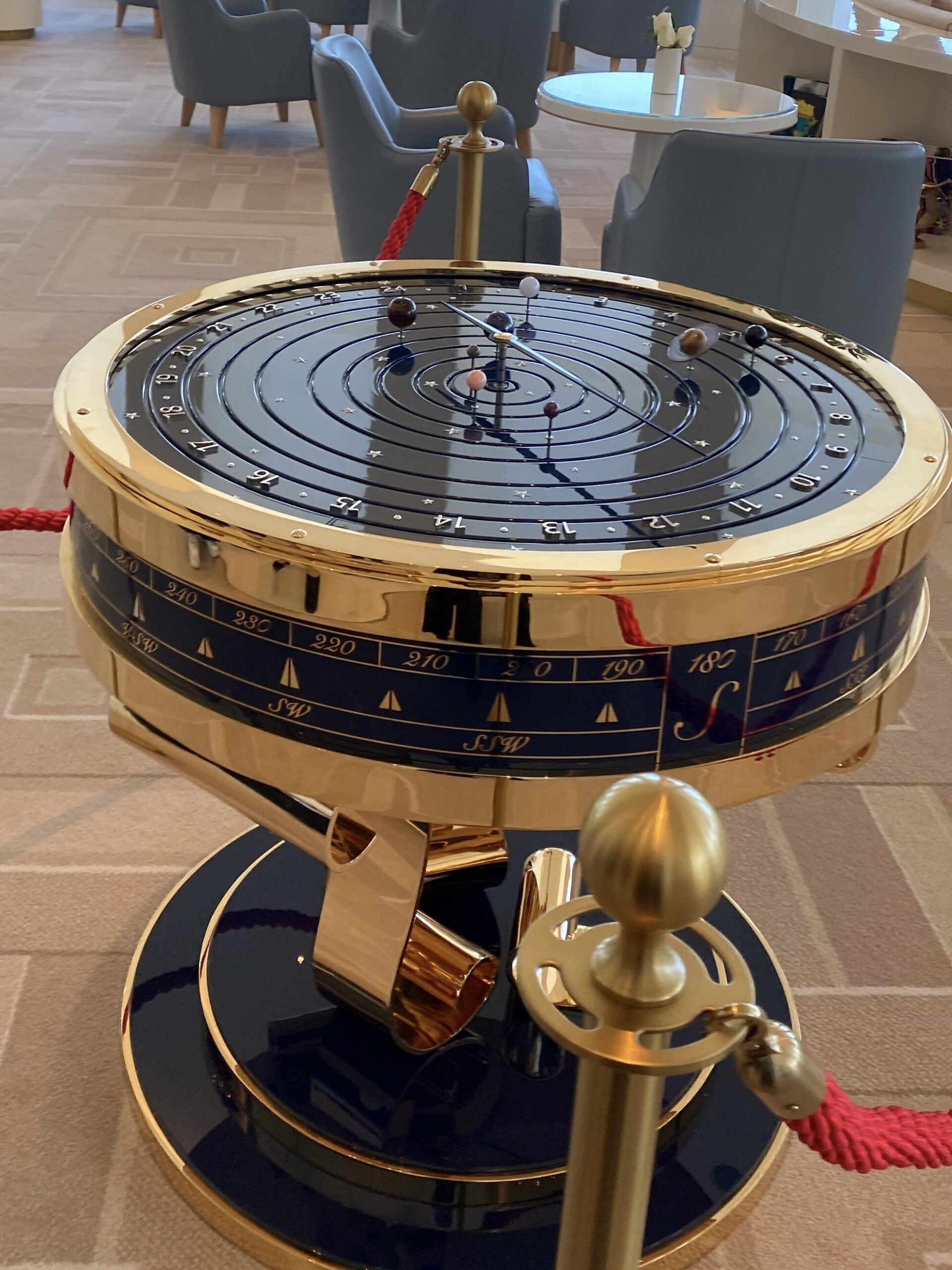
A signature feature in Waldorf Astorias worldwide, the Peacock Alley clock at Rabat-Salé was specially imagined for the property by legendary French designer Pierre-Yves Rochon and crafted by Swiss artisans. It functions both as sculpture and symbol: a reminder that this hotel belongs to a global legacy while still being deeply anchored in Moroccan identity.
An Art Collection You Actually Notice
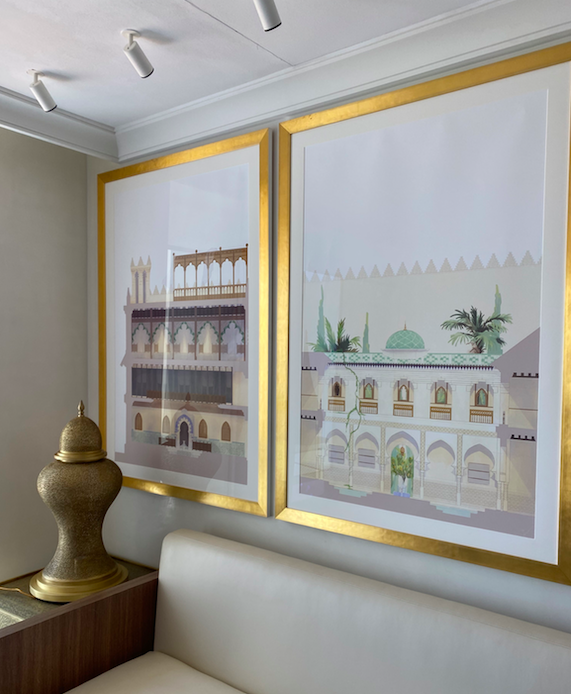
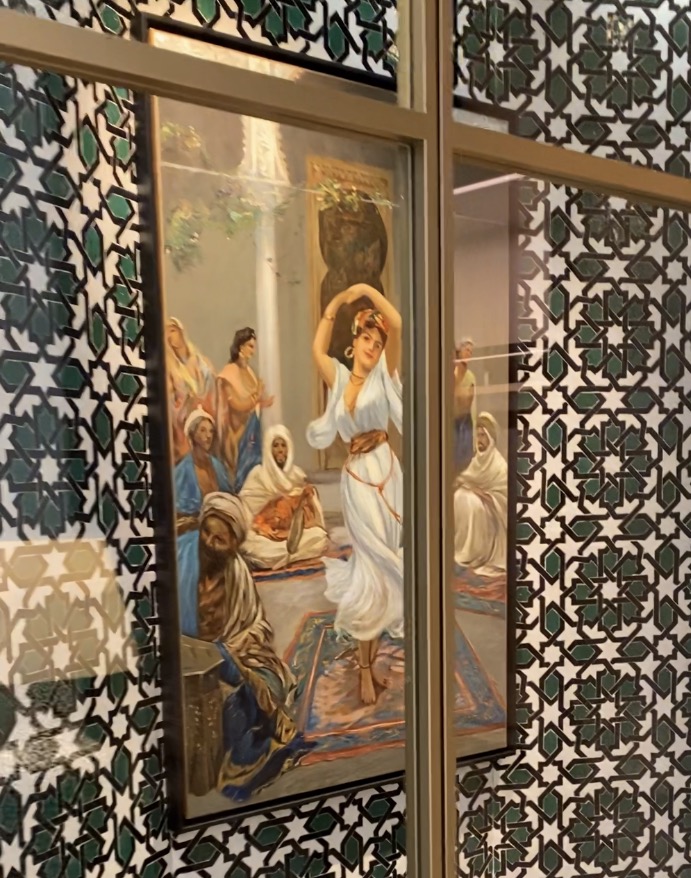
Most luxury hotels claim to “celebrate art”. Usually that means two abstract paintings near the elevators and a sculpture nobody looks at. The Waldorf Astoria Rabat-Salé went several levels higher. The property houses more than 7,000 specially commissioned artworks, transforming the hotel into something closer to a livable gallery than a traditional hospitality project.
The pieces are integrated everywhere, not as decoration, but as part of the emotional architecture of the place.
And then there are the books.
Not decorative stacks selected by a stylist. Actual libraries. Entire shelves dedicated to Moroccan craftsmanship, architecture, photography, and culture appear throughout the hotel, including inside the rooms. It gives the property an unexpectedly intellectual dimension, like staying inside the apartment of the impossibly cultured and absurdly wealthy.
The Rooms Don’t Scream. They Seduce.
The rooms begin on the 32nd floor, and not a single one faces the “wrong” side of the tower. Every suite, every restaurant, every shared space is oriented toward the same hypnotic 180-degree panorama.
Interestingly, the design avoids the usual clichés of demonstrative luxury. There’s no visual overload, no gold-on-gold maximalism, no attempt to impress through excess. Pierre-Yves Rochon instead created interiors based on curves, softness, texture, and proportion. The atmosphere is warm, cocooning, almost sensual.
Approximatively 130 Moroccan master artisans contributed to the project, crafting bespoke details down to custom-made faucets and finishes. Moroccan craftsmanship appears everywhere, but never in a folkloric or touristic way. It feels distilled, elevated, contemporary. The rooms understand something many luxury hotels forget: calm is the ultimate flex.
The Spa : An Escape From Gravity
Most luxury spas try to transport you. This one suspends you.
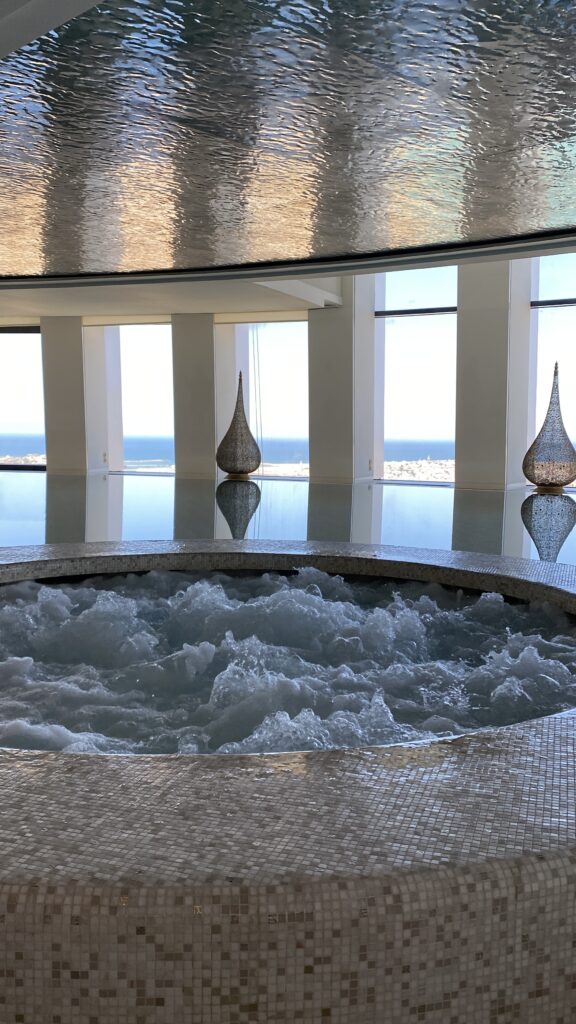
Perched high above Rabat, the wellness floor at the Waldorf Astoria Rabat-Salé feels almost detached from physical reality, as if the city below had been muted into abstraction. The indoor pool stretches toward immense windows overlooking the Bouregreg, creating that strange visual confusion where river, reflection, skyline, and water begin melting into one another. You stop thinking about swimming laps and start wondering whether you’re still entirely connected to the ground.
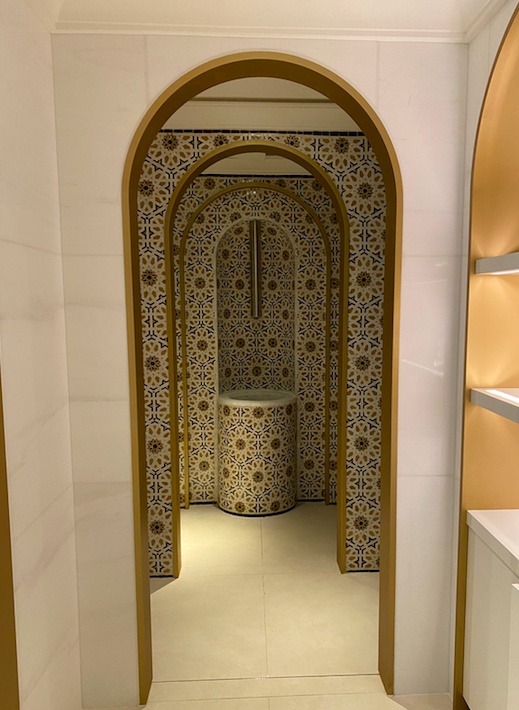
The atmosphere avoids the cold perfection often associated with ultra-luxury wellness spaces. Instead, there’s something deeply tactile and intimate about it. The hammam, especially, anchors the experience back into Moroccan sensuality: textured brick, filtered light, dense warmth, mineral humidity lingering against the skin. It feels less like a polished spa ritual and more like stepping into an elevated memory of home, reinterpreted through contemporary design.
And maybe that’s the real achievement of the place. Not the treatments, not the technology, not even the spectacular altitude. It’s the rare ability to create genuine stillness in a world addicted to stimulation. For an hour or two, the noise simply disappears.
Aldabaran: Alain Ducasse’s Moroccan Orbit
At the summit sits Aldabaran, Alain Ducasse’s Mediterranean fine dining destination named after the brightest star in the Taurus constellation.
The celestial references make sense the moment you step inside. Between the altitude, the lighting, and the endless night views over Rabat, the restaurant feels suspended in another atmosphere entirely.
While Ducasse reportedly drew inspiration from Le Louis XV in Monaco, the restaurant that earned him his first three Michelin stars, Executive Chef Morgan Perrigaud brings the concept to life with a menu built around precision rather than spectacle.
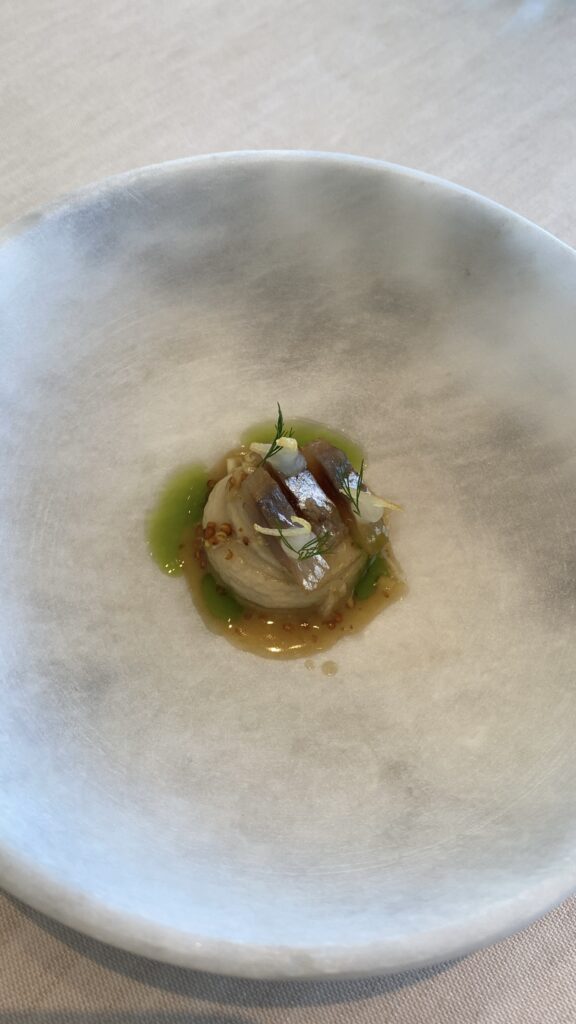
A sea mullet dish arrives with an herb granité so fresh it almost feels electric. Spider crab paired with Kristal caviar balances marine intensity with restraint. Roasted lamb with caponata and savory jus demonstrates the kitchen’s ability to make simplicity feel monumental.
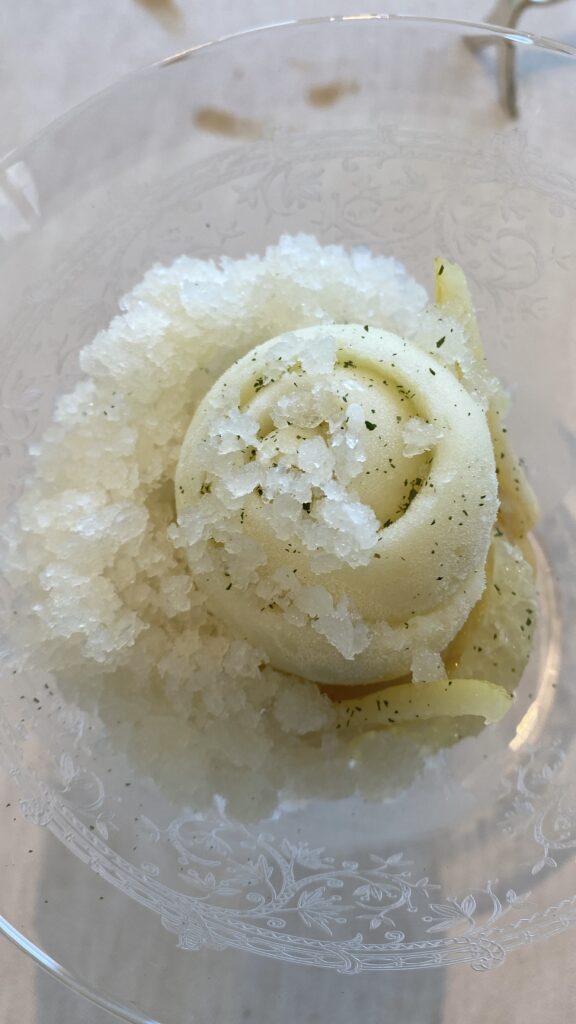
And then there’s the dessert simply called “Citron”, layering citrus, cream, sorbet, and orange blossom into something that tastes simultaneously Riviera, Moroccan, and entirely its own.
It’s fine dining without stiffness. Sophisticated but still oh so satisfying.
Magnolia Is Where Things Get Deliciously Emotional
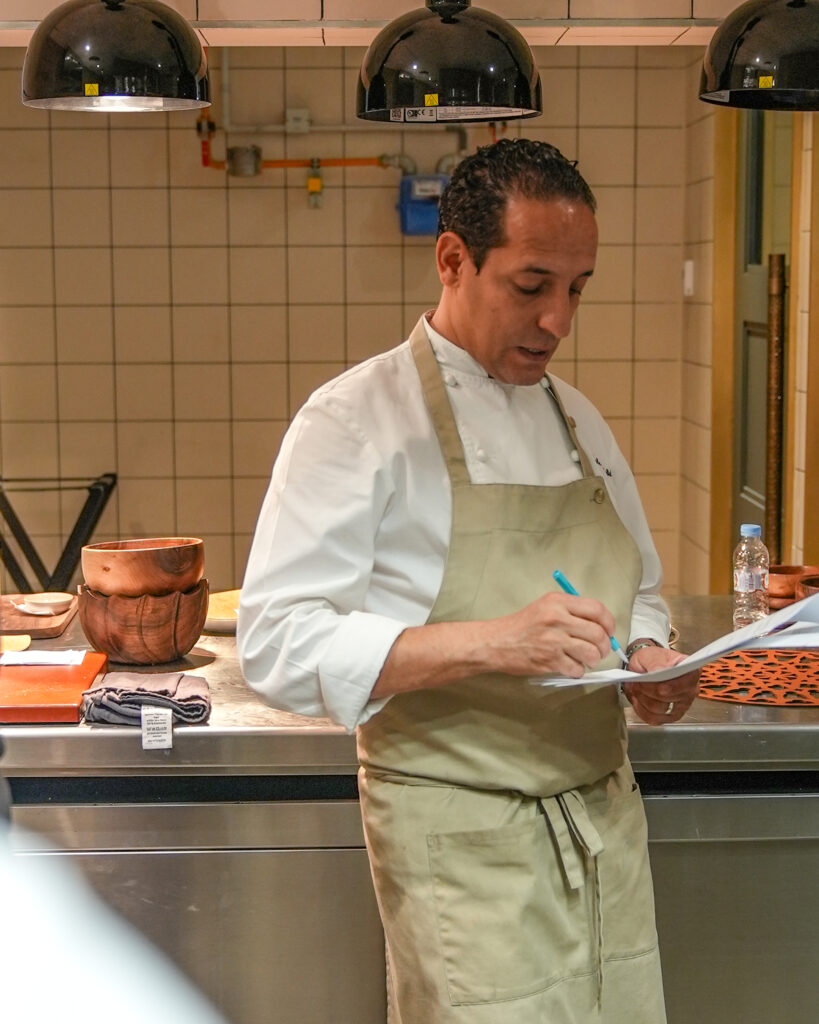
Downstairs, the energy shifts completely. Magnolia doesn’t operate on intimidation or ceremony; it seduces through atmosphere. The restaurant, imagined by Moroccan chef Lahcen Hafid, whose résumé includes the Ritz Paris, feels like the kind of place where the Mediterranean comes alive in fragments: a little Beirut at lunch, a touch of southern Italy by dinner, traces of Greece, Morocco, and the Levant constantly weaving through the menu without ever becoming caricatural.
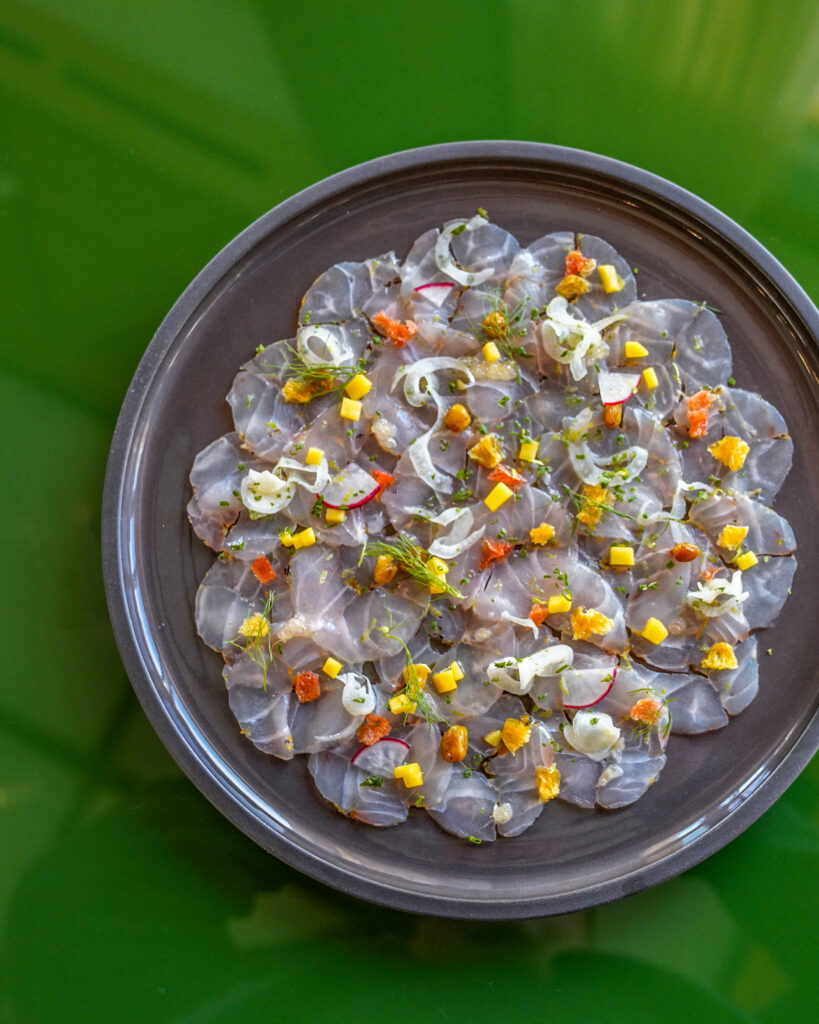
There’s precision here, obviously, but also generosity. The cooking avoids overcomplication, letting textures, olive oil, spice, citrus, and fire do most of the storytelling. Every plate feels grounded in product first, ego second, a surprisingly rare quality in luxury hospitality dining.
Then dessert arrives and suddenly things become emotional.
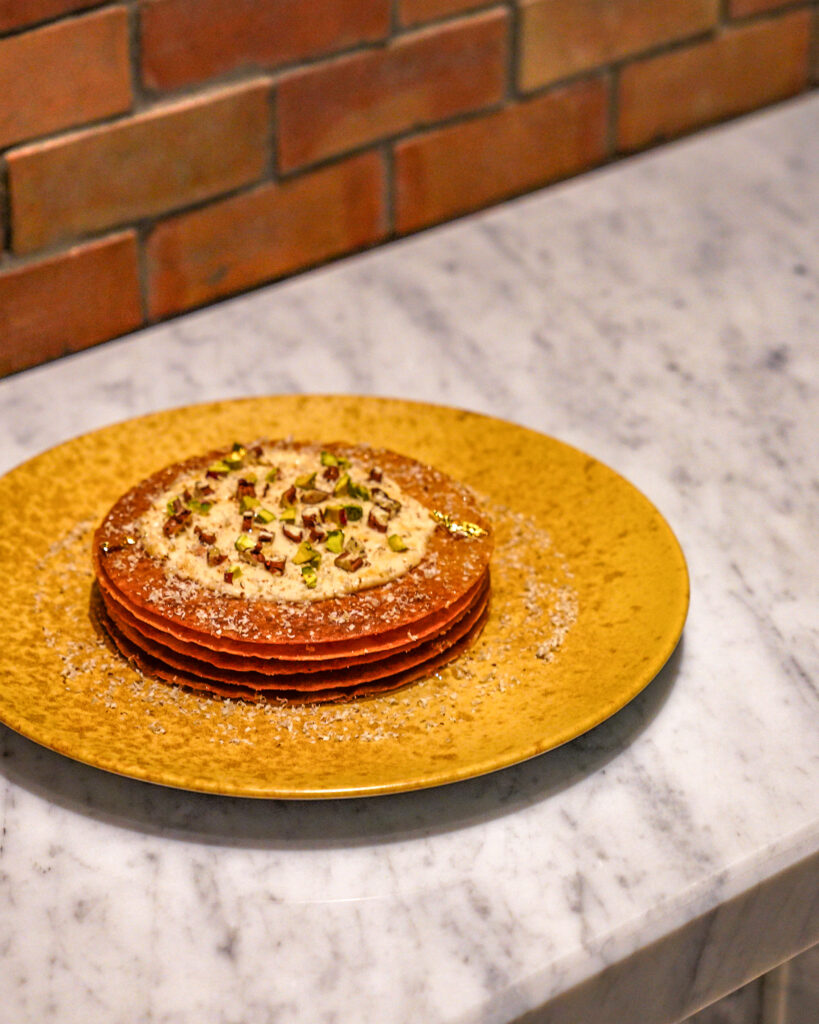
Magnolia’s reinterpretation of Jawhara (the jewel, or pearl in Arabic), the Kingdom’s beloved milk Pastilla, turns the traditional sweet into something almost architectural: paper-thin pastry, orange blossom cream, pistachio, delicate gold accents catching the light. Familiar, but elevated to the edge of fantasy.
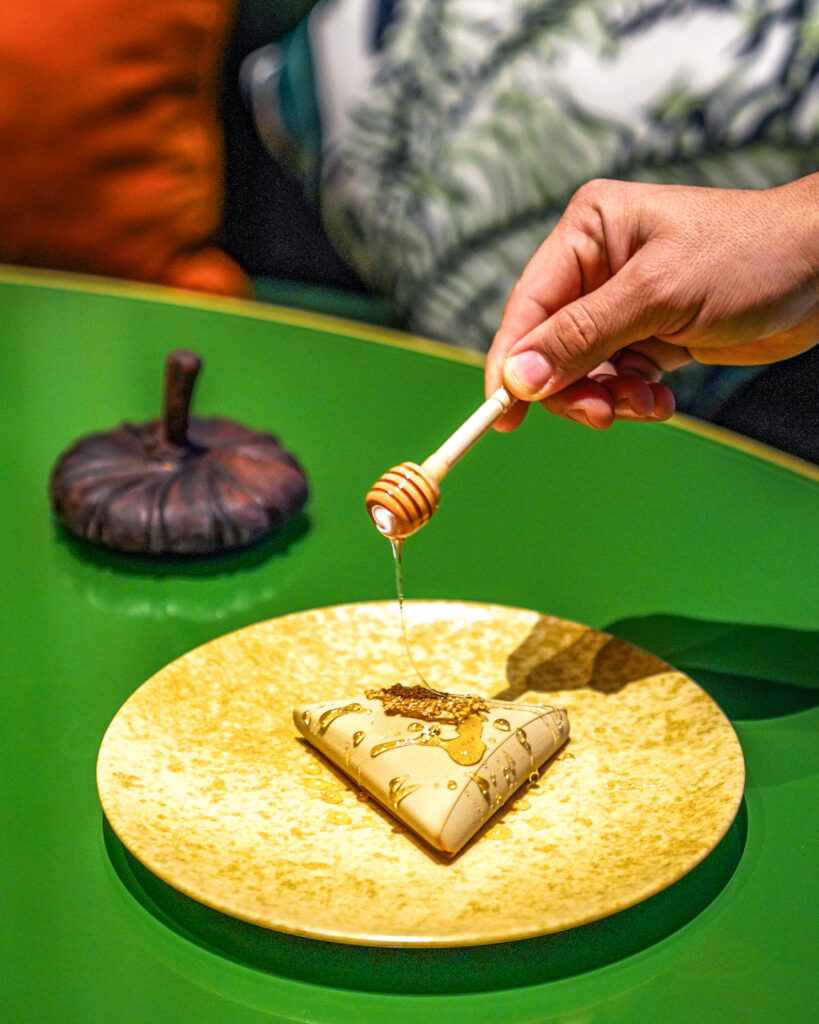
And then there’s the Brioua. Or rather, Magnolia’s completely unhinged version of it. Honey, amlou, toasted crumbs of faqqas, cream, mousse-like textures… somehow the dessert manages to taste like Moroccan childhood memories reprogrammed through fine dining technique. One spoonful and you’re simultaneously in a luxury brasserie and at a family tea table somewhere in Morocco twenty years ago.
This is comfort food that went to Paris and came back cooler.
The New Moroccan Luxury Is Vertical
The Waldorf Astoria Rabat-Salé ultimately succeeds because it understands something essential about modern luxury: people no longer want excess. They want emotion, fluidity, silence, beauty, privacy, meaning, and experiences that feel impossible to replicate elsewhere.
This hotel delivers all of it, while hanging above an entire capital city.
In Rabat, luxury is no longer hidden behind ancient walls.
Now, it touches the clouds.