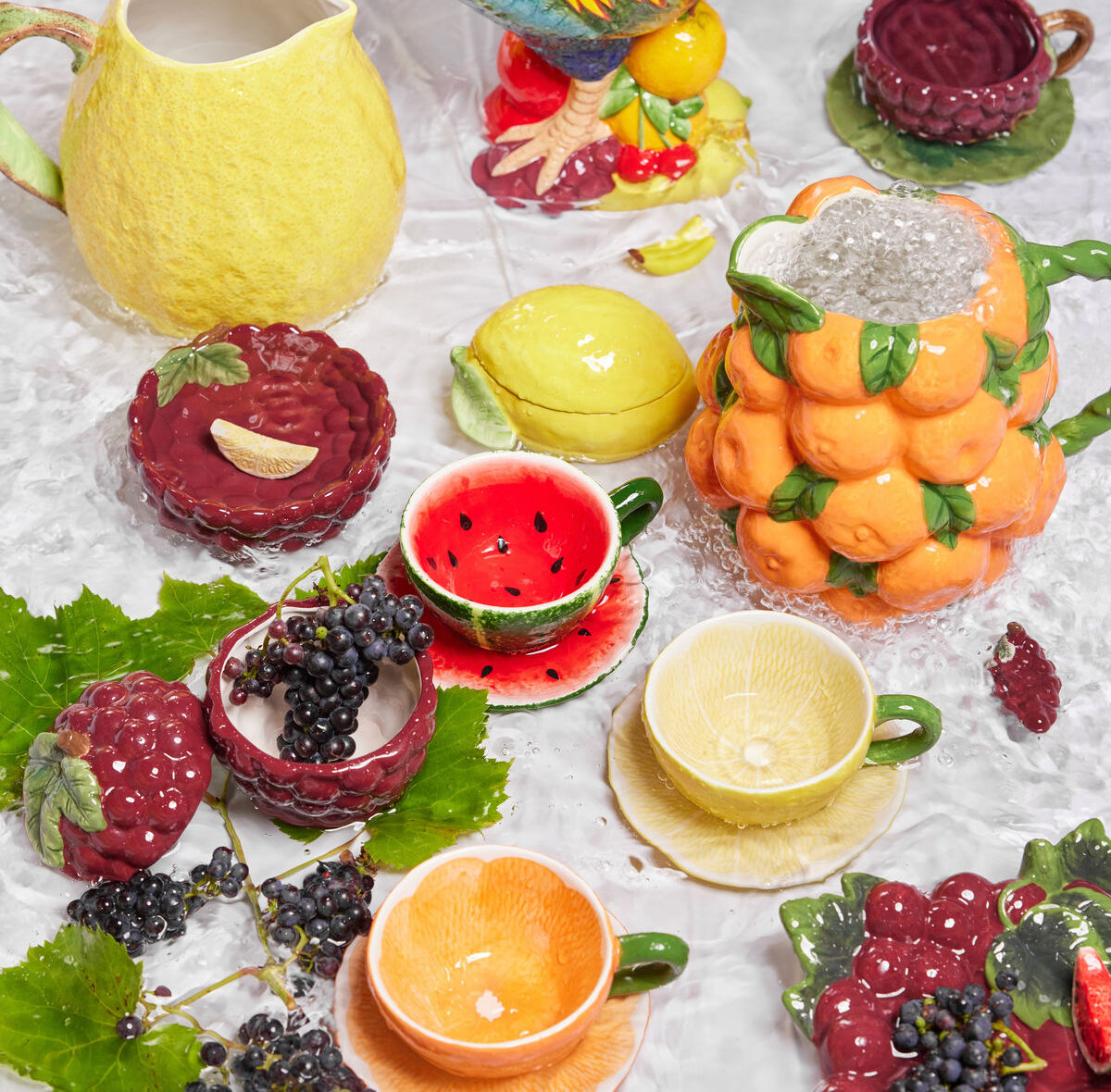
Inside Summer ’26 Interiors : The Fruit Salad
After years of controlled minimalism and muted interiors, design is loosening its grip. Fruit, once decorative, then kitsch, then forgotten, is back as a full aesthetic language. Not as a motif, but as an attitude: rounded, excessive, slightly absurd, and impossible to ignore.
A new domestic language of abundance
Some trends don’t arrive; they overflow. The Fruit Salad interior moment feels less like a style shift than a cultural correction. After a decade shaped by Scandinavian restraint, algorithm-friendly beige, and the long reign of “quiet luxury”, interiors are beginning to reintroduce, loudly, something that was carefully removed: emotion.
This return to visual appetite is not new in history. Design has always swung between control and excess, from Bauhaus functionalism, which erased ornament in favour of rational clarity, to the later backlash of the 1970s, when organic shapes and earthy irregularity returned to domestic spaces. That was before the 1980s and Italy’s Memphis movement, where Ettore Sottsass turned interiors into chromatic playgrounds of laminated fantasy, rejecting seriousness altogether.
Today’s fruit-coded interiors sit somewhere in that lineage, but with a softer intent. It is no longer about provocation or theory. It is about pleasure.
Fruit becomes the perfect vessel for this shift because it exists between categories: natural yet artificial once stylised, familiar yet visually excessive when enlarged or abstracted. It is instantly legible, culturally universal, and slightly ridiculous, which is exactly the point.
Kitchen: Functionality loses control
The kitchen has always been the most honest reflection of design eras. Once purely utilitarian, then glossy and aspirational in the 1950s, then hidden entirely in the minimalist 2010s, it is now reappearing as a space of exaggeration.
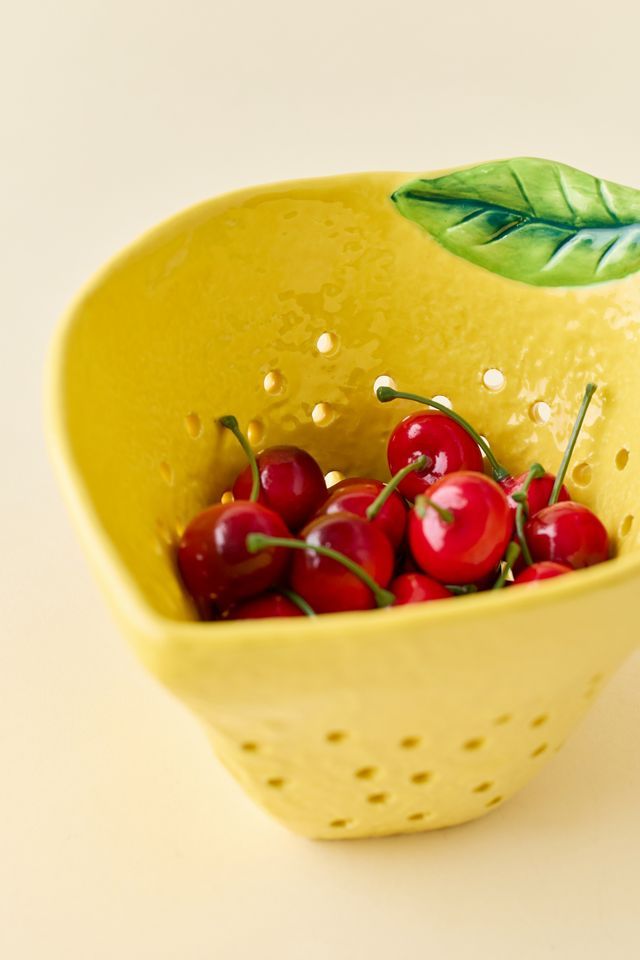
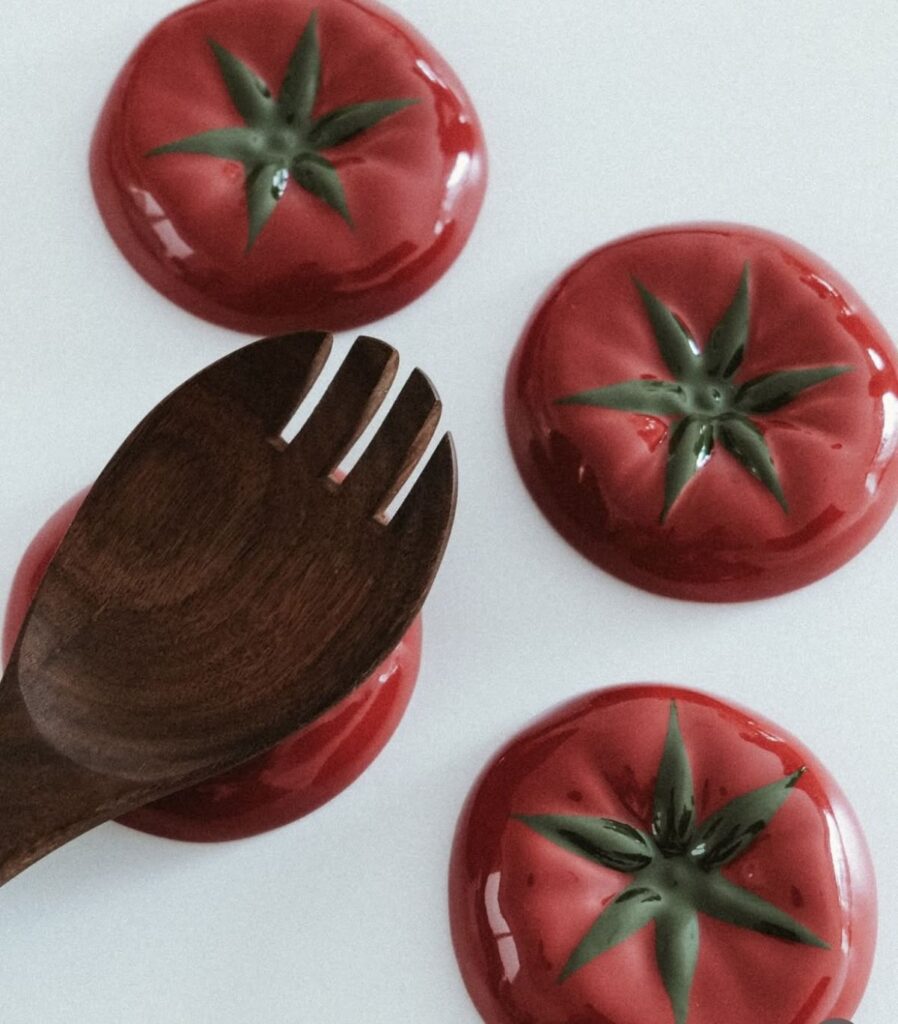
Fruit-coded design thrives here because the kitchen is already a place of abundance. But instead of real fruit bowls, we now see sculptural interpretations of them: tomato-red ceramics, citrus-toned utensils, banana-shaped handles, objects that sit halfway between tool and sculpture.
There is a subtle echo here of Renaissance still-life paintings, those carefully staged depictions of overflowing tables, where fruit symbolised both wealth and ephemerality. The difference is that in 2026, the still life is no longer painted. It is lived in.
Utensils become expressive rather than neutral. A spoon curves like a gesture, a bowl refuses invisibility, and everyday cooking begins to feel staged, not for performance, but for pleasure.
Living room: still life, but lived in
If the kitchen is where fruit becomes loud, the living room is where it becomes atmospheric. This is no longer a space designed to disappear into neutrality; it is a space built through interruptions.
For years, living rooms followed the logic of invisibility, beige palettes, low-profile furniture, soft textures designed to avoid visual friction. But historically, domestic salons were never neutral. From Rococo interiors in 18th-century France to mid-century maximalist homes, the living room has always been where identity is displayed through objects.
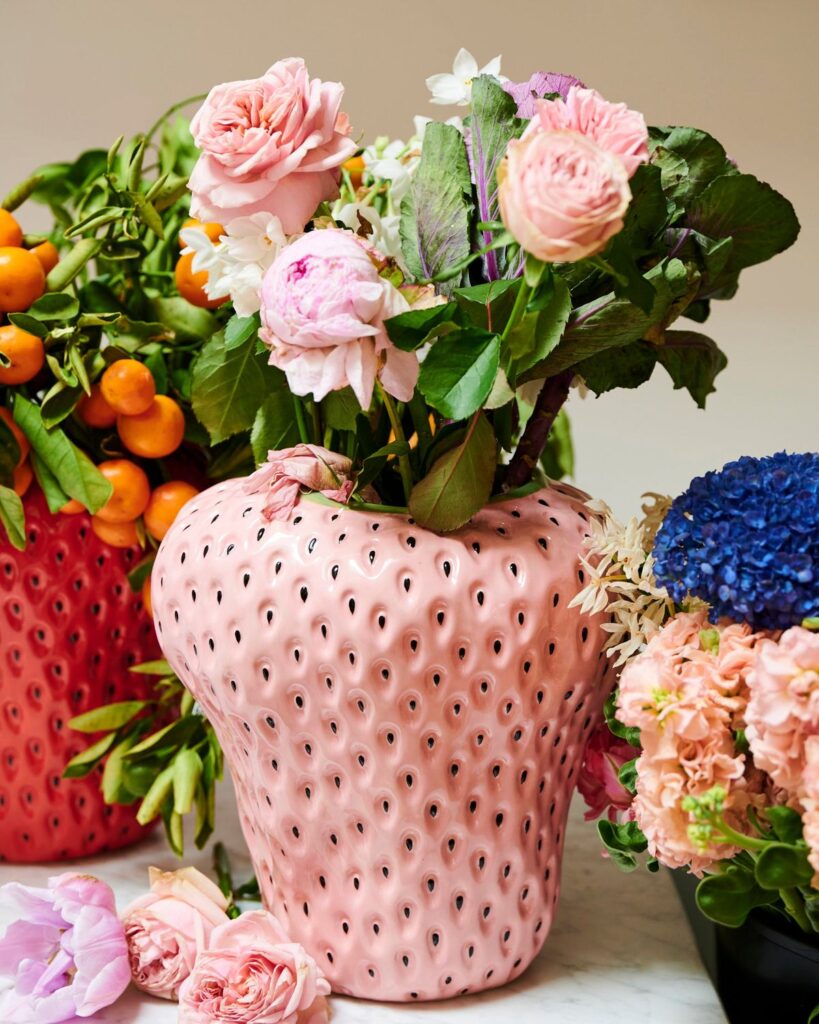
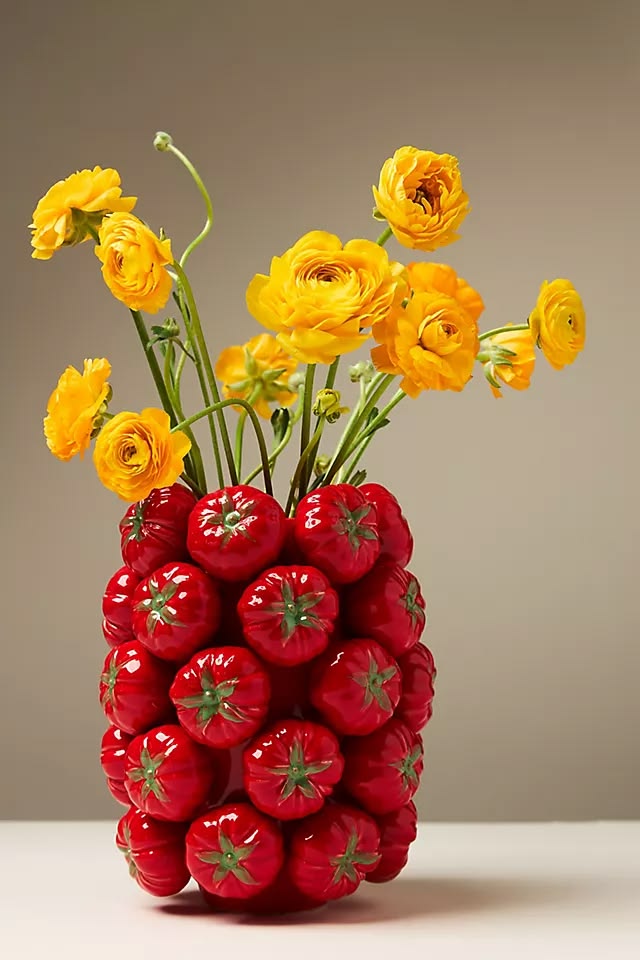
The current shift is not a rejection of minimalism, but a distortion of it. A single fruit-shaped vase or oversized ceramic bowl is enough to disrupt a perfectly controlled space. These objects do not dominate; they punctuate.
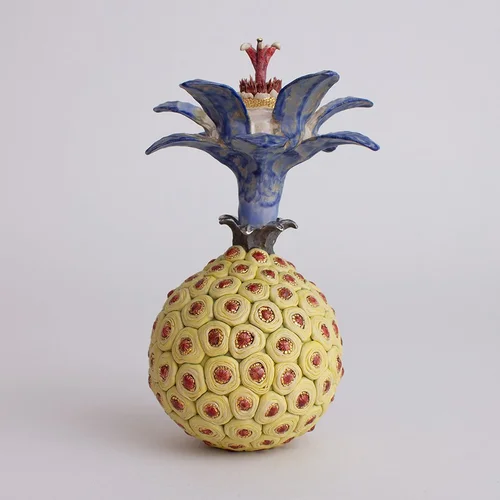
It’s not only about decoration, it can also be about collecting art, like a piece from Japanese artist Kaori Kurihara , creating since 2008, ceramic fruits from an imaginary botanical garden.
Bedroom: Private symbols and soft objects
The bedroom is where the trend becomes quieter, almost subconscious. Fruit here is no longer about spectacle. It becomes intimate, scaled down, and emotionally loaded.
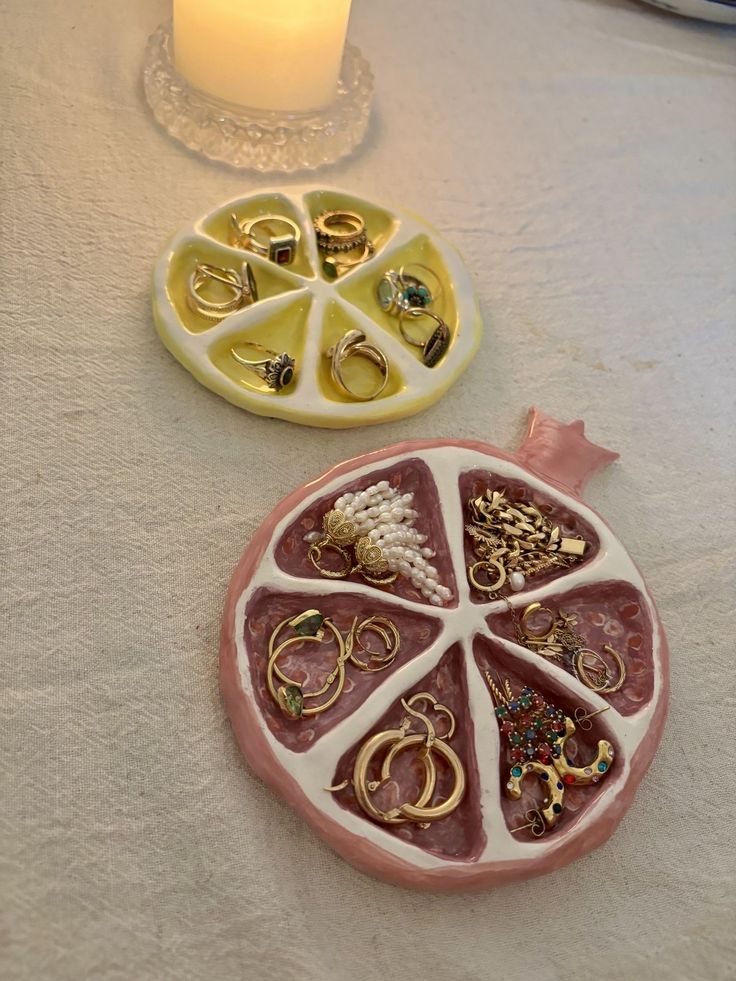
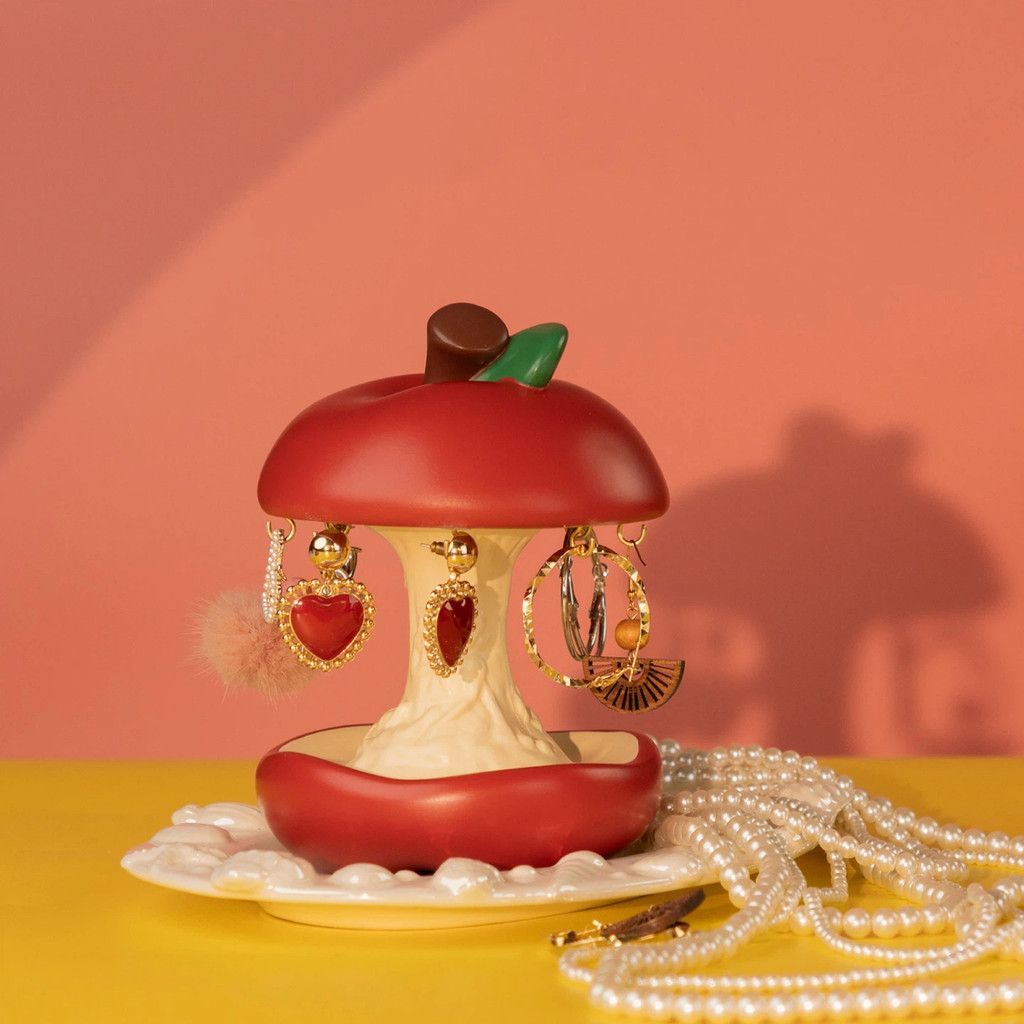
A small object on a bedside table, a cherry-shaped dish, a lemon-like container, a sculptural form with no clear function, begins to act less as decoration and more as ritual. It collects jewelry, loose change, notes, fragments of daily life. The act of placing things inside it becomes habitual, almost unconscious.
There is a long history of symbolic objects in private interiors. Victorian bedrooms were saturated with meaning, while modernist bedrooms stripped everything down to pure function. The current moment sits in between: minimal in structure, but emotional in detail.
Fruit works here because it carries contradiction. It is playful but familiar, decorative but domestic, innocent but slightly sensual. It becomes a soft anchor in an otherwise restrained space.
Bathroom: The shape of water
Bathrooms have always been transitional spaces in design history, functional, overlooked, then slowly elevated through spa culture and wellness aesthetics.
In this new fruit-coded language, the bathroom becomes unexpectedly natural terrain. Smooth surfaces, reflections, water movement, everything already feels slightly abstract, almost edible in its softness.
Objects begin to follow this logic. Soap dishes curve like fruit halves, containers look inflated, accessories become rounded and tactile. There is a subtle shift from precision to sensation.
This evolution echoes the rise of global spa cultures, from Japanese bathing rituals to Scandinavian sauna minimalism, where the bathroom is no longer just functional, but atmospheric. Fruit intensifies this shift by introducing familiarity into abstraction. The space begins to feel less like a utility room and more like a sensory pause.

DIY: Your hands know better
The final stage of the Fruit Salad aesthetic is not consumption, but translation.
Across design cycles, DIY culture always emerges when mass production becomes too polished. In the 1970s, it was craft revival. In the 2010s, Etsy era handmade nostalgia. Today, it returns as a reaction to hyper-perfect interiors and algorithm-driven sameness but also as a remedy to scrolling and a kind of “crafty meditation”.
Fruit becomes the ideal material for reinterpretation because it is structurally simple but visually rich. A lemon becomes a tray, a tomato becomes a candle holder, a garlic bulb becomes a sculptural object. The meaning is not in accuracy, but in transformation.
Imperfection is not only accepted, it is the point. What matters is the gesture of turning something familiar into something slightly useless, and therefore emotionally charged.
Because ultimately, this trend is not about fruit at all. It is about reintroducing appetite into interiors, appetite for color, for humor, for softness, and for things that serve no purpose other than being looked at.
Discover the Exhibit
Our celebration of young and incredibly talented Chinese artists. Their artworks will be available for viewing all throughout the spring season as we usher in the New Year.
The Year of the Fire Horse


Xie Shiyi
03
DANLI MA
02
Huang Wang
01
Li xueer
04
CHENJIAN BOWEN
05
Yu Liu & Lief
06
Bella
07
ZHANGZHIWEI
08
Li Zihong
09
Discover the Artists
Osé Digital Art Gallery
Enjoy our Spring Feature Exhibition
Have a story to tell? We'd love to hear it. Let’s begin with a simple note.
And everywhere in between
Paris to Casablanca