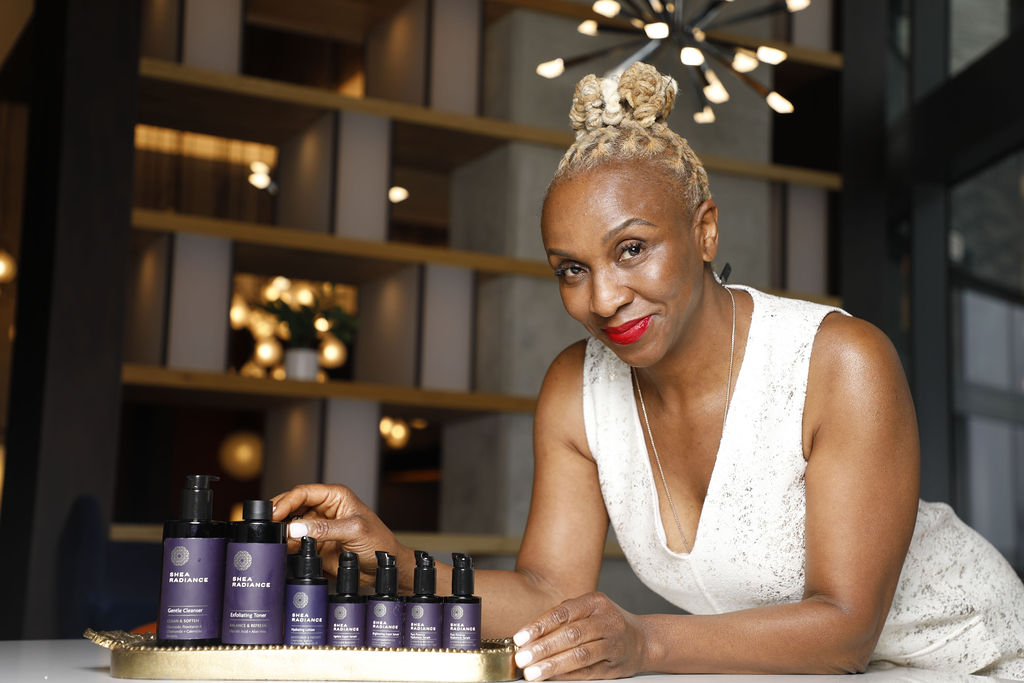
Funlayo Alabi: Radiating Inside and Out
About 7 years ago, at a resort in Marrakech the most vibrant, beautiful, force of a woman came up to me, introduced herself and began to slather my hand in the silkiest cream I have ever experienced. Her name, Funlayo, as we began to talk, her and her two friends told me they were now my Nigerian Aunties and we spent the next few days sharing meals and laughs together.
This is very indicative of the not only the person that Funlayo is but also of the business, Shea Radiance, she has built alongside her husband and cofounder Shola. Her focus is on relationship, whether it is with her customers, her team or the women in her shea supply chain. Her unwavering commitment to human connection is aspirational, even more so now, in the days of trillionaires and planned obsolescence. Her story is one of true grit and unabashed boldness. She has put her family, her heritage and her ethics at the heart of her booming business and built it one intentional brick at a time. She continues to be an inspiration on how business can be done better for entrepreneurs everywhere, all while meeting her needs, making time for family, friends and for God. In our interview she gets candid about what has gone into to building Shea Radiance, her community, her mistakes, aging and how African skin care is the foundation built for every woman.
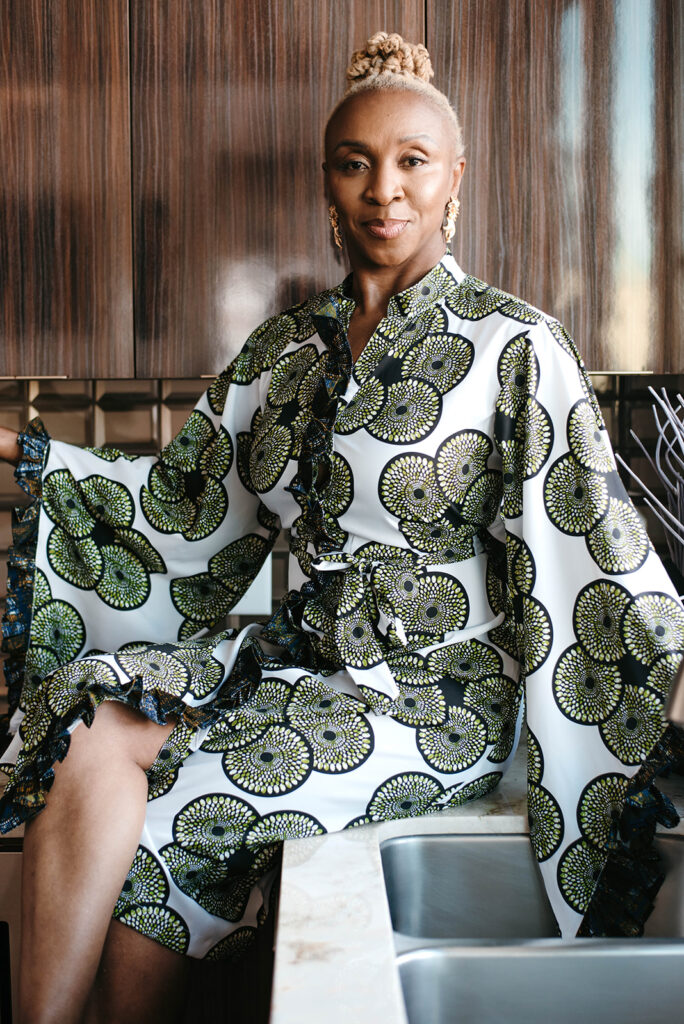
Photo Courtesy of Funlayo Alabi & Shea Radiance
Ose Magazine: Let’s start at the beginning. Can you explain a bit about who you are and how Shea Radiance came to be?
Funlayo Alabi: I’m Funlayo Alabi, a Nigerian born entrepreneur, wife, mother and cofounder of Shea Radiance. My professional background is in international business and technology, but I have always carried a deep connection to Africa and a desire to create something that reflected both the richness of our natural resources and the ingenuity of our people.
Shea Radiance began in our family kitchen. My husband, Shola, and I started experimenting with shea butter to create effective solutions for our family’s dry skin. Shola is the gifted formulator, the “mad scientist,” as I affectionately call him, and together we became fascinated by the possibilities of this extraordinary ingredient. What began as a personal solution gradually grew into a much larger vision.
As I learned more about the shea supply chain, I discovered that the women who gather and process shea nuts often receive very little economic benefit from an ingredient that creates tremendous value in the global beauty industry. That realization became central to our purpose. We wanted to build a company that created beautiful, high performing products while honoring the women at the source through trade, economic opportunity and more equitable participation in the value chain.
Today, Shea Radiance manufactures its products in Maryland, but the soul of the company remains deeply rooted in Africa. For me, this journey has always been about more than skincare. It is about beauty, heritage, economic dignity and demonstrating that African ingredients and innovation belong at the very heart of the global beauty conversation.
“It is about beauty, heritage, economic dignity and demonstrating that African ingredients and innovation belong at the very heart of the global beauty conversation.”
OM: To be perfectly frank, I am in utter awe of you, and you are who I would like to be when I grow up. At 60, you are a successful businesswoman, a mother, a sister, a wife, a mentor, a daughter and so much more. How are you able to balance it all and make it look so easy?
FA: Kate, first of all, thank you. That means so much to me, especially coming from a woman I admire. But let me be perfectly frank in return: I do not balance it all, and it has never been easy! What may look graceful from the outside has included sacrifice, exhaustion, mistakes, tears, prayer and many moments when I questioned whether I could keep going.
I still remember packing Shea Radiance orders with my youngest son strapped to my back. That image captures so much of my journey. Motherhood and entrepreneurship did not happen in separate, neatly organized spaces. I carried them together, sometimes quite literally. There were seasons when my children needed more of me, seasons when the business demanded more, and seasons when caring for my parents or supporting other people I love had to take priority. I have learned that balance is rarely a perfect division of time. It is being present and faithful to what a particular season requires.
I have also never done any of this alone. I have a wonderful husband and business partner, children who have grown up alongside Shea Radiance, a close family, mentors, friends and a team who help carry the vision. I have learned to ask for help, release the need to control everything and accept that I cannot be everything to everyone at the same time.
Above all, my faith is the foundation beneath it all. I depend deeply on God’s grace, wisdom and strength. At this stage of my life, I am also learning that rest is not something I must earn after everything is finished, because everything is never finished. Rest, boundaries and caring for my body and spirit are part of how I remain able to serve, lead and love well. So if it looks easy, please know that what you are really seeing is grace built over many years.
“Rest, boundaries and caring for my body and spirit are part of how I remain able to serve, lead and love well.”
OM: Your business started as a family business of sorts, solving a family problem. How has the business evolved over the years as it has grown into what it is today?
FA: Shea Radiance began with a very simple question: how could we care for our family’s chronically dry skin using ingredients we trusted? In those early days, everything happened in our home. Shola formulated the products, I worked on building the brand and connecting with customers, and our children grew up folding boxes, applying labels and helping us pack orders. It truly was a family enterprise.
Over time, the business evolved from products made in our kitchen into a full beauty manufacturing company. Today, we formulate and manufacture our products from scratch in our own certified organic facility in Maryland, supported by a growing team. Our products are sold directly to customers and through retail partners such as Whole Foods Market and MOM’s Organic Market. What began with shea butter based solutions for dry skin has expanded into body, hair and facial care, with products that combine African botanicals and traditional beauty wisdom with modern cosmetic science.
The nature of my role has also changed. In the beginning, Shola and I did almost everything ourselves. As the company grew, I had to evolve from being the person doing every task to becoming the leader responsible for vision, culture, capital and strategy. Learning to build a team, create systems and entrust important parts of the business to other capable people has been one of the most necessary, and sometimes most challenging, parts of our growth.
Yet the heart of Shea Radiance has remained remarkably consistent. We are still solving real skincare needs. We still formulate and manufacture with great care. We are still deeply connected to the women who produce our shea butter. And we are still a family business, although the meaning of family has expanded to include our team, our suppliers, our retail partners and the customers who have grown with us over the years.
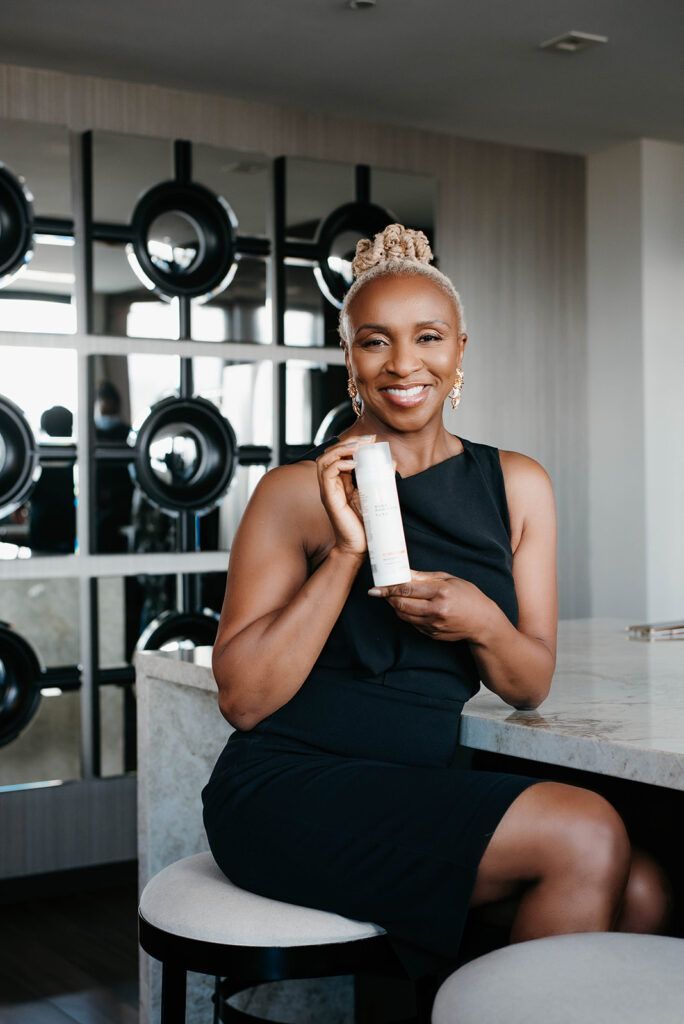
Photo Courtesy of Funlayo Alabi & Shea Radiance
OM: Your brand was created with a combination of necessity and African wisdom. How much of this botanical knowledge was passed down to you from your mother, her mother or perhaps the women you source from? How much of that knowledge is present in your business?
FA: The botanical knowledge behind Shea Radiance is both inherited and acquired. It was not passed down to me as a neat collection of written recipes from my mother or grandmother. It was more of a cultural inheritance: an understanding that the earth provides powerful ingredients for caring for the skin and body, and that African women have preserved and practiced this wisdom for generations. Shea butter, oils, herbs and other botanicals were simply part of the world from which I came, even before I understood their chemistry or commercial potential.
As Shea Radiance developed, that inherited awareness was deepened through research, formulation science and, importantly, the knowledge of the women who process our shea butter. They understand the shea tree, the fruit, the timing of the harvest and the careful, labor intensive process of transforming the nut into butter. That expertise is present in every jar we produce.
Our broader product development ethos builds on the same belief in the power of natural ingredients to solve real problems. We pair ingredients such as shea and baobab oils with modern cosmetic science and thoughtfully selected actives, including marine extracts and mushroom extracts such as chaga, tremella and shiitake. The mushrooms are not part of our women centered supply chain story. They reflect our commitment to exploring nature’s intelligence and developing effective solutions for the skin.
The women in our shea supply chain have profoundly shaped both Shea Radiance and me as an entrepreneur. Meeting women who perform physically demanding work, care for their families and hold their communities together changed the way I understood the beauty industry. I could no longer see shea butter as simply a raw material or a line item on a purchasing sheet. Behind it are women with names, families, skills and aspirations.
Their lives clarified our responsibility as a company. Our purpose is not to “save” African women, but to recognize their expertise, purchase what they produce and help create greater economic opportunity through trade. They have taught me about resilience, dignity and the importance of building a business in which value is shared more equitably. Their work gives our products authenticity, but their influence goes much deeper than that. They are central to why Shea Radiance exists and to the kind of entrepreneur I continue striving to become.
OM: You highlight the women in your shea supply chain across your website and social media when most brands do not talk much about who is behind their products. You are also incredibly transparent about the way you do business with them. When building the brand so many years ago, were their stories and your collaboration always at the heart of the business?
FA: The honest answer is that Shea Radiance began with our family’s need for effective skincare. The deeper mission emerged as I became more connected to the women who produce shea butter and began to understand the imbalance within the global value chain. Once I saw how much labor, knowledge and skill went into producing this extraordinary ingredient, and how little of its economic value often remained with the women, the business could no longer be only about making beautiful products.
“Once I saw how much labor, knowledge and skill went into producing this extraordinary ingredient, and how little of its economic value often remained with the women, the business could no longer be only about making beautiful products.”
From that point forward, the women became central to how we understood our purpose. Their stories were never added later as a marketing strategy. They shaped the kind of company we wanted to build. Shea butter does not simply appear in a jar. There are human hands, communities and generations of knowledge behind it. We believe our customers deserve to understand that connection.
At the same time, I am very intentional about how we tell these stories. The women are not props, beneficiaries of charity or anonymous faces used to make customers feel good about a purchase. They are skilled producers, suppliers and business partners whose work creates tremendous value. Our philosophy has always been trade, not aid, because dignified, consistent economic opportunity can have a far more lasting impact than charity alone.
“The women are not props, beneficiaries of charity or anonymous faces used to make customers feel good about a purchase. They are skilled producers, suppliers and business partners whose work creates tremendous value.”
Transparency also creates accountability. When we openly share who is behind our ingredients and how we work with them, we are reminding ourselves and our customers that business decisions affect real people. We have not done everything perfectly, and there is still much more value that needs to reach the women at the beginning of the supply chain. But keeping them visible ensures that, as Shea Radiance grows, we do not lose sight of where the journey began or who helped make that growth possible.
OM: You built your brand on three distinct pillars that are a beautiful ode to the energy you radiate as a human being. Can you explain a bit more about those pillars?
FA: Our three pillars are Uncompromised Quality, Meaningful Beauty and Socially Devoted. What is especially gratifying is that these are not simply ideas we created internally. Our recent customer research confirmed that they are also the reasons people choose Shea Radiance: the quality of our natural ingredients, the effectiveness of our products in solving specific problems and the alignment they feel with our values.
Uncompromised Quality begins with the ingredients. We use raw, unrefined shea butter because we want it in its most beneficial form, with its natural properties intact. We thoughtfully combine powerful botanicals with modern cosmetic science, and we manufacture our products from scratch in our own facility. Our customers trust us to make products with integrity, and we take that responsibility very seriously.
Meaningful Beauty means that beauty must have both purpose and performance. We do not create products simply because a category is popular or because an ingredient is trending. We begin with a real need, such as chronic dryness, a weakened skin barrier, sensitivity, uneven tone or the changing needs of skin and hair as we age, and formulate a targeted solution. The experience should be beautiful and sensorial, but the product must also do what it promises.
Socially Devoted reflects our belief that the way a product is made matters just as much as how it performs. Our customers care about the women who produce our shea butter, the communities connected to our supply chain and the values behind their purchases. For us, social impact is not a campaign or a charitable addition to the business. It is expressed through trade, transparency, economic opportunity and respect for the people whose knowledge and labor make our products possible.
Our A Beauty focus brings these three pillars into even sharper view. It gives us a confident language for celebrating African botanical wisdom, developing effective solutions through modern science and showing that products rooted in African knowledge can set a global standard for quality and innovation. The expression of the brand continues to evolve, but these three pillars remain its foundation.
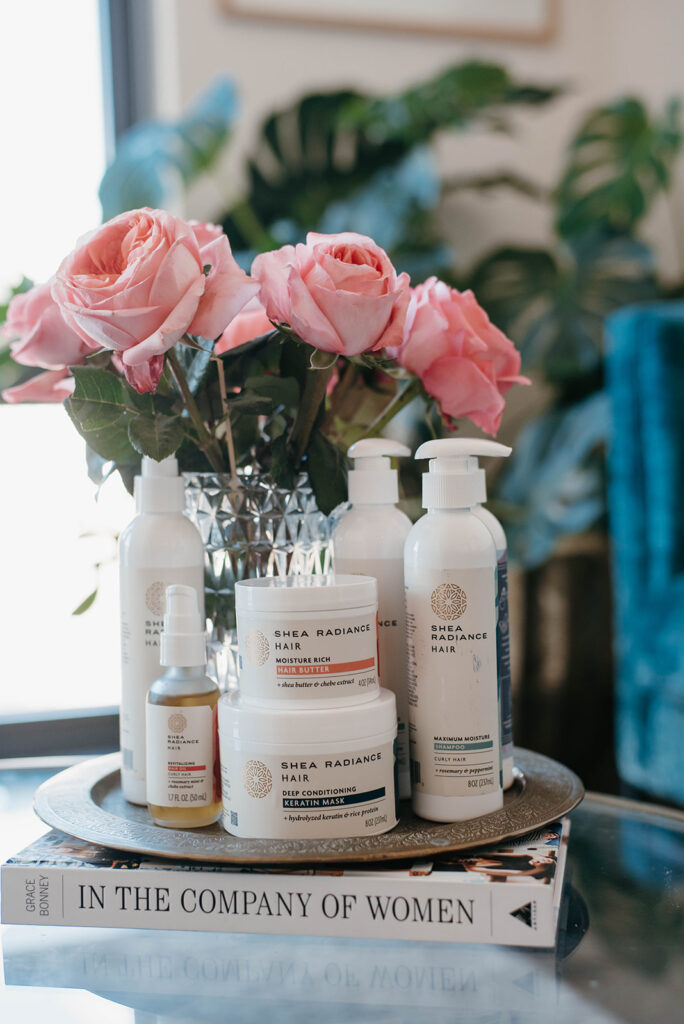
Photo Courtesy of Funlayo Alabi & Shea Radiance
OM: Your brand is incredibly inclusive. You speak about how serving the most overlooked skin serves all skin, and how African skincare is the origin, not the alternative, as well as the answer to many skin concerns. What is something you wish every woman knew and adopted about African skincare?
FA: I wish every woman understood that skincare should begin with nourishment, not correction. One of the great lessons within African beauty traditions is that the skin should be cared for consistently, generously and before it reaches a state of crisis. Moisturizing is not an occasional response to visible dryness. It is a daily ritual of care.
In the West African tradition I grew up with, healthy skin is not simply skin that is no longer dry. It is skin that is supple, protected and glowing. That often requires layering moisture: applying hydration to damp skin and then sealing it in with an oil, balm or butter. Shea butter is especially powerful when used this way. The goal is to support the skin barrier and help the skin retain what it needs rather than constantly stripping it and attempting to repair the damage afterward.
This wisdom is universal. Dryness, sensitivity and barrier disruption affect women of every background, even though they may appear differently across skin tones. When we formulate for skin that has historically been overlooked, and solve those more demanding needs well, we create products that can serve everyone.
African skincare should not be treated as an exotic alternative or a passing trend. Africa is home to some of the world’s oldest beauty rituals and most effective botanical ingredients. The knowledge has always been there. My hope is that every woman feels invited to experience it, not as an act of borrowing something foreign, but as an opportunity to benefit from a beauty tradition rooted in nourishment, consistency and profound respect for the skin.
“Africa is home to some of the world’s oldest beauty rituals and most effective botanical ingredients. The knowledge has always been there.”
OM: You spoke about being born in England and growing up in Nigeria, then moving to the United States to attend Howard University. How do you feel the experience of each place has left its mark on you and formed you into the woman and entrepreneur you are today?
FA: I was born in England, but Nigeria is where I was raised and where so much of my identity was formed. Growing up in Lagos gave me a strong sense of family, community and cultural confidence. It also taught me resourcefulness. In Nigeria, entrepreneurship was not necessarily described as entrepreneurship. It was simply how people lived. My mother worked as a secretary and my father was a government accountant, but like many people around us, they also pursued other ways to create income and opportunity. Everyone seemed to have a side hustle, and there was no rigid separation between being a professional and being enterprising.
That environment normalized the idea that you could create something of your own. My parents were not venture backed founders using the language of business plans and scaling, but they demonstrated initiative, discipline and the importance of using what you had. I absorbed those lessons long before I imagined that I would one day build Shea Radiance.
Moving to the United States as a young woman required another kind of resourcefulness. I had to learn how to navigate a new culture while remaining grounded in who I was. Attending Howard University was especially formative because it placed me in an environment of Black excellence. I encountered people from across the African diaspora who were ambitious, intellectually curious and unapologetic about their identity. Howard expanded my understanding of what was possible for me while also deepening my appreciation for where I came from.
My life in America gave me access to education, a career in technology and the opportunity to build a company. Nigeria gave me the cultural foundation, adaptability and entrepreneurial instinct that helped me recognize the opportunity. England is part of my beginning, Nigeria is the ground beneath my feet, and America became the place where I learned to translate heritage into enterprise.
So yes, I believe my entrepreneurial journey began much earlier than Shea Radiance. It began by watching ordinary people find creative ways to provide for their families and build something beyond their primary jobs. Shea Radiance became my own expression of that inheritance: identifying a need, working with what was available and creating something that could serve both my family and a much wider community.
OM: You have created all the formulas from scratch. What was your first product that you were selling at the farmers market all those years ago? How have you expanded your line, and what is coming up?
FA: Our first farmers market product was the Whipped Body Butter. It grew directly out of our experience using unrefined shea butter to care for our sons’ eczema prone and chronically dry skin. Shola, my husband and cofounder, is our lead formulator. He spent nearly two years experimenting with shea butter, botanical oils and essential oils until we created a product that was effective, pleasurable to use and worthy of sharing beyond our family.
The farmers market became our first real product development laboratory. We could speak directly with customers, watch them experience the texture and scent, hear about their skin concerns and learn what brought them back. That immediate feedback helped us understand that we were not simply selling body butter. We were solving persistent problems for people who had often been disappointed by conventional products.
From that first body butter, we expanded into African black soap, moisturizing body creams and hair care, always with hydration and nourishment at the center. We now have two complementary collections. Pure Essentials offers accessible, family friendly care for dry, sensitive and eczema prone skin and hair. Our Signature Collection brings together exceptional African botanicals and advanced cosmetic actives for women seeking elevated body and facial care, including targeted support for hydration, radiance, uneven tone and the changing needs of skin as we age.
What is coming next is a more focused expression of Shea Radiance as an A Beauty brand. We are not interested in launching products simply to create more SKUs. We are concentrating on thoughtful innovation in body care first, followed by face and hair, areas where we know our ingredient knowledge and formulation expertise can solve meaningful problems. We are also developing more elevated rituals and spa experiences that allow women to encounter African beauty as both high performance skincare and a restorative wellness practice.
“We are concentrating on thoughtful innovation in body care first, followed by face and hair, areas where we know our ingredient knowledge and formulation expertise can solve meaningful problems.”
The scale has changed dramatically since those farmers market days, but the development process has not. We still begin with a real person, a real need and the question that started Shea Radiance: how can the power of natural ingredients help us solve this well?
OM: When I met you, one thing that impressed me was when you grabbed my hand, rubbed the softest cream all over it and it began to glow. You seem to approach business as an exchange, focusing on the relationship and the customer’s experience rather than the sale. Is that a byproduct of Nigerian culture or a Funlayo special?
FA: I think it is both Nigerian culture and a little bit of the “Funlayo special.” In Nigeria, commerce is relational. You greet people, you talk, you negotiate, you laugh and you establish a connection. A transaction is rarely just an exchange of money for a product. There is a human interaction around it, and hospitality is often part of the experience.
But I am also naturally a tactile and relational person. When I take someone’s hand and apply a product, I am not thinking, “How do I close this sale?” I want her to feel what I feel: the texture, the softness, the transformation and that moment when the skin begins to glow. Beauty products are deeply sensorial. Sometimes the product can communicate in seconds what I would need ten minutes to explain.
There is also something very personal about caring for another woman’s hands. Hands carry so much: our work, our families, our responsibilities and our stories. Applying cream becomes a small act of care and an invitation to pause. It says, “Let me show you what is possible for your skin.”
The farmers markets taught me that people may initially come for a product, but they return because of how you made them feel and because they trust you. That has remained central to how I approach business. Of course, sales matter. We cannot fulfill our mission without building a profitable company, but I never want the transaction to become more important than the person. My goal is to create a genuine exchange: she gives me her attention and trust, and I give her knowledge, care and a product that can meaningfully serve her.
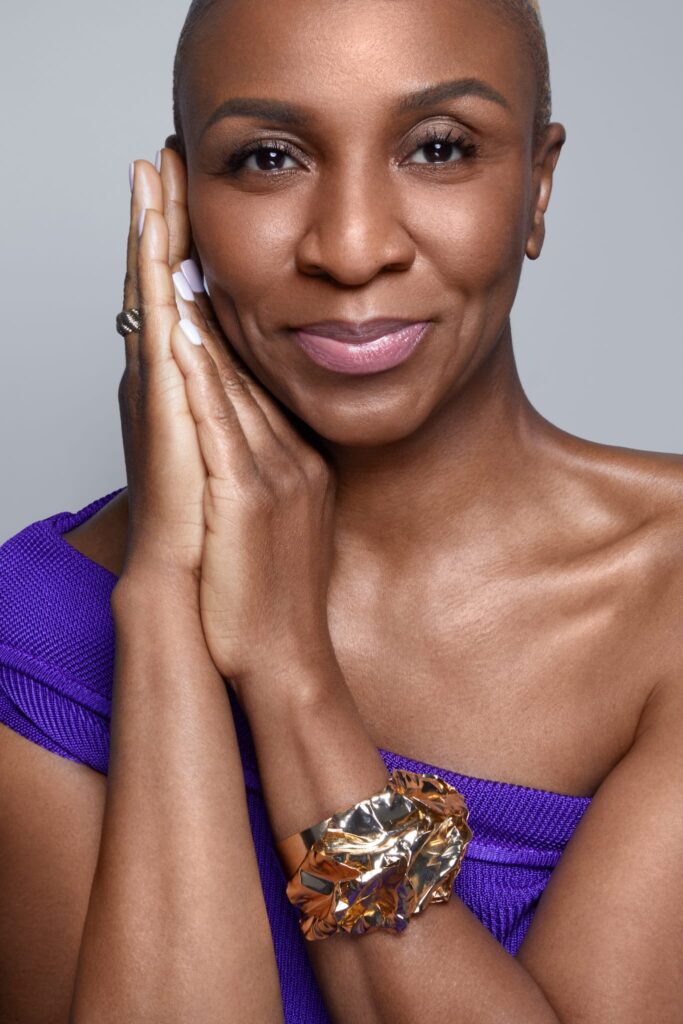
Photo Courtesy of Funlayo & Shea Radiance
OM: Osé means to be bold or audacious. What is one of the most audacious things you have done, either in life or business?
FA: One of the most audacious things I have ever done was donate a kidney to my oldest son. I am not sure I experienced it as bravery in the moment. It felt like love, making the decision before fear could finish asking all its questions. As a mother, when you know that something within you can give your child a healthier and fuller life, the choice can feel both enormous and remarkably simple.
But it required a profound surrender. I had to place my body, my son, my family and the outcome in God’s hands. I am accustomed to being the person who leads, solves problems and keeps moving. The transplant forced me to become vulnerable, receive care from others and accept that strength is not always demonstrated through action. Sometimes strength is trusting, resting and allowing yourself to be carried.
That experience changed my understanding of audacity. We often imagine boldness as something loud and highly visible: launching a company, taking a financial risk or walking into a room where no one expects you to belong. Those things require courage, and I have done my share of them. But some of the most audacious decisions are deeply personal. They ask you to offer what is precious, release control and move forward in faith.
For me, being audacious means refusing to allow fear to have the final word. It does not mean fear is absent. It means love, purpose and faith become greater than the fear.
“For me, being audacious means refusing to allow fear to have the final word. It does not mean fear is absent. It means love, purpose and faith become greater than the fear.”
OM: You often talk about aging as an honor and a blessing and you walk the walk as the most elegant woman I have ever met. How do you see the conversation around aging changing?
FA: Thank you, Kate. I believe the conversation is slowly shifting from anti aging to pro aging, from treating age as something to conceal toward understanding it as a natural, valuable stage of life. Women are beginning to reject the message that our relevance, beauty or desirability has an expiration date.
At 61, I do not want to look 31. I want to look healthy, vibrant and fully alive at the age I have been blessed to reach. Aging is evidence that I am still here. I have lived, loved, raised children, built a marriage and a business, endured losses, survived difficult seasons and gained wisdom that could only come through time. Why would I want to erase all of that?
That does not mean abandoning beauty or pretending that every physical change is easy. Our skin, hair, hormones, metabolism and bodies change, and women deserve honest information and effective products that support those changes. I enjoy looking my best, dressing well, caring for my skin and maintaining my physical strength. But there is a profound difference between caring for yourself and fighting against yourself. Pro aging asks, “How can I nourish and support the woman I am becoming?” rather than, “How can I make her disappear?”
I am also encouraged that the conversation is expanding beyond appearance. Women are talking more openly about menopause, muscle strength, bone health, rest, emotional wellness, purpose and longevity. Aging well is not simply about having fewer wrinkles. It is about remaining strong, curious, engaged, connected and able to participate fully in your own life.
I hope we reach a place where women can make personal beauty choices without shame, but also without the pressure to appear perpetually young. The goal should not be to disappear into age or to run from it. The goal is to arrive in each season as fully as possible, with gratitude, confidence and the freedom to define beauty for ourselves.
“The goal is to arrive in each season as fully as possible, with gratitude, confidence and the freedom to define beauty for ourselves.”
OM: What legacy do you want to leave behind?
FA: The legacy that matters most to me begins with my family. I want my sons to know that they were deeply loved and that everything I built was never more important than the people I was building it for. I hope they inherit faith, courage, compassion and a sense of responsibility to use whatever God has placed in their hands to serve others.
Through Shea Radiance, I want to leave behind a strong, enduring African beauty company, one that can thrive beyond its founders, create meaningful jobs and demonstrate that purpose and profitability can coexist. I want African ingredients, knowledge and innovation to be recognized as central to the global beauty industry, not treated as an exotic alternative. And I want more of the value created from African resources to remain with the women and communities at the source.
I also hope my journey gives other women permission to begin, continue or begin again. I did not follow a perfect entrepreneurial path, and success did not arrive according to a neat timeline. I have experienced growth, failure, rebuilding, motherhood, caregiving and reinvention. If another woman sees my life and believes that age, setbacks or an unconventional journey do not disqualify her from pursuing her purpose, that would be deeply meaningful to me.
Ultimately, I do not want my legacy to be measured only by how many products we sold or how large the company became. I want it to be measured by whether people were strengthened, opportunities were created, women were treated with dignity and those closest to me felt loved. I hope I am remembered as a woman who was faithful with what she was given, and who left people and places more radiant than she found them.
To find out more about Funlayo and her incredible products head to SheaRadiance.com
Discover the Exhibit
Consciousness is a state of awareness that exists in all of us.
Through this exhibition, we explore consciousness through the lens of four incredibly talented artists. They offer a global perspective shift in consciousness and how through different cultural lenses the idea of consciousness changes.
Whether it is captured through the eyes of another, in contemplation, within the evolution of self or in stillness, they all truly capture that inner knowing that lives inside of us all.
Consciousness


Javier garcía sánchez
03
Klazicmoskoart
02
Kknairuti
01
munyange
04
Discover the Artists
Osé Presents
Have a story to tell? We'd love to hear it. Let’s begin with a simple note.
And everywhere in between
Paris, san Francisco, Casablanca