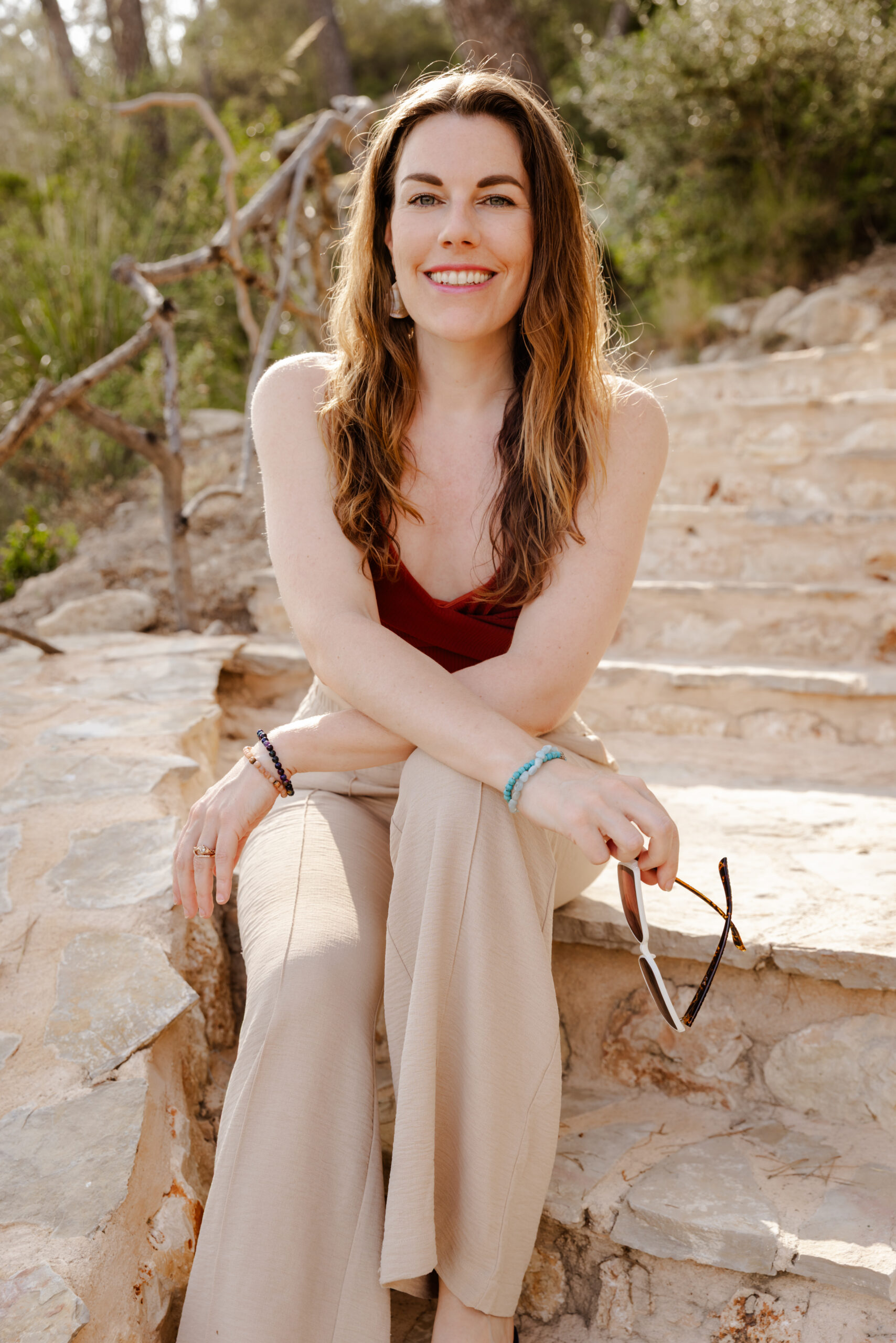
Veerle Beelen Da Costa David: Wherever You Go, You Take Yourself
Some people travel to see the world. Others do it to meet themselves. Veerle not only is the latter she has made it her life’s work to help other’s pursue the same.
Born in the Netherlands, she discovered what life could feel like outside her home country during a year in Barcelona. That experience set her on a path that has taken her from a UN posting in Cambodia to immigration work in Sydney and Melbourne, then to a pandemic-era return to home in the Netherlands after losing her job and visa. From there she moved on to Portugal and, finally, back to Sydney, the city where she met her husband and where she hopes to put down roots for good.
Along the way, she traded a decade-long career in law for something bolder and more fulfilling. She is now a travel and life coach who helps people with the part of relocation that often gets overlooked: the emotional and mental side of building a life abroad. She is also a certified Happiness Ambassador through the School of Happiness, and she is training in energy work, inspired by a transformational retreat in Mallorca. Her work centers on belonging, identity, purpose, and coming home to yourself.
Having been friends for almost two decades, it was a pleasure to get to sit with Veerle and talk about in depth about her life, her adventures and what how she hopes to leave her mark.
Osé Magazine: Back in 2010 we met on a drunken night out in a club in Barcelona where you were studying international law and later became an immigration lawyer. What happened next?
Veerle Beelen Da Costa David: I still remember our time in Barcelona, sharing a beautiful meal on your balcony followed by a night of dancing with the girls. A lot has happened since then!
After spending a year in Barcelona I moved back to the Netherlands to finish my law degree. As I couldn’t find work right away after graduation, I started teaching latin dance classes in a local dance school. This eventually turned into my second career / side hustle of teaching Zumba, which I still do to this day.
After a year of dancing and job searching, including some unpaid internships at law firms in Amsterdam, I was invited for an opportunity to work at the UN in Cambodia. I didn’t think twice and almost immediately said yes. I was always ready for new travel adventures and exploring my horizons.
That time abroad was followed by another 3 moves across the world. First, to Australia to work as an immigration consultant in Sydney and later also in Melbourne. Then, back to the Netherlands, when my job was made redundant during the pandemic and I lost my visa – and had to pack my bags within 2 weeks, leaving the life I had so purposefully built behind again.
In the Netherlands I changed careers and decided to start my own coaching business to help other people move countries and live their best life abroad – not just from a logistical point of view, but from the part that’s always forgotten: the emotional and mental side of relocation.
And then again, after some years in the Netherlands – where I could never really adjust anymore – my husband and I moved to Portugal and then back to Australia.
Now, in my work, I focus on topics around belonging, identity, purpose, coming home to yourself, and living life on your own terms. Creating a life that not only looks good on paper, but actually really lights up your soul.
That’s where I’m at now!
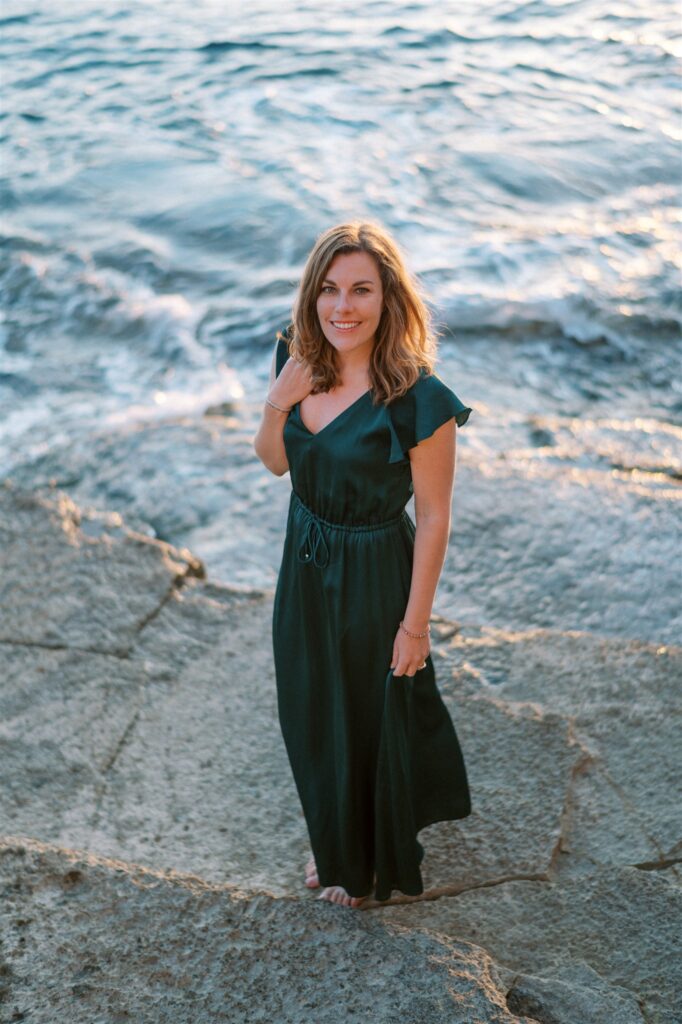
Photo Credit: Avieta Claessens Photography
OM: How did your time working for the UN in Cambodia shape your view of the world and the systems within it?
VBCD: Honestly, I was quite unprepared when I moved to Cambodia. I was in my early twenties and just saw it as a great adventure and opportunity for my career, but didn’t do proper research about what living there would entail. So, when I arrived and when I started working I was shocked about what I saw and heard, especially about the tragic history of the Khmer Rouge. All I could think was “how come I never heard about this in my life before? How is it possible that they don’t teach this at school?”. So, my time working for the UN definitely opened my eyes and broadened my world view. It made me realize that I had been living in a school and work system that was just a bubble, and didn’t represent what’s really going on in the world. Maybe I was just a bit naive before then, so this was a good learning experience to understand that it’s important to do my own research and not just rely on what systems have taught me.
“It made me realize that I had been living in a school and work system that was just a bubble, and didn’t represent what’s really going on in the world. “
OM: You are a graduate of the School of Happiness, making you an official Happiness Ambassador. Can you explain what that means and how someone can apply those principles to everyday live?
VBCD: The School of Happiness was founded by my dear friend Alienor Salmon, who is a happiness expert and researcher. I decided to become a Happiness Ambassador through her program, because it’s important to me in my work and in my personal life to not only find ways to live my happiest life – and figuring out what that means – but promote understanding of how we can spread happiness to the world with all the things we do. Happiness sometimes sounds like a vague concept, or a ‘nice-to-have’, but what it really means in the context of being a Happiness Ambassador is every person’s right to a meaningful, fulfilling and purposeful life, and understanding how much impact a science-based approach to happiness can have on the world.
If you want to apply this in your everyday life, a good starting point can be to look at your values. What matters most to you and why? What are your priorities and how do you express them? For example, an important value for me is presence. Being very present in the work that I do, but also in how I live my life. There’s so much noise and distractions around us every day, from social media, the news etc., that it can become hard to hear your own thoughts and listen to your inner voice. The more present I can be, the happier I become – because it gives me a clear direction of how I can live my happiest life.
Another principle that I apply in my everyday life is to understand that happiness isn’t a goal to achieve or a destination to reach. Even when life feels hard, or maybe especially when life feels hard, I try to find the silver lining and look for small sparks of joy. For me it’s not so much about happiness as a big milestone, but how we can integrate small moments into our day-to-day life, glimmers that can lift your mood or make your day just a tiny bit better.
OM: You have lived on three different continents: Europe, Asia and Australia. What prompted your desire to travel and even further live in a place outside your home and how did you start?
VBCD: I’ve had a travel bug since I can remember! As a child growing up in the Netherlands, my family took me on trips through Europe, and as a teenager also overseas to the Americas, and to Asia. I’ve always been fascinated by discovering new places, different languages and cultures, and seeing how other people live their lives. I always felt that there was so much more to see than the tiny country that I grew up in! When I was given the opportunity to move abroad during my law studies for an exchange program, moving to Spain was a logical choice – since I was curious to learn the language and discover what it feels like to live in a different country.
That year in Barcelona gave me the confidence and resilience to build a successful life abroad. From not speaking the language at all when I first arrived and not knowing anyone, to eventually becoming fluent in Spanish, creating a beautiful group of strong friendships, and not just surviving in a different culture but also thriving – it was a life changing experience for me.
Since that experience in my early twenties, the Netherlands never felt the same anymore. I got a taste of how good life can be somewhere else, that there’s not just one way to live your life and most importantly how it made me feel. I knew that I wanted to see the world as much as possible and experience living in more countries. Not just to get to know the world, but also to get to know myself on a deeper level.
My concept of “home” was stretched and I realized that there’s a way to create this feeling of home in a completely new place. Travel and living abroad has given me a sense of freedom and awe, knowing that it’s possible to build a life outside of what’s familiar.
“Travel and living abroad has given me a sense of freedom and awe, knowing that it’s possible to build a life outside of what’s familiar.”
OM: What have you learned from each place and culture that you’ve inhabited?
VBCD: The Netherlands taught me stability, structure, and boundaries. Spain awakened my joy, connection and free spirit. Cambodia showed me resilience, courage and surrender. Australia expanded my freedom and confidence. Portugal grounded me in presence and balance.
Overall, living in these countries and traveling to many more, made me a more well-rounded person. I often see myself more as a global citizen, instead of being a citizen of only one country.
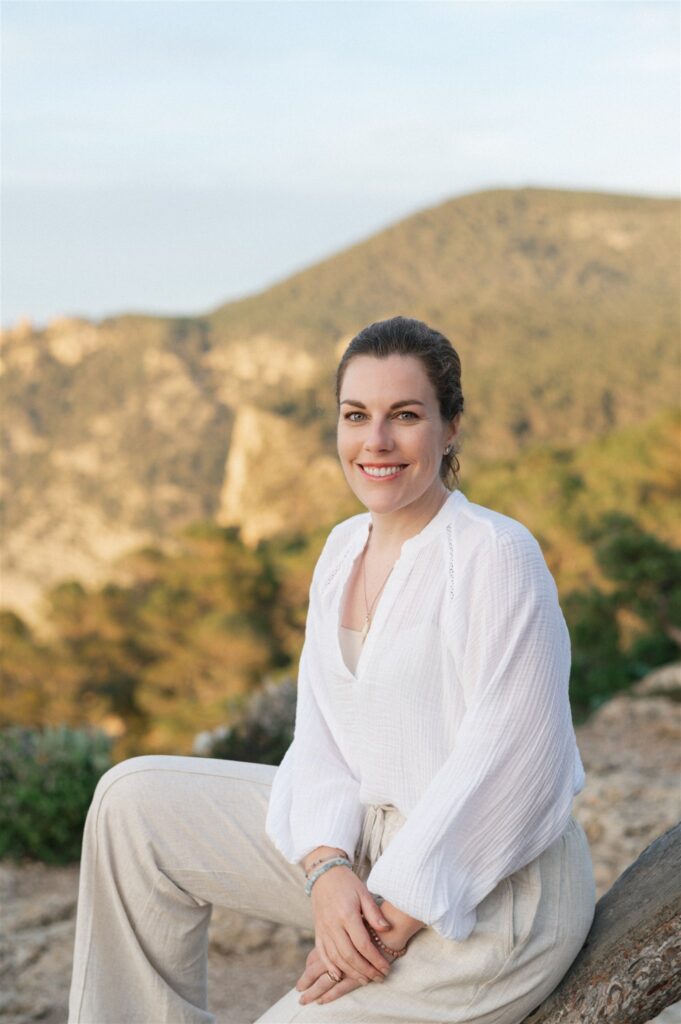
Photo Credit: Avieta Claessens Photography
OM: What is the trip that you think really had a lasting impact on you and set in stone the desire to live the life you are currently living?
VBCD: I went to a retreat in Mallorca that was very transformational on a personal growth and spiritual level. It was a beautiful place on the top of a hill with a view over the valley. Every morning we started with a multidimensional energetic practice, in which I really experienced the feeling of coming home to myself on a deep soul level. It’s hard to put it in words, some people may want to call it an awakening. But it definitely changed my outlook on life and made me ask myself the big questions of “What am I doing on this planet? How do I want to live my life? What am I meant to be doing here?”
These were confronting yet important questions to ask myself, and to really give myself the space and time to answer and integrate, instead of rushing through life and just hoping for the best – never really knowing if I’m on the right path.
It had such a profound impact on me, that I decided to get training and learn the method myself so that I can practice these energy transmissions in my everyday life and share them with anyone who’s interested in coming home on a soul level and finding a deeper connection to themselves.
So that’s part of my current journey now and I cannot wait to share this beautiful inner work with everyone soon.
OM: What is your system to navigate a city you’ve never been in? How do you break it down? How does that system change when you move from traveling to a city and moving to a city?
VBCD: I personally like the combination of planning and going with the flow. I usually research before I travel to a new city to understand what places are worth visiting, what to expect, how transport systems work, any cultural differences or customs I should be aware of (e.g. what is appropriate to wear), safety, and any logistics I need to take care of.
When I have the basics prepared, this gives me the space to enjoy the new city in a way that’s more about discovery than following a perfectly laid out itinerary.
For me it’s very important, beyond the logistics, to ask myself what I want to get out of this travel experience. Why do I want to visit this city? What am I looking for and what do I hope to get out of this visit?
So, for me it always starts with an intention – not with a list of the top 10 touristic highlights you should see. While I was younger I always wanted to tick off as many things as possible to make the trip “worth it”. I would rush from one thing to another and cramp as much as possible into every travel day, just to make sure I didn’t miss anything. The FOMO was real!
Luckily for me, I now prefer having a much slower pace. More focused on the experience itself, soaking it all in, giving myself the time and space to wander, talk to strangers, have spontaneous encounters and just see what happens.
In terms of moving to a new city, it’s definitely a different approach, because it’s more about having a long-term vision. It involves preparation and research of course, and also focusing on the intention or “why” of your move to that city. But besides that it’s also about building a life there, not just about experiencing the city for a few days.
So the research is more about lifestyle, quality of life, and logistics like renting a place, costs of living etc. – that is not so relevant when you just travel to a city for a short visit.
OM: How do you overcome some of the challenges of living in a new place? Being far away from family, friends, customs, etc?
VBCD: It’s definitely different not having a support system close. Over the years I’ve learned to rely more on myself, but also to learn how to ask for help – even to strangers – when you’re figuring out systems in a new country and you don’t know what to do. It requires resilience and stretching yourself out of your comfort zone all the time.
Besides that, it also gave me the opportunity to get to know myself much better. When challenges come up, you have to trust yourself and know that you can figure things out. This shapes you and gives you a sense of confidence and resilience that is hard to find when you stay in your comfort zone.
Staying close to myself, and finding that home within, has helped me navigate challenges and overcome obstacles like language barriers, culture shock, home sickness, loneliness, and any other challenges that come up when you’re building a life abroad.
To give you a practical example, like making new friends. If you stay at home, feeling lonely, hoping that some day you make new friends but you don’t go out or take any action, nothing really changes. You have to put yourself out there, join meet ups, go to events, introduce yourself, start conversations. And yes that’s also possible for introverts (like myself!). Your mindset and energy are important, and also thinking about your intention again. What type of friendships are you looking for? What are the best places to find likeminded people? What steps are you taking each week to meet people?
Because I’ve experienced all of this myself, and helped others through it as well, I recently decided to create an online program around all of these challenges and how people can overcome them – going from surviving to thriving abroad.
Sometimes it’s just about asking yourself better questions, or changing your mindset, and realizing that often the worst-case scenarios that we create in our minds are never going to happen anyways.
Yes… living abroad is not always easy, there are many challenges – life has its ups and downs – but with the right mindset, courage and open mindedness you can come a long way. And being kind to yourself through all of that, is so important too.
OM: How does moving abroad act as a mirror to help you understand your true self? Do you have an example of how this shows up in a good way and in a bad way?
VBCD: In a good way, moving abroad helps you to get to know yourself much better. When there’s no one else around to help you, you don’t understand the language or the systems, and you have to rely on yourself, you find a sense of inner strength you didn’t know you had. This will bring you closer to yourself.
On the other hand, the mirror of moving abroad can also be triggering. In my coaching business, I always say “wherever you go, you take yourself”. What I mean with this, is that moving abroad doesn’t suddenly solve all of your problems. It can perhaps feel like a temporary escape from the life you were living, but sooner rather than later, anything you haven’t dealt with will come back to the surface.
I like to use the metaphor of having an “inner carry-on”, which is filled with beautiful things like your resilience, kindness or confidence, but can also be filled with things that weigh you down, like limiting beliefs, fears and doubts. Things that you are carrying with you that feel heavy.
In that sense the mirror of moving abroad can be confronting. For example, an old fear can show up when you have to put yourself out there in a different language or culture to make new friends and you suddenly get worried about how you’re being perceived.
Being in a new environment can also be triggering, especially in the beginning. Your nervous system is continuously scanning everything that’s new around you, and assessing whether you’re safe. This can make you feel exhausted or more sensitive or insecure than usual. At the same time, it can also teach you a lot about yourself.
Moving abroad is not just a relocation, it’s a full personal identity update. At home, your identity runs on autopilot. Your brain recognizes the setting and activates the matching behaviour.
That’s why we can often feel stuck in repeating patterns and it can be hard to change our behaviour. When we move abroad, it can feel like a wake up call. While everything is new, the environment stopped reminding you who you were supposed to be. And what’s left, is who you’ve always been underneath.
It can feel like an expansion, or like you feel more alive. But at the same time, it also requires intention. Because otherwise, when the novelty fades, you end up repeating the same patterns again and autopilot eventually returns. If you don’t approach it consciously, you’ll just create the same life again in a different location.
“While everything is new, the environment stopped reminding you who you were supposed to be. And what’s left, is who you’ve always been underneath. “
OM: Which limiting belief was the hardest to overcome, and does it still show up in your work?
VBCD: Not feeling enough. Even though I came a long way, this thought can still show up sometimes, whenever I try something new for example. “Is this good enough? Will people like it? Etc. I think it’s a tricky one, that many of us – especially women – recognize, since we’ve been raised in a system that often keeps us small and doesn’t allow us to fully express ourselves without fear of rejection.
Since I was young I was always overachieving, trying to get the highest grades, and later on as an adult climbing the career ladder and chasing the next promotion – thinking that whenever I reached the next thing, I would have made it. Not really knowing what that “it” even was. Until in recent years, I learned the hard way – mostly through health challenges – that chasing external validation is not going to make me happy.
So it has definitely been a journey for me to work on this limiting belief and to realize that I don’t need any external validation, but that I can do things from a place of worthiness and joy.
Because if you really think about it, just being on this planet, being alive, makes you worthy already!
OM: Having lived abroad almost as long as you’ve lived in the Netherlands, what did it mean to be Dutch before versus after having lived abroad? How do you relate to being Dutch now?
VBCD: Growing up I didn’t think much about it, but after my first time abroad I realized that the way I had been living my life in the culture that I was familiar with wasn’t the only way to live my life. Somehow I had been given this understanding when I was younger that things were better in the Netherlands than in other countries and when I found out that that wasn’t true, it changed my perspective of the country as well. I never felt fully connected to Dutch culture, and in hindsight this may have been one of the reasons why I loved traveling and living abroad so much.
The longer I’ve lived abroad, the less attached I feel to being Dutch. Honestly, it doesn’t really mean much to me. It’s not something I’m proud of, also not something that I hate, it just is what it is. I feel more like a global citizen, than being Dutch specifically.
I’m grateful to have been raised in a country where I had the opportunities that I had, to go to school, to travel, to grow up in a safe environment, to have a passport that allows me to travel the world – and I will never take that for granted.
But as an adult, I’ve realized that the Netherlands is not the best place for me to live and that I don’t relate much to being Dutch anymore and that’s okay for now.
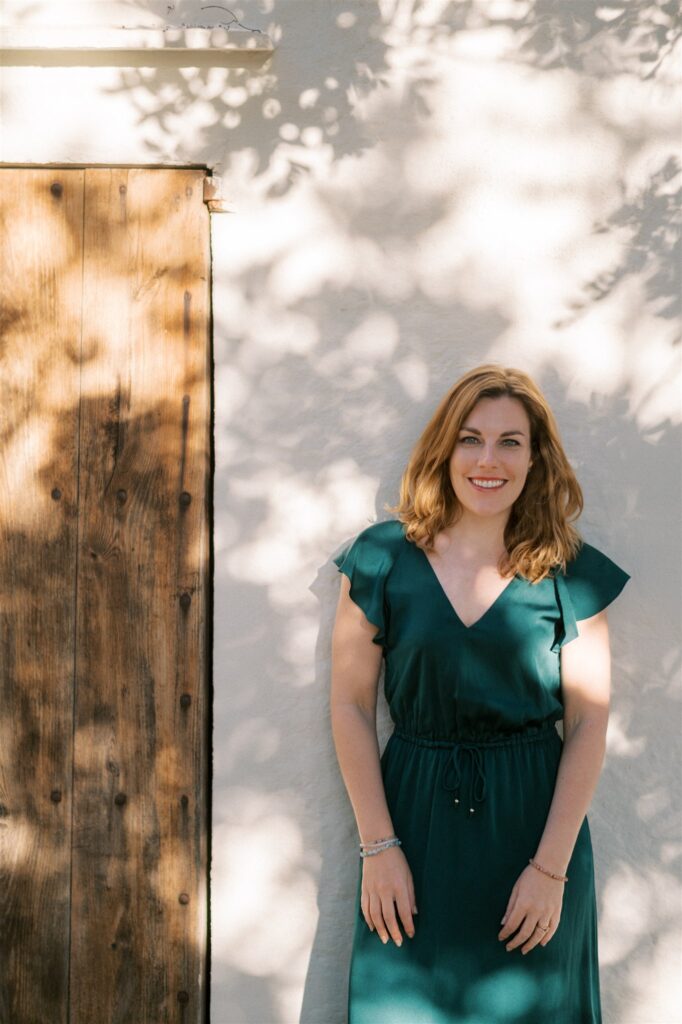
Photo Credit: Avieta Claessens Photography
OM: Do you think traveling is better than therapy? Why or Why not?
VBCD: I think traveling is a form of therapy in itself! I’m not saying it’s better or worse than traditional therapy, and I think there’s a place for travel and for therapy and that they can also complement each other.
Travel has been a transformational part of my life and definitely helped me find clarity, grow, and heal. At the same time, I’ve done different forms of therapy as well over the past years, and they have been very instrumental and supportive to process challenging times in my life.
So I prefer to say that they are complimentary, and depending on your situation one probably fits better than the other in a certain phase of your life.
OM: You met the love of your life while living in Australia, which was far from home for both of you. What was that experience like? Do you think it was an advantage that you were both outside of your native cultures? And how do you bridge the inevitable cultural gaps in your relationship?
VBCD: Yes, we met each other in Sydney, just a few weeks after I had moved there in 2018. What are the odds! I definitely didn’t plan on meeting someone on the other side of the world, but as cliche as it sounds, those things happen when you’re not looking for it.
I think it was an advantage that we’ve both lived in many countries outside of our home country and that we both don’t feel so attached to our native cultures. That’s probably also the reason why so far we haven’t experienced any cultural gaps in our relationship.
Since we’re both more globally minded, having started over in different places multiple times across our lives before we met each other, I believe it made it much easier to understand each other and live this lifestyle together.
Communication is key of course, like in any relationship. And over the years, we’ve created our unique language, combining English, Dutch, Portuguese and Spanish plus random made-up words that no one else understands but us!
Also, since we’re both not attached to one place, it made it easier to decide to move countries together and eventually decide to move back to Sydney. Since we’ve met here, it’ll always be a special place for us.
OM: You are currently living in Sydney. Is that your forever home or is there another move in your future?
VBCD: I definitely hope this will be my forever home. Sydney does feel like the place I’ve felt most at home in my life so far, so we’re not planning any move for the future. Our next goal is to get permanent residency here.
“I just trusted that spark that I felt, and knew that if I would just put one step in front of the other, I would find my path.”
OM: Osé by definition is living life boldly and unapologetically with audacity. What is your biggest Osé moment so far?
VBCD: Besides moving countries, I feel that starting my coaching business was one of those biggest Osé moments. At that time, I was at a low point in my life. In 2020, in the middle of the pandemic, I had just moved back to the Netherlands after I lost my job and visa in Australia. I was unemployed, stuck in lockdown, felt depressed and in reverse culture shock, and had no idea what to do with my life.
The only thing I knew was that I didn’t want to go back to an office job anytime soon. This “what am I doing with my life” phase took about 6 months, in which I travelled deeply inwards and remembered that I had always wanted to create something for my own.
I had already started a blog and built a website while I was still living in Australia at that time, about my experiences of living abroad, and in that sense that seed was already planted.
Then, I came across a program to become a certified Travel Coach and something clicked. I realized that I wanted to help others who were dreaming of moving countries or were adjusting to life abroad and figuring out what they wanted to do in their lives.
From my decade of working as an immigration lawyer, I noticed that there was a gap in the global mobility industry. There was support for the logistics, like visas and taxes, but no emotional and mental support for expatriates. That’s why so many people who’ve moved abroad eventually end up burned out or disappointed, and return home unfulfilled.
Eventually I also became a life coach and started helping people around deeper life topics like belonging, identity, purpose, career changes, and living life on your own terms.
But it all started with that “Osé moment” of daring to change my career – a career that I’d been building for a decade – while the whole world was in chaos and I had no idea how to even become an entrepreneur.
I just trusted that spark that I felt, and knew that if I would just put one step in front of the other, I would find my path.
Now six years later, I’m back in Australia, and so grateful that my younger self was brave enough to bet on her dreams that day.
You can fin Veerle at https://www.unpackbyveer.com or on instagram @unpackbyveer
Discover the Exhibit
Consciousness is a state of awareness that exists in all of us.
Through this exhibition, we explore consciousness through the lens of four incredibly talented artists. They offer a global perspective shift in consciousness and how through different cultural lenses the idea of consciousness changes.
Whether it is captured through the eyes of another, in contemplation, within the evolution of self or in stillness, they all truly capture that inner knowing that lives inside of us all.
Consciousness


Javier garcía sánchez
03
Klazicmoskoart
02
Kknairuti
01
munyange
04
Discover the Artists
Osé Presents
Have a story to tell? We'd love to hear it. Let’s begin with a simple note.
And everywhere in between
Paris, san Francisco, Casablanca