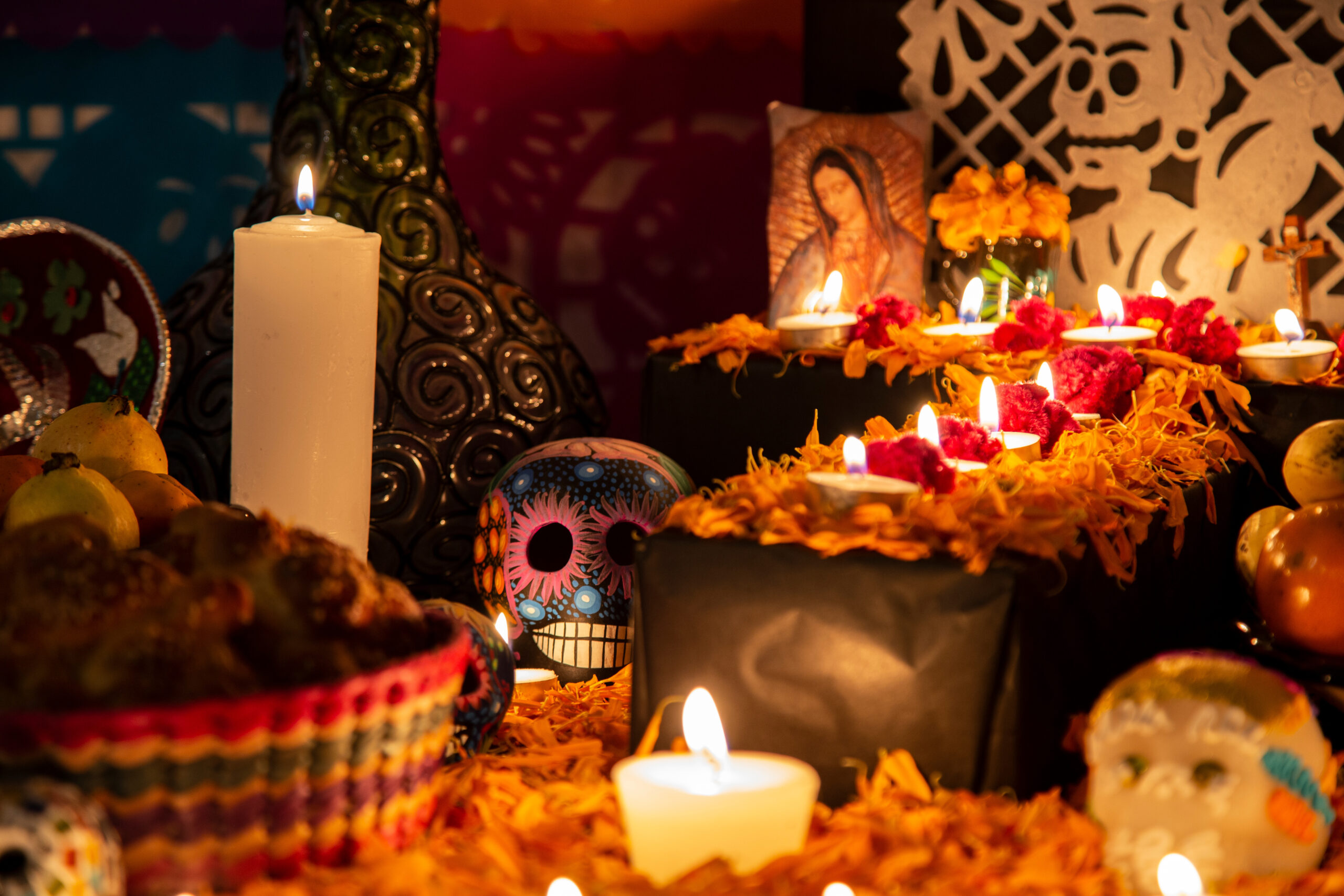
Dia de Los Muertos: Where Death Comes in Living Color
Death in Living Color: A Moment to Share with Those Who Have Passed
In the Western World death is often sad, dark and adorned in the color black. In Mexico and other Latin countries that celebrate Dia de Los Muertos across the world, death is colorful, filled with vibrant serapes, the loved ones’ favorite foods, figurines, candles, marigolds and other decorations bringing to life grave sites, homes and ofrendas (an altar built to offer gifts to those in the afterlife) to encourage loved ones passed to join in the joyful celebrations.
The Art of the Ofrenda: Creating an Altar That Honors Those You Love
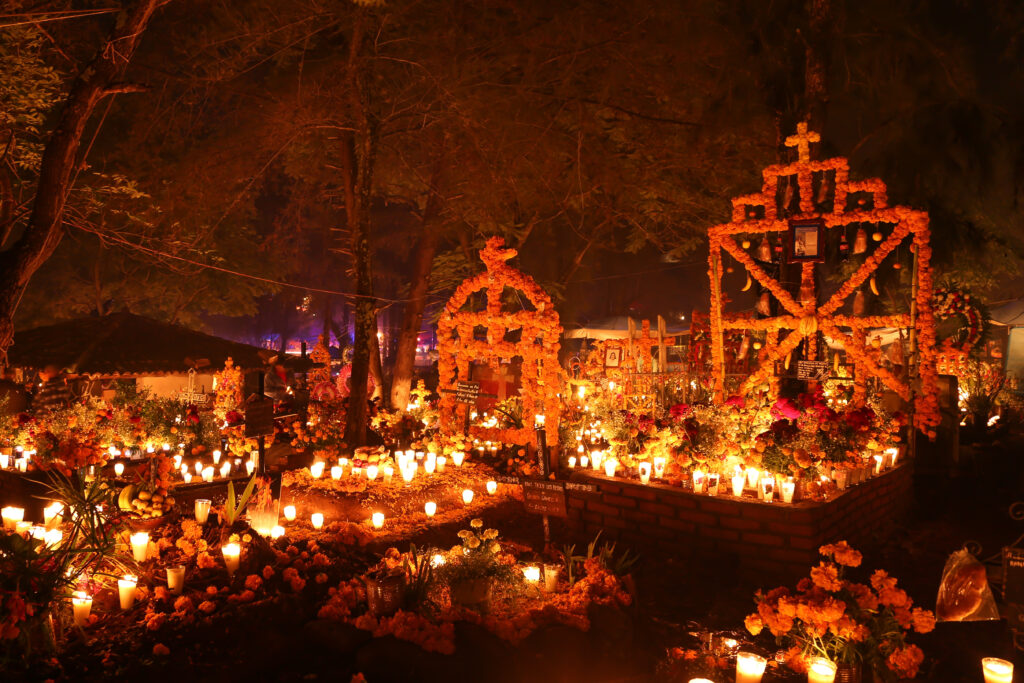
Ofrendas appear in homes or on graves during various periods of October and are fully constructed by the 31st and last through the festivities over the first days of November. The celebrations and ofrendas vary by state and even by family, but most include different levels to represent the different worlds and incorporate each of the elements (earth, fire, water, air), papeles picados (paper decorations), colorful flowers, salt, water and some favorite foods, candies and pastries. Ofrendas are more often than not set up in homes but some cities create them in their centers to offer remembrance to lives lost in local tragedies, historical or important cultural figures.
Nourishment in all Forms: Food as Connection to This Life and the Next
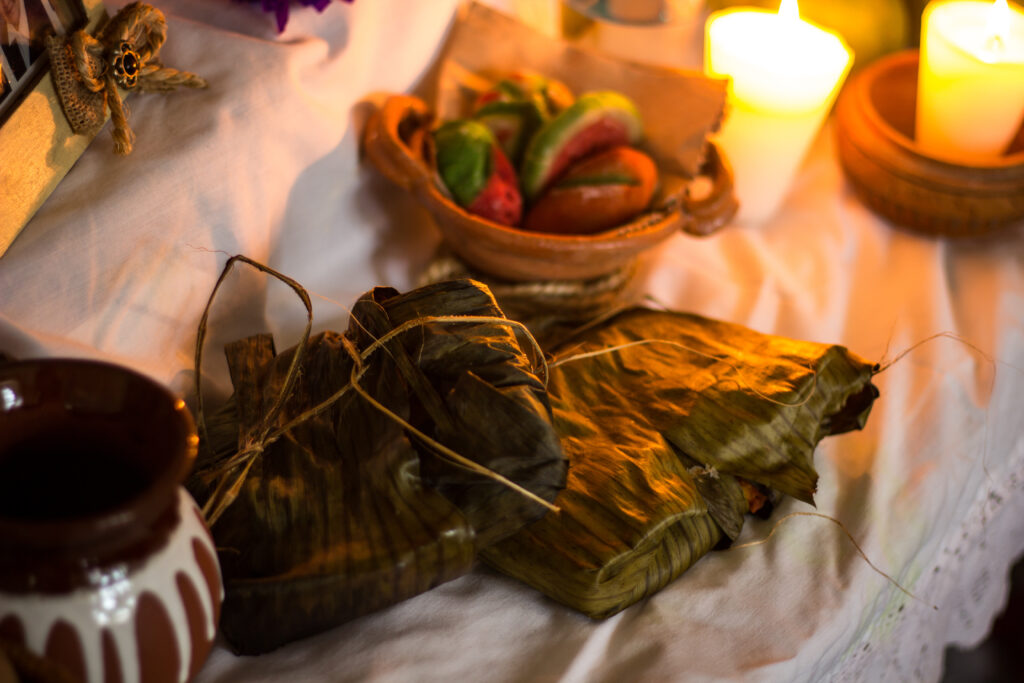
Beyond the food for the ofrendas, there is food, so much delicious food for the celebration. Mexican classics like tamales, delicious pan de muertos (a festive bread) which takes different shapes and flavors depending on the region making it but it is marked with a cross on the top and often includes orange zest and orange blossom water. There is also the traditional Mayan dish, mukbil pollo, found in the Yucatan region. In Guatemala they celebrate with cold salads, cheeses, meats and pickled vegetables. Whatever the choice for the festivities, food is at the heart of the celebration, often taking days to prepare. Families and friends gather around grave sites and ofrendas to eat, tell stories while assisting and nourishing their loved ones along their journey to the underworld, always leaving food aside for them.
Art in Celebration: Every Moment is an Opportunity for Expression
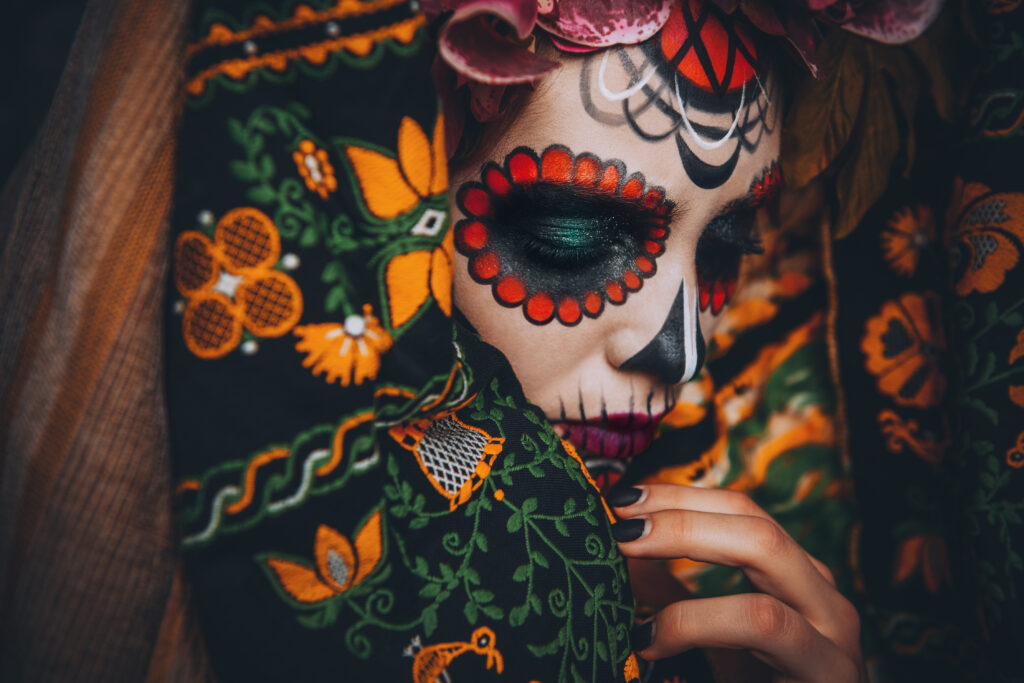
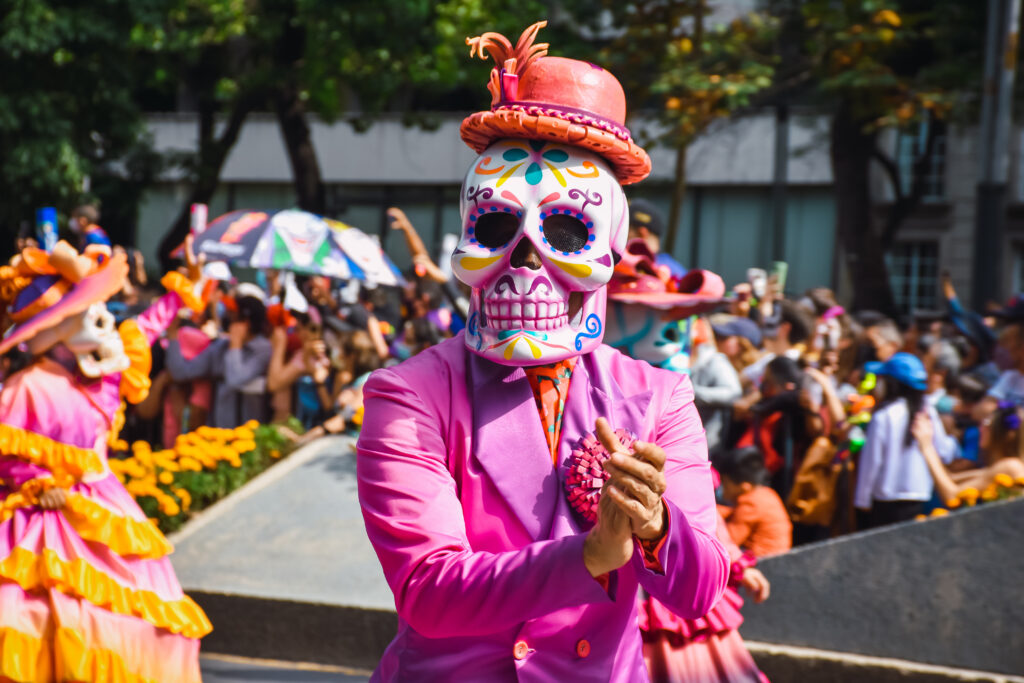
Food and ofrendas are just the beginning of the celebrations. There is art and adornment to tell the story of either loved ones or of the underworld. Much more than the candy skull tutorials you find on Pinterest. Many people from different regions offer their bodies and traditional garments as a canvas for story telling and art in its purest form.
In Santiago Sacatepéquez and Sumpango, Guatemala, Dia de los Muertos and the Festival de Barriletes Gigantes (The Giant Kite Festival) are dual celebrations that create one big bash of joyful festivities of colorful kites made from delicate tissue paper and bamboo, alongside all the color of Dia de Los Muertos.
In the US, South Western and Western regions delight in the festivities of Mexican heritage, moving what were once private home celebrations into communal celebrations in large cities like Los Angeles, San Francisco, Austin, San Antonio and more. Collaboration with Mexican and Mexican American artists and cultural institutions brought these celebrations to life in former Mexican territories and allowed others to participate respectfully in the festivities.
@teotecpatlsantinm Ya se siente el día de Muertos El Día de Muertos es el resultado de un profundo sincretismo cultural que conecta la cosmovisión mesoamericana, la imposición y adaptación del catolicismo novohispano y las reinterpretaciones modernas. En la época prehispánica la muerte no era un final definitivo, sino como una fase natural de un ciclo y una transición hacia el Mictlán (el lugar del reposo, y otros destinos según el tipo de muerte. Los mexicas dedicaban meses enteros a honrar a los difuntos, destacando Tlaxochimaco (fiesta de los "muertitos" o niños) y Huey Miccailhuitl (la gran fiesta de los adultos), que coincidían con el final de las cosechas de maíz. Se usaban calaveras reales para decorar los altares de los templos, ofrendas de comida, flores de Cempohualxochitl (“Cempasúchil”) y se creía que los guías de los difuntos eran los perros xoloitzcuintles. Tras la invasión en el siglo XVI, los evangelizadores católicos intentaron erradicar los rituales nativos por considerarlos paganos o irrespetuosos. Para facilitar la evangelización, la Iglesia hizo coincidir las celebraciones prehispánicas con el Día de Todos los Santos (1 de noviembre, dedicado a los niños o "angelitos") y el Día de los Fieles Difuntos (2 de noviembre, para los adultos), festividades instituidas en Europa siglos atrás. Se integraron a las ofrendas los productos europeos y el trigo supliendo el Tzoalli de amaranto con pan de muerto, se integró las veladoras, el uso de cruces, y el vino. Hoy en día, la celebración combina elementos de ambas eras con un carácter profundamente comunitario y familiar. Se montan altares en hogares y espacios públicos con niveles, fotografías, papel picado, comida típica (mole, tamales, dulces de alfeñique) y bebidas. En el siglo XIX nacieron las calaveras literarias y la figura de la Calavera Garbancera popularizada más tarde como la Catrina por José Guadalupe Posada y Diego Rivera como crítica social. Fue declarada Patrimonio Cultural Inmaterial de la Humanidad por la UNESCO en 2008, y en años recientes ha adoptado formatos masivos como los desfiles urbanos, además de una alta visibilidad mediática y turística. Proyecto @Yaotecame Maquillajes: @Chispa y Pincel @nicoleemakeup @Higer Oriente @eossiris.madrazo @ossiris Madrazo Lienzos: @Rebeca Durán @arturo @Jaguar Teotecpatl @alondrarodriguez @nora @María.Raices.Vivas Fotografía: @Francisco Photo Art Colaboración con: @Relatos de Catrinas @tlanextlikayaks.com.mx Idea creativa: @Teocelotl @Francisco González #diademuertos #miccailhuitl #teotecpatl #yaotecame #Happy ♬ La Bruja – Mexican Music Factory
Appreciation Without Appropriation: How to Celebrate Dia de los Muertos
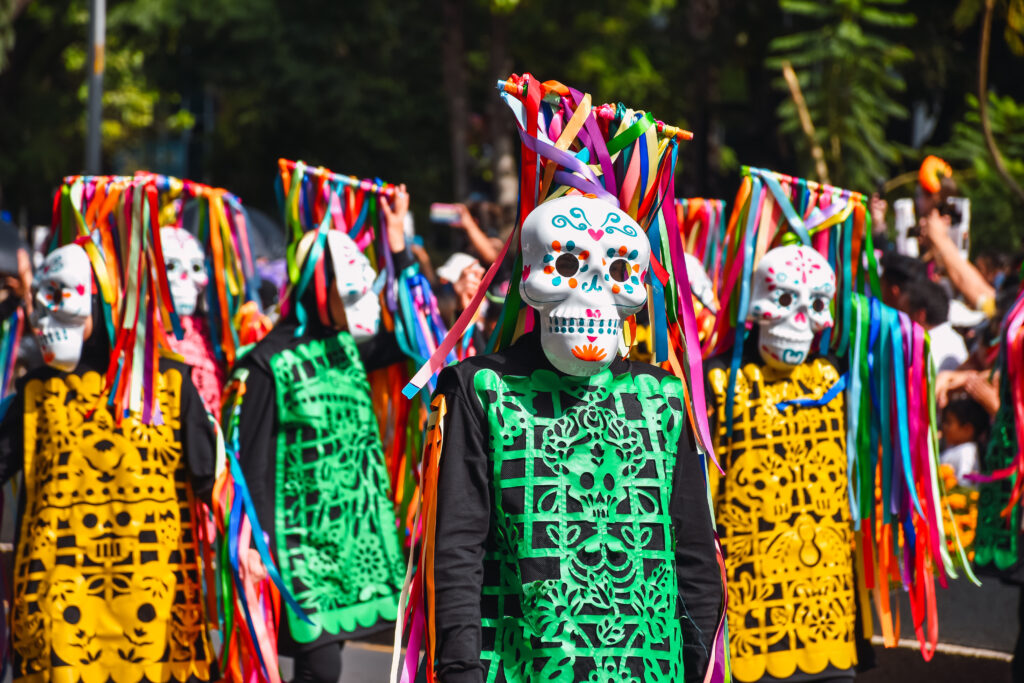
While Día de los Muertos has become more and more synonymous with the “Halloween” season, and cultural appropriation of traditional dress, customs and “partying” have never been more present in western culture. It is important to remember that these rituals and celebrations aren’t a costume you’ve pinned to wear on Halloween; they are cultural heritage, with some, such as Festival de Barriletes Gigantes, even recognized by UNESCO and should be honored as such. That being said these celebrations aren’t closed ceremonies, and Mexicans are some of the most welcoming people on the planet, so, as we approach the end of October, find out where your local Dia de los Muertos celebrations are taking place and enjoy with everyone as they welcome everyone back to the party for food, drinks, storytelling and the art of the thinning veil.
Discover the Exhibit
Consciousness is a state of awareness that exists in all of us.
Through this exhibition, we explore consciousness through the lens of four incredibly talented artists. They offer a global perspective shift in consciousness and how through different cultural lenses the idea of consciousness changes.
Whether it is captured through the eyes of another, in contemplation, within the evolution of self or in stillness, they all truly capture that inner knowing that lives inside of us all.
Consciousness


Javier garcía sánchez
03
Klazicmoskoart
02
Kknairuti
01
munyange
04
Discover the Artists
Osé Presents
Have a story to tell? We'd love to hear it. Let’s begin with a simple note.
And everywhere in between
Paris, san Francisco, Casablanca